
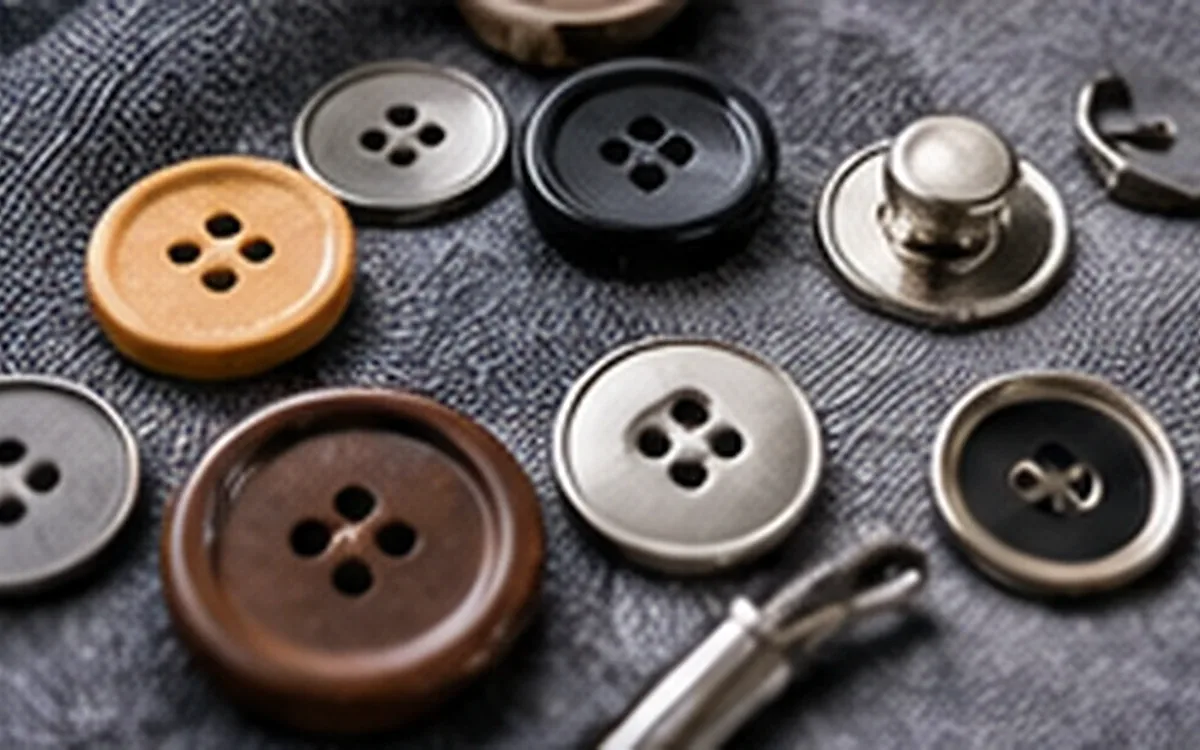
A buyer approves a silver snap for a jacket. Two weeks later, the factory receives the right colour and diameter. Yet the supplier has changed the backing part. The snap looks the same on a trim card. It has not yet been proved on the jacket's actual fabric layers.
This is the kind of gap a garment trim approval process must close. Approval should name the trim and its intended use. It must also show the evidence that supports release. A clear process also tells purchasing, stores and production what they may do next.
The approach below gives buyers and factories a practical control method. They can adapt it to their contract. It covers buttons, snaps, zippers, labels, patches, elastic and similar garment components. Use the rules for the product and its market to set test limits and legal duties. The parties must also agree who has the right to approve each item.
Define the use covered by each approval
Start with the garment and work towards the trim. An item can suit one garment and fail on another because the fabric, care process or way it is attached has changed. The approval record therefore needs more than a supplier catalogue number.
For a snap, identify both mating sides and the parts used to attach them. For a zipper, identify the chain, slider, puller, stops, length and tape colour. A label needs the correct artwork, language, size and placement. Its fabric and print must also meet the agreed standard.
Then describe the use. Record the garment style, version, colourways and size range. Add the trim position, fabric layers and intended care process. Include any age or market restriction that affects the choice. These details establish what the evidence is meant to cover.
Give each component a stable internal code. Link that code to the supplier's own reference. Two similar descriptions can hide different products. A supplier may call both items a black polyester button. Their sizes, finishes or resin grades may still differ.
The Prym Fashion equipment guide shows why the way a trim is attached matters. It lists machines for specific fastening systems. Features include stroke adjustment and controls that allow for fabric thickness. Approve the fastener together with the way it will be attached. Confirm the exact setup with its supplier.
A photo helps people find the right item. It cannot carry the whole specification. Use it beside the component code, drawing and physical reference. A photo and written dimension may disagree. Resolve that conflict before the supplier starts bulk work.
Separate the decisions that people call approval
A single green status can hide several unfinished tasks. Split the record into decisions that have a clear purpose and owner. The names can vary, but the permissions must be understood by everyone who acts on them.
Decision | What it permits | Evidence still needed for later use |
|---|---|---|
Appearance accepted | Use the defined colour, artwork and shape as the visual target | Required performance and compliance evidence |
Development trial accepted | Use the agreed component in the recorded sample application | Confirmation that bulk materials and process match |
Bulk manufacture authorised | Supplier may make the stated quantity and variants | Receipt checks and any outstanding release conditions |
Bulk lot released for use | Factory may issue the identified lot to the approved garment order | Continued process checks and control of later changes |
This structure keeps a buyer's colour comment within its scope. It cannot become permission to use an untested trim. A supplier may still prepare materials when the buyer allows it. The factory can see which later decisions remain open.
Write the permission in plain language. For example: “Colour and logo placement accepted for sample revision 3. Bulk use remains on hold until the agreed attachment and care checks are accepted.” This is an illustrative comment, not a standard form or a universal requirement.
Avoid a bare “approved with comments.” A condition needs an owner, a deadline and a defined action. State which work may proceed while the condition is open and which work must wait. A commercial manager cannot waive a safety or legal rule that applies to the product.
Build a compact approval record
A trim card is useful when it connects the physical sample to the current specification. It becomes weak when people treat it as a display board and leave the decisions in separate email chains.
Use one record for each controlled component or closely defined variant group. Link supporting files instead of copying test results into several spreadsheets. Another team member should be able to read it without help from the sample's first owner.
Record area | Useful content |
|---|---|
Identity | Style, component code, supplier reference, description and revision |
Variant scope | Colour, size, length, artwork and garment positions covered |
Application | Fabric layers, reinforcement, attachment method and care process |
Evidence | Sample reference, drawings, test reports and certificate scope |
Decision | Status, authorised use, approver, date and unresolved conditions |
Bulk link | Purchase order, supplier lot, receipt lot and production allocation |
Record units beside dimensions. Write “cm” beside a zipper length and “mm” beside an artwork offset, for example. Do not expect people to recall the units. State how length is measured when different endpoints could give different answers.
Keep a physical reference where appearance matters. Mark it with a unique sample number, date and revision. Store it so handling, light or contamination does not make it a poor comparison standard. If several sites hold references, list their controlled copies. State how each site receives a replacement.
The ApparelDiary guide to apparel PLM explains the wider product-data context. A small team can apply the same discipline in a shared register. The essential controls are identity, access to the current version and a record of who changed it.
Map the variants before sending samples
The number of garment colours does not always equal the number of trim approvals. One button may serve several colours. In turn, one garment colour may need different zipper lengths by size. Artwork, finish and attachment can create further differences.
Build a variant matrix before sampling. Put each distinct requirement in a row. Then decide which evidence can cover more than one row. Record the technical basis for that grouping and get the required agreement. Grouping should save duplicate work without hiding a meaningful change.
Consider a hypothetical jacket order in three colours and two front-zipper lengths. The purchase quantities are shown below. Each jacket needs one front zipper. The figures exclude spare stock and pieces used in testing.
Garment colour | Short zipper | Long zipper | Total jackets |
|---|---|---|---|
Navy | 1,400 | 1,000 | 2,400 |
Olive | 1,100 | 900 | 2,000 |
Sand | 900 | 700 | 1,600 |
Total | 3,400 | 2,600 | 6,000 |
There are six colour-length variants. All six may need their own size and shade checks. Some performance evidence may still cover a defined family. The buyer's test programme must accept that family. The table alone does not show that grouping is valid.
Suppose five variants are fully released. The sand long zipper is waiting for an agreed check, so 700 jackets remain blocked by that item.
Variant approval coverage = released variants ÷ required variants × 100.
Coverage = 5 ÷ 6 × 100 = 83.3%.
Order quantity covered = jackets with a released front zipper ÷ total jackets × 100.
Quantity covered = 5,300 ÷ 6,000 × 100 = 88.3%.
Both figures are correct, but they answer different questions. Neither proves that 88.3% of the jacket order can enter production. Other trims, fabrics and approvals may still be missing. Label the second figure “front-zipper quantity coverage.” That name makes its limited scope clear.
Match each test to a real failure question
Begin the test plan by asking what could go wrong in the intended use. A visual assessment answers colour and appearance questions. It does not establish how a closure behaves under load or after care.
For each risk, agree the test method and edition. Define the specimen, conditioning, number of tests and pass rule. A buyer may name a laboratory or require a specific accreditation scope. Put these details in the request. Do not send an unexplained instruction to “test the trim.”
A useful test request can describe the following questions:
Does the closure work in the garment? Does it catch or damage nearby fabric?
Does the attached component stay secure under the agreed test conditions?
Does the trim retain acceptable appearance and function after the specified care process?
Does the material meet the chemical requirements for the buyer, use and destination?
Does the label remain legible and contain the approved information?
These are planning questions. They do not set universal pass values or replace the relevant test method.
YKK's product testing guide describes several zipper properties. These include chain strength, stop holding strength and slider-puller strength. A result for one property does not describe all the others. A request for a generic “zipper strength test” leaves the actual task unclear.
The same care is needed with chemical testing. The AFIRM Restricted Substances List gives guidance for apparel and footwear. It includes testing information based on the material type. Its 2026 edition states that brand requirements may differ. Check the buyer's current programme and intended markets. Then decide whether a report covers what is needed.
Keep the acceptance limit and the test result in their original units. If someone converts a value for a summary, keep the reported value beside it. Check the conversion as well. A number without its method, unit and specimen description is a weak basis for approval.
Prove the trim in the garment application
A loose component and an attached component answer different questions. Development trials should use the actual fabric construction and layers wherever possible. If a substitute is needed, record how it differs. State what still needs checking on bulk materials.
For a snap trial, record the shell fabric, reinforcement and layer count. Add the fastener parts, tooling and approved setup. A patch trial may need the thread, stitch path and backing recorded. An adhesive badge needs its application conditions and the material it is bonded to.
Trained staff should carry out the trial. They must follow the supplier's instructions and safe work procedures. The purpose of the record is to make the accepted result repeatable. It should not invite people to guess a machine setting from another style.
Examine the complete application after the agreed care treatment. Look at nearby fabric as well as the trim itself. A closure can remain intact while its surrounding material tears, distorts or stains. Record the failure location and mode so a revised trial addresses the cause.
If the trial fails, keep the failed sample and its identity. Changing three things at once may produce a passing sample. It may still leave the cause unclear. Where practical, change one relevant factor at a time in a planned trial. Some factors may interact. The technical team must decide whether to compare more than one combination.
Once the application passes, record the approved combination. A new reinforcement, backing part or attachment method may need a fresh review. The visible face of the trim may look unchanged.
Read reports and certificates for their actual scope
A supplier's folder may hold valid documents for other materials. They may not cover the trim being offered. Review identity first. Compare the report with the approval record. Match the sample description, colour, material and supplier reference to the trim.
Next check what was tested, when it was tested and which requirements were assessed. Ask whether the reported sample represents the proposed bulk supply. A report on a plain metal part may not cover a later coating or printed decoration.
Use the buyer's policy to decide whether existing evidence remains acceptable. There is no single report age that makes every trim acceptable or unacceptable. A current report for the wrong construction is still the wrong evidence. An older report may need review after a change. Check the material, process, rules and buyer policy.
OEKO-TEX STANDARD 100 addresses harmful substances in certified textile articles and components. Its requirements vary with intended use and product class. Check the certificate's scope and validity through the official OEKO-TEX Label Check. A chemical certificate does not prove how firmly a button is attached. That needs evidence from the garment application.
For US children's products, read the CPSC's component-part testing guidance. Relying on supplier tests has conditions, including a duty to use due care. Some requirements need assessment of the finished product. This guidance concerns US rules. Test needs for other garments and markets can differ.
Keep the review outcome with the report. Name the trim, finish and requirement the report covers. A tick beside “certificate received” does not show that review. If scope is unclear, ask the compliance reviewer to resolve it. Keep the affected release on hold until then.
Release bulk by lot and by permitted use
Match a bulk delivery to the approved item before adding it to usable stock. Stores staff need enough detail to identify the trim. Quality staff need the agreed receipt and release checks.
Check the purchase-order reference, supplier item, quantity, variant and lot identity. Compare the delivered item with the controlled specification and reference. Follow the agreed inspection plan for dimensions, appearance, function and other required checks.
Keep inspection and release separate in the records. An item can be received and counted while its use remains blocked. The ApparelDiary guide to usable supplier lead time develops this point. A material's arrival date does not tell us when it is ready for use.
Suppose the sand long zipper lot arrives early in the jacket example. Its final approval is still pending. Label it with a clear hold status and prevent it from being issued to the order. Do not rely on a note that only the merchandiser can see.
The buyer may allow a limited sample trial. Identify the quantity issued for that purpose. Keep the remaining stock on hold until the release conditions are closed. Reconcile the pieces used in the trial. Otherwise, a later stock count may show an unexplained shortage.
Record each bulk release with its date, lot and quantity. State which orders the decision covers. One lot may serve several styles. The evidence or a separate approval must cover each use. A shared component code should not silently broaden the permitted use.
Treat substitutions as a fresh decision
A late delivery often creates pressure to use an available alternative. Start by describing the proposed change precisely. The phrase “equivalent quality” needs evidence. It does not describe what has changed.
Compare the original and replacement materials, sizes, finishes and colours. Review construction, attachment and performance needs as well. Identify what can remain valid and what needs review or retesting. Ask who has authority to accept the commercial and technical consequences.
The CPSC's material-change guide covers US children's products. The guide covers changes to design, production or component sourcing. If a change could affect compliance, new testing and certification duties can apply. The effect of the change matters; a familiar supplier name does not settle the question.
Assume a replacement zipper looks right for the jacket in our example. Yet it has a different slider. The supplier's evidence covers the original slider assembly. The team must decide what new evidence is needed. It must then obtain the required approval before releasing the replacement.
Record the decision even when the replacement is rejected. Another team can then see why the earlier proposal failed. If accepted, state the affected purchase order, lot, quantity and production date range. Update the specification and communicate which stock must remain separate.
Commercial urgency still deserves a clear analysis. The ApparelDiary guide to late-trim expediting can help compare delivery options. First establish that the substitute is suitable and has the required approvals. Then weigh the time it could save.
Make the review request easy to answer
A complete submission helps the buyer see every question that needs an answer. Put the decision requested at the top, then identify the sample and the evidence provided. Explain any difference from the approved garment specification before asking for a response.
Here is a request for the jacket example: “Please confirm the navy zipper shade for style J24, revision 4. This covers the two lengths listed. Sample references N-S-03 and N-L-03 are enclosed. The request covers shade and tape appearance only. Performance review remains open under test request T18.” These codes are invented for this example.
That wording gives the buyer a manageable task. It also prevents a reply such as “navy looks good” from being treated as a decision on the olive and sand variants. Once the answer arrives, update the exact rows it covers. Keep the original message linked to the record.
If the reply is unclear, ask a precise follow-up. Ask: “Does this release both lengths for bulk manufacture, or only confirm the shade?” The buyer can answer that specific doubt. Sending the whole submission again may leave it unresolved.
Agree review roles at the start of the order. The merchandiser may coordinate the submission. A designer may accept appearance, while a technical specialist accepts the application. A nominated compliance reviewer may assess test evidence. Stores and production then act on the recorded release. They should not have to guess its scope from comments.
These roles can sit with the same person in a small business. The decisions still need to be visible. Several people may need to approve an item. Name the person who confirms that all required decisions are complete.
After a meeting or phone call, record the agreed action. Ask for confirmation through the buyer's accepted channel. Include the sample version and any limits. “The buyer was happy with it” does not identify an approved version. That gap can be hard to resolve weeks later.
Use measures that expose unfinished work
Use the approval register to direct the next action. A high completion percentage alone tells little. Track unresolved decisions by their effect on the order. A missing label artwork approval may block packing even when every sewing trim is ready.
Count variants awaiting a first submission and submissions awaiting a decision. Also count lots received but not released, and changes awaiting technical review. Record the age of each open item from a defined start point. State whether a measure uses calendar days or working days.
Suppose a buyer takes four days to answer a complete request. That is different from a request returned twice for missing data, even with the same elapsed time. Record each resubmission and its cause. Otherwise, the final elapsed time tells little about where the process needs improvement.
Review repeated causes as well as late items. Were the specifications complete? Did the supplier sample the current version? Did the buyer's comments clearly state the next action? Discuss the evidence without turning every delay into a blame contest.
Close the order with a usable approval history
At order close, keep the final specification and approval decisions. Retain relevant reports and the link to bulk lots used. Follow the applicable customer and legal retention requirements. Mark old versions clearly. They remain useful as history, but staff must know they are no longer live instructions.
Ask another competent person to trace an approval. Can they identify what was approved and where it was used? Can they explain why a later change was accepted? If the answer depends on searching several private inboxes, the record is incomplete.
A reliable trim approval process gives each decision a defined scope. It links the buyer's target to the supplied trim and its use in the garment. The record also identifies the released bulk lot. These links help the team prove that the trim in use matches the agreed choice.



Discussion0
Loading the discussion…