Fabric GSM Testing and Roll Weight Calculation Guide
An incoming fabric roll can have a correct GSM result and still fail the weight check on the receiving sheet. Before opening a supplier claim, check whether the two records…

Smarter Operations for Apparel
Apparel Diary turns operations research and analytics into practical guidance for apparel and textile manufacturing teams. 52 published articles across 4 verticals · last updated Oct 18, 2026

An incoming fabric roll can have a correct GSM result and still fail the weight check on the receiving sheet. Before opening a supplier claim, check whether the two records…


Aug 21, 2026 · 8 min read

Aug 20, 2026 · 9 min read
Newly published across all 4 verticals.

Measure on-shelf availability against an agreed assortment and observation schedule, then separate replenishment delays from inventory-record errors. A worked audit reconciles shelf gaps with their owners, while a repeatable log prevents excluded products.

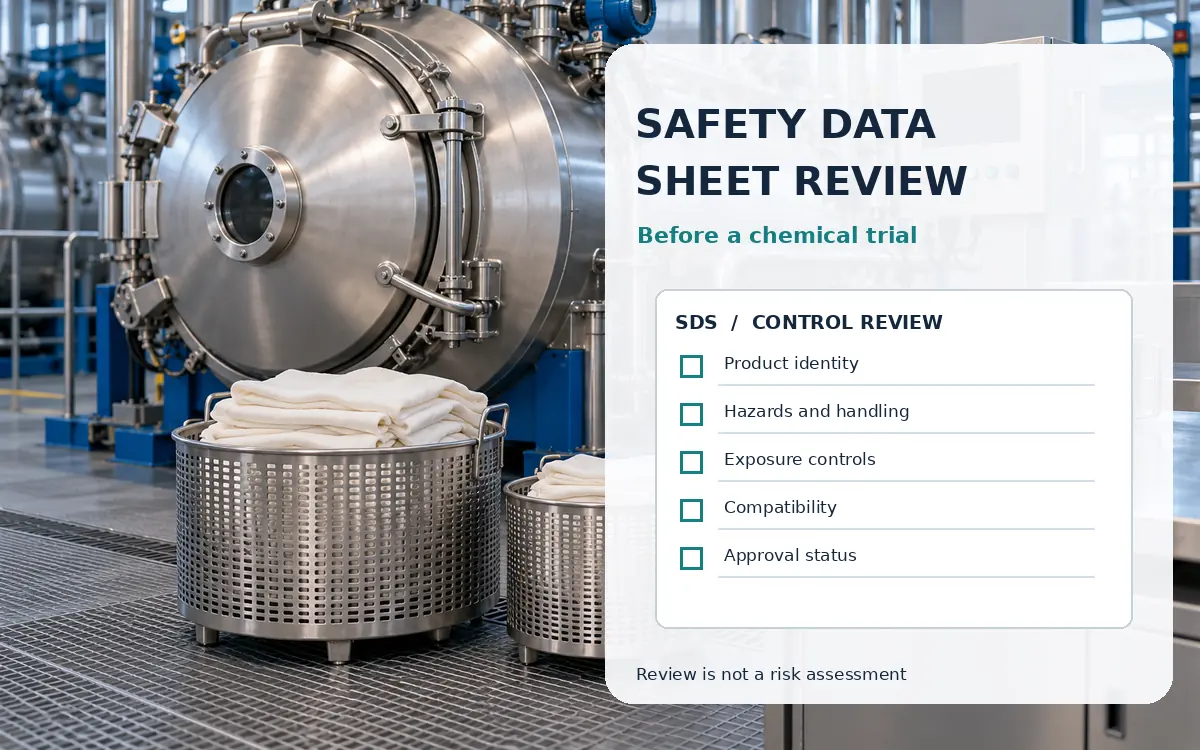
Read the parts of a supplier safety data sheet that affect a chemical trial, then translate them into a task-specific control and approval record. The review matrix highlights identity mismatches, unclear protective equipment, compatibility gaps and emergency arrangements.

Calculate MTBF, repair time and restoration time from one consistent downtime log. A four-event example shows how excluding spares and response waits overstates availability, while the data dictionary explains failure counts, exposure hours, event boundaries and careful reporting

Choose which spare parts to stock, share or source using consequence, recovery time and technical compatibility. An illustrative cost screen separates annual holding cost from avoidable outage exposure, while the decision matrix and receiving controls keep safety-critical items.

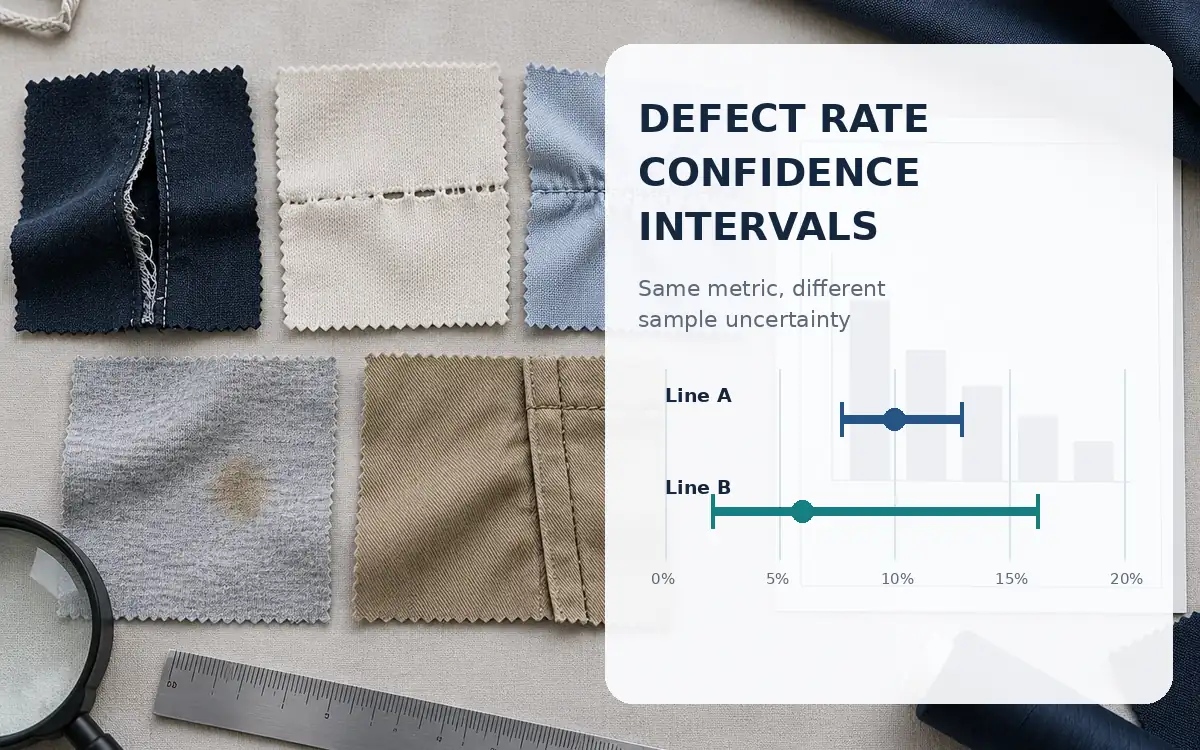
Calculate a Wilson confidence interval for a sampled defective-unit rate and report it with the sample count. Examples show why a small sample with a lower percentage may still be inconclusive, why zero observed defects is not proof of zero risk.

Turn defect records into a Pareto chart with correctly sorted counts and cumulative percentages. A second ranking by illustrative rework minutes shows why the most common fault may not consume the most capacity, while the action worksheet keeps suspected causes separate.
52
published articles
4
industry verticals covered
48.1k+
reads on the top articles
Fibre to finished garment: spinning, weaving, wet processing, apparel engineering and quality systems.

Calculate liquor volume and distinguish dosing on fabric weight from dosing on bath volume. A partial-load example shows why copying full-load quantities changes concentration, while a release checklist separates arithmetic checks from the technologist's approval.
Optimisation, queuing, scheduling and decision models applied to real production and supply networks.

Build an expediting decision from the actual line-readiness deadline, action-specific delay probabilities and incremental recovery costs. A worked trims example calculates the premium's break-even probability reduction and records the evidence, approval owner and fallback needed

Sep 16, 2026 · 3 min read
Turning operational data into forecasts, dashboards and decisions that hold up in a review meeting.

Calculate a Wilson confidence interval for a sampled defective-unit rate and report it with the sample count. Examples show why a small sample with a lower percentage may still be inconclusive, why zero observed defects is not proof of zero risk.
Occupational health, fire engineering, chemical handling and physical security for industrial sites.

Read the parts of a supplier safety data sheet that affect a chemical trial, then translate them into a task-specific control and approval record. The review matrix highlights identity mismatches, unclear protective equipment, compatibility gaps and emergency arrangements.

Aug 21, 2026 · 8 min read

Aug 5, 2026 · 7 min read

Jul 21, 2026 · 9 min read
Every article here is written by someone who runs the process they are describing. Submissions are reviewed by an editor before they go live.
Industrial Engineer & Business Process Optimization Executive
Md. Salauddin Ahamed is an industrial engineer specializing in business process optimization for the ready-made garment industry in Dhaka, Bangladesh. He curre…
43 published articles
LatestOn Shelf Availability Calculation and Retail Gap AuditSr. Executive, Digital Excellence & Transformation | ERP & Business Process Optimisation
Anik Das is a merchandising and digital transformation professional who helps Bangladesh’s Ready-Made Garment (RMG) industry run smarter. At Apex Holdings Ltd,…
9 published articles
LatestThe Supply Chain KPI Dashboard Every Bangladesh RMG Factory Needs: Order Intake, Material Receipt and On-Time Delivery (Part 1)Submit an article through the guest portal. An editor reviews every submission, and you can follow its status - pending, changes requested, approved, published - from your own dashboard.