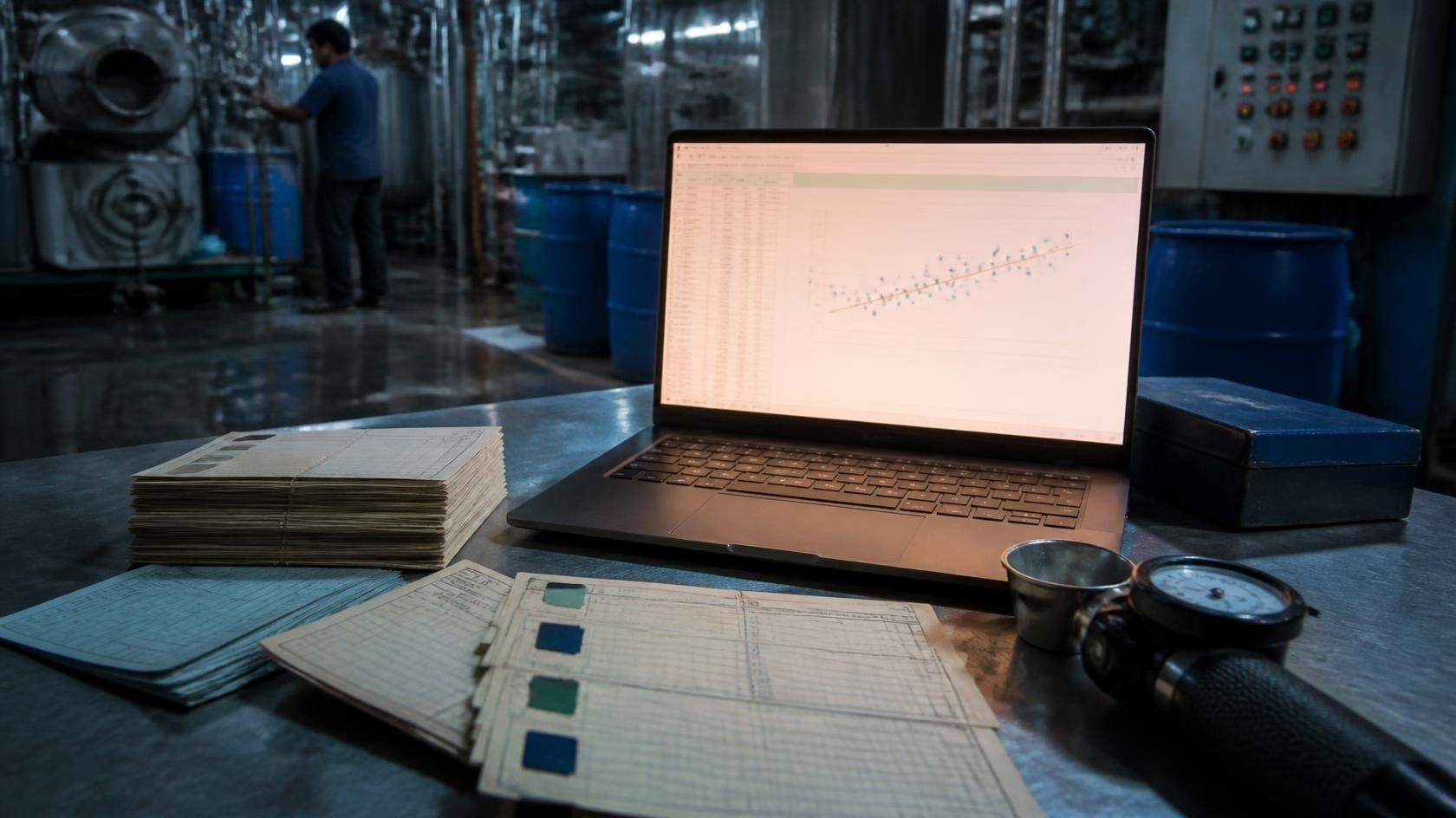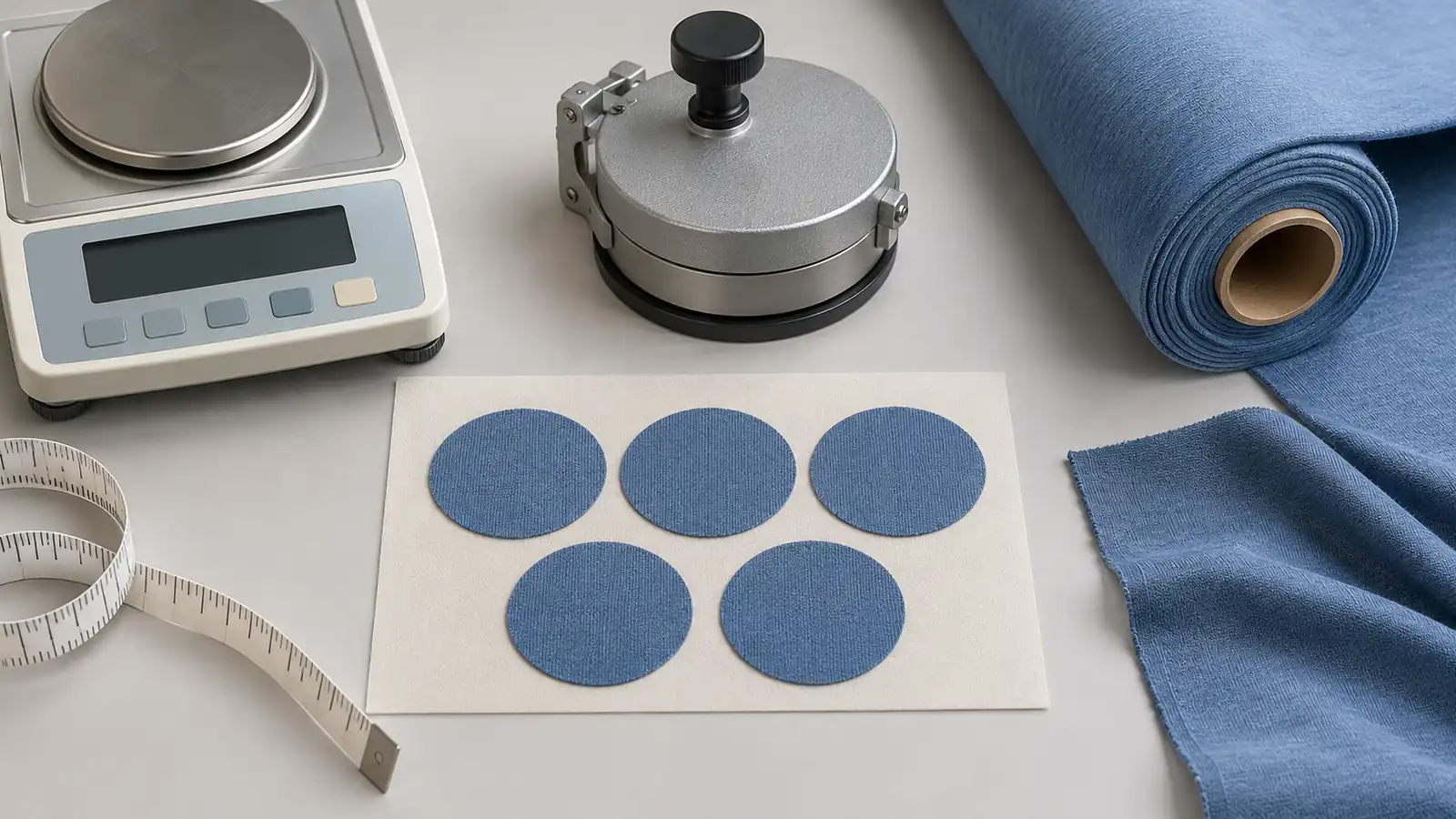
Fabric GSM Testing and Roll Weight Calculation Guide
An incoming fabric roll can have a correct GSM result and still fail the weight check on the receiving sheet. Before opening a supplier claim, check whether the two records…

Smarter Operations for Apparel
Industrial Engineer & Business Process Optimization Executive
Md. Salauddin Ahamed is an industrial engineer specializing in business process optimization for the ready-made garment industry in Dhaka, Bangladesh. He currently leads ERP and workflow standardization projects at Apex Holdings Ltd., having previously worked on line balancing and industrial engineering at Epyllion Group and Young Group. He holds a BSc in Industrial and Production Engineering from the University of Dhaka (NITER) and founded Apparel Diary to share practical operations research and analytics with apparel and textile manufacturing teams.

An incoming fabric roll can have a correct GSM result and still fail the weight check on the receiving sheet. Before opening a supplier claim, check whether the two records…


One Safety Stock Rule Doesn't Fit a Trims Store A trims store holds thousands of SKUs: zippers, buttons, labels, elastic, drawcords, each with a different value and a different…

A cutting room manager or IE will be able to place a control point on every stage from marker receipt to issue, and trace a shade-variation or short-bundle rejection back to the shift and lay that caused it.

To be able to build a multiple regression model from your own batch records that predicts a dyeing recipe's chemical cost before the batch runs, and know which two or three variables actually drive that cost.

A step-by-step account of replacing push scheduling between the cutting room and the sewing floor with a two-bin kanban, including the card calculation and the first three weeks of failure modes.

You'll be able to design a factory KPI dashboard supervisors keep opening past week four, by starting from the five decisions it must support instead of the data that happens to be available.

Most line balancing is done by eye and a stopwatch. Here is the mixed-integer formulation that does it properly, with the constraints that keep the answer feasible on a real floor.

A safety officer or EHS lead will be able to build a working HIRA using written scoring anchors, a filled-in worksheet, and a hierarchy-of-controls logic that survives a compliance audit and actually changes floor behavior.

A merchandiser or mill planner will be able to convert confidently between Ne, Nm, Tex, dtex and Denier in either direction, correctly resolve ambiguous ply notation like 30/2, and run the round-trip check that catches a count error before an order ships.