
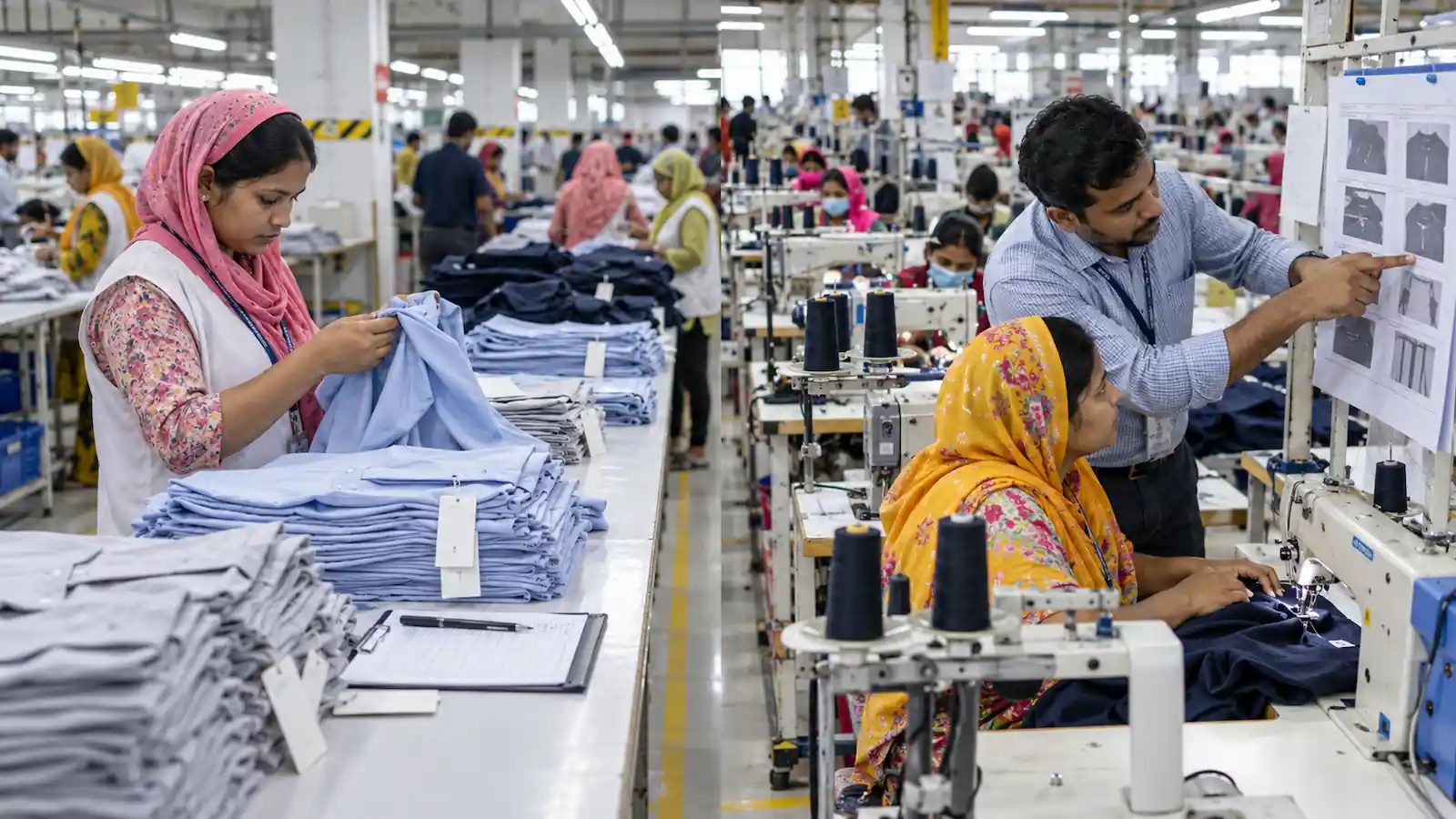
Every second, somewhere in the world, someone puts on a garment that was cut, sewn and finished in Bangladesh. Behind that ordinary moment sits an export industry worth tens of billions of dollars a year, and behind that number sits a much quieter fight: the one happening on the quality floor, long before any garment reaches a shop shelf. It stopped being a question of "does this shirt have a loose thread" a long time ago. Today it is a question of whether a factory can prove, on paper and in practice, that it catches problems before they happen at all.
Two Factories, Two Very Different Bets
Picture two factories on the same industrial road in Dhaka. Factory A bets on speed and correction. Garments move fast through cutting, sewing and finishing, and the real checking happens at the very end, when a big pile of finished pieces gets inspected all at once. When something is wrong, it is wrong in bulk, an entire shipment, a whole colorway, sometimes an entire order. Factory B bets on something less visible: a system. Work is checked while it is happening, not after it is done, and by the time a garment reaches the final table, most of the surprises have already been removed.
Both factories can produce a good garment. Only one of them can produce the same good garment reliably, order after order, buyer after buyer. That reliability is the actual thing today's global buyers are shopping for, more than any single sample.
Quality Control Finds Problems. Quality Assurance Prevents Them.
The two terms get used interchangeably on a factory floor, but they describe two different jobs. Quality control (QC) is inspection: someone checks a finished garment, a roll of fabric, or a batch of accessories, and sorts what passes from what fails. Quality assurance (QA) is the wider job of designing the process itself so that fewer failures are created in the first place, documenting how work should be done, training people to do it that way, and reviewing the results so the same mistake does not repeat next month.
A buyer who only sees QC sees a scoreboard after the game is already over. A buyer who sees QA sees the coaching, the practice drills and the game plan that produced that scoreboard. Modern sourcing decisions increasingly weigh the second far more heavily than the first, because a strong QA system is what makes next season's scoreboard predictable.
What a Real Quality Management System Actually Looks Like
"Build a quality culture" is easy to say and hard to check. What a buyer's audit team actually looks for is far more specific, and it breaks down into five parts that show up, in one form or another, in almost every serious quality management system (QMS) used to prepare a Bangladeshi RMG factory for buyer review.
QMS element | What it really means on the floor | What an auditor checks for |
|---|---|---|
Policy | A short, clear statement of what the factory is actually committing to on quality, not a vague mission poster | Written policy, known by staff, tied to measurable department goals rather than left as a slogan |
Organization | Who is responsible for quality, and whether that responsibility survives one person leaving | An organization chart, job descriptions, a backup plan for key roles, a QC team that is genuinely independent of production targets |
Process and routines | Documented, repeatable steps for how work is actually done, not tribal knowledge in one supervisor's head | Flow charts, operation-wise work instructions, a quality manual that a new hire could actually follow |
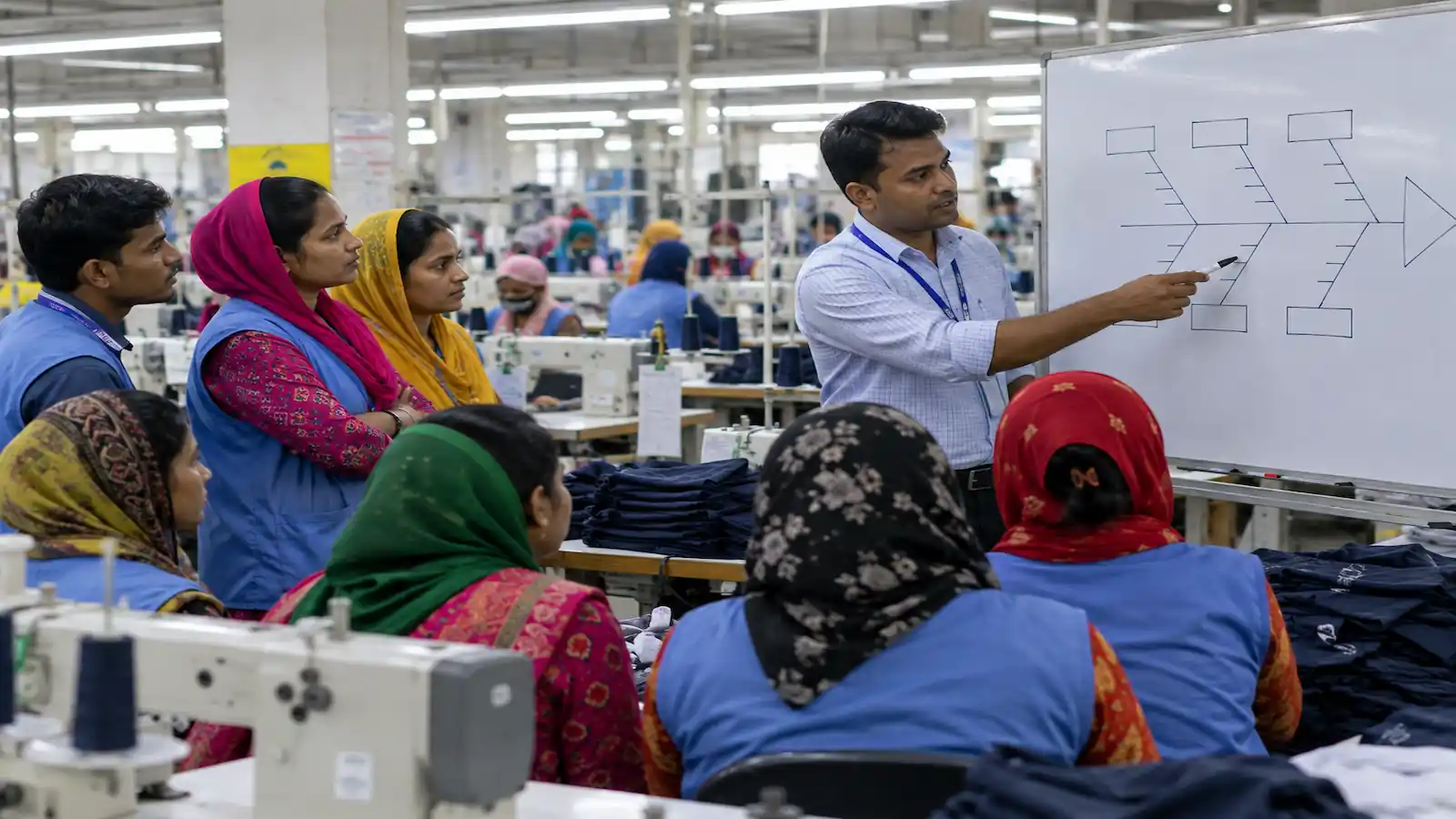
Communication and implementation | Whether the documented process is understood, not just filed away | Visible instructions at workstations, training records, a working feedback loop between the sewing floor and management |
Feedback and improvement | Turning real defect and rejection data into specific, dated corrective actions | Root cause records, a rejection or defect trend that is actually going down over time, not just being reported |
Notice what is missing from that list: nowhere does it say "have zero defects." It says prove you have a system that keeps finding and closing gaps. That is the real definition of "Right First Time," a phrase used widely across the industry: not perfection on the first attempt, but a process disciplined enough that defects get caught and designed out close to where they are created, instead of piling up at the end of the line where they are far more expensive to fix.
Why This Shift Is Not Optional Anymore
A factory that only inspects at the end of the line is making a specific, expensive bet: that most garments will be right, and the ones that are not can be caught and reworked before shipment. That bet gets worse as order volumes grow, lead times shrink and buyers add more style variety per season. Reworking a bulk shipment discovered wrong on the final table costs far more in labor, delay and reputation than catching the same problem at the cutting table or the first few stitches on a new line. The statistical process control discipline that keeps a process inside its natural limits, and the structured risk assessment habits used on the safety side of a factory, both point at the same underlying idea: it is cheaper, and more reliable, to design a process that resists failure than to keep inspecting your way out of one that does not.
Field note: the factories that struggle most with buyer audits are rarely the ones with the worst sewing. They are the ones where good work happens, but nobody wrote down how, so the next new hire, the next rush order or the next line change quietly loses that quality all over again.
Where Documentation Actually Pays For Itself
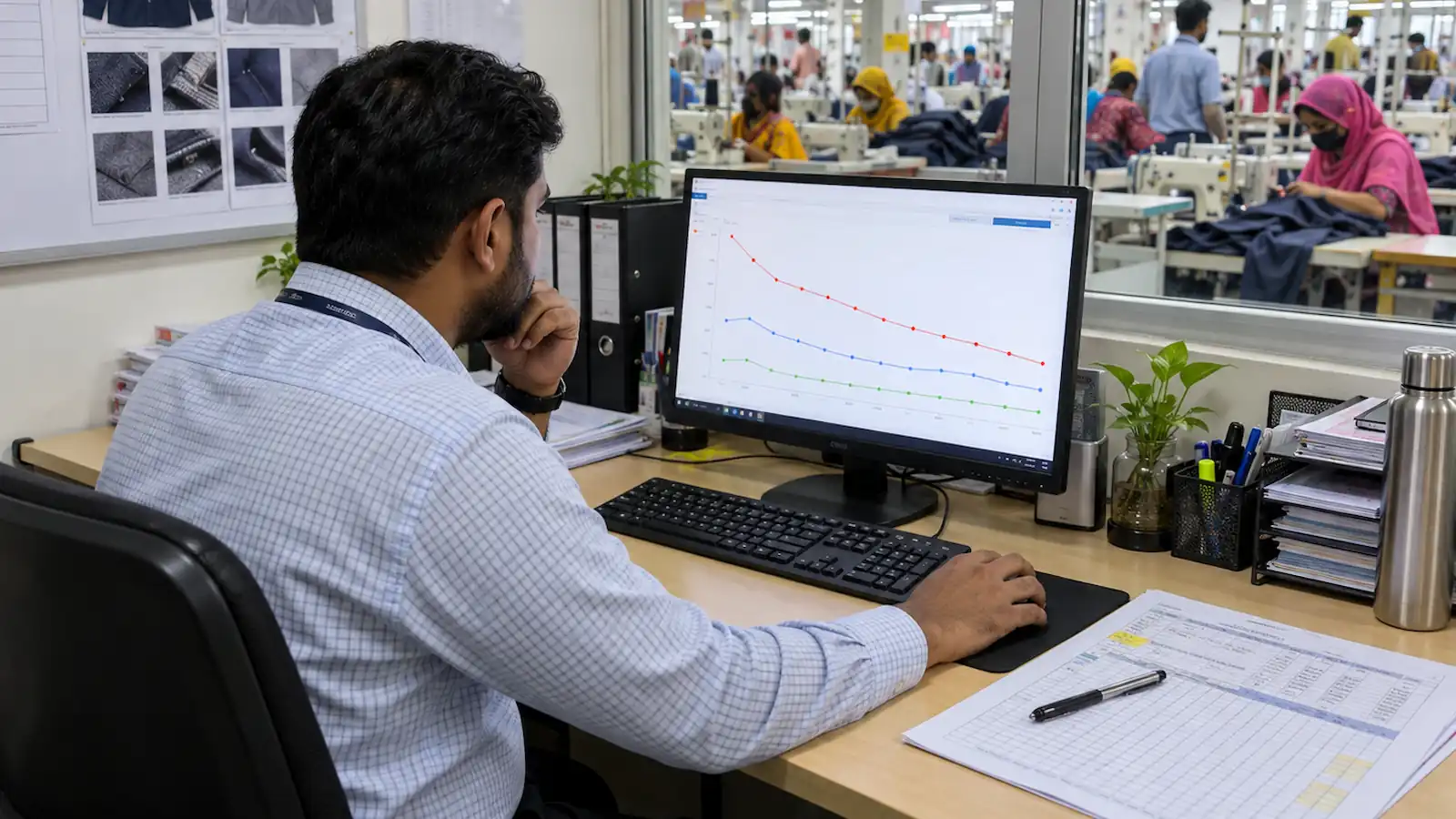
A documented process is not paperwork for its own sake. A written work instruction posted at a station, a flow chart for how accessories get approved before they reach the line, a Kanban style pull system that limits how much unchecked work-in-process can pile up between cutting and sewing, all of these exist so the same good result can be repeated by a different person on a different day. That is precisely what turns one good sample into ten thousand consistent finished pieces, and it is what a factory KPI dashboard is actually measuring when it tracks quality trends over time instead of a single day's snapshot.
A manufacturing analytics stack built on top of that documentation is what eventually lets a factory answer a buyer's hardest question in seconds instead of days: not "was this shipment good," but "show me the trend, and show me what you did the last time it went the wrong way."
Quality Assurance Readiness Checklist
A written quality policy exists, is known by staff at every level, and is tied to specific department goals rather than left as a general statement
The QC and QA team has its own reporting line, independent of the production target for the day
Key processes have a documented flow chart or work instruction that a new employee could actually follow without a supervisor standing over them
Work instructions are visible at the point of work, not only filed in an office binder
Defect and rejection data is reviewed on a real schedule, and each recurring issue has a dated, named corrective action, not just a note that it happened
Final Word
Quality control tells you what already went wrong. Quality assurance is the harder, less visible work of making sure fewer things go wrong in the first place, and being able to prove it with a policy, an organization chart, a documented process, a communication habit and a feedback loop that actually closes. That five-part structure is what a serious buyer audit is quietly measuring, whether or not the factory ever calls it by that name.
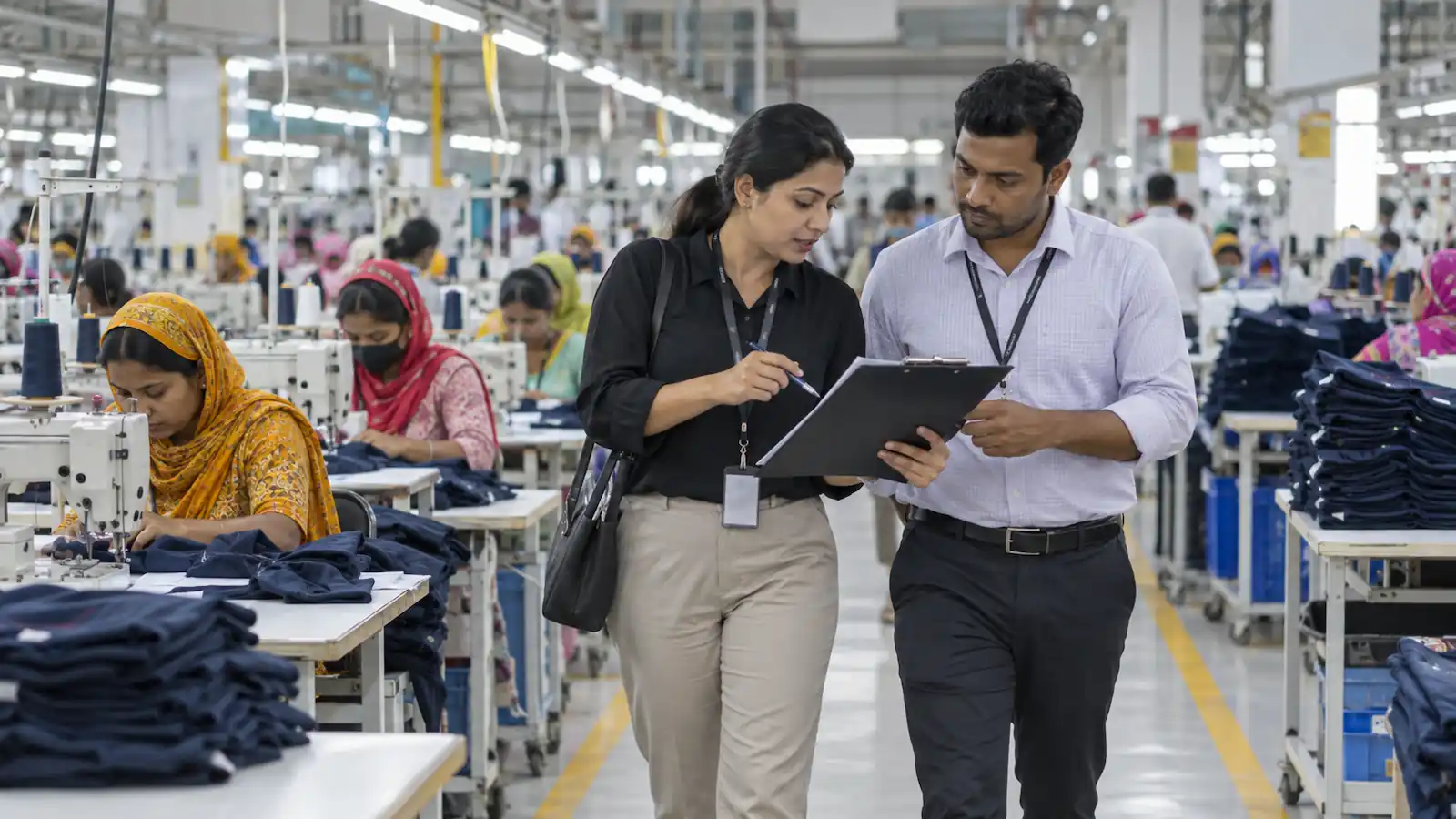
In Part 2, we go inside the audit itself: what a buyer's quality team actually checks when they walk onto a factory floor, what changes between a new supplier's first audit and an established one's, and why a factory's paper trail matters just as much as its stitching.
Discussion0
Loading the discussion…