
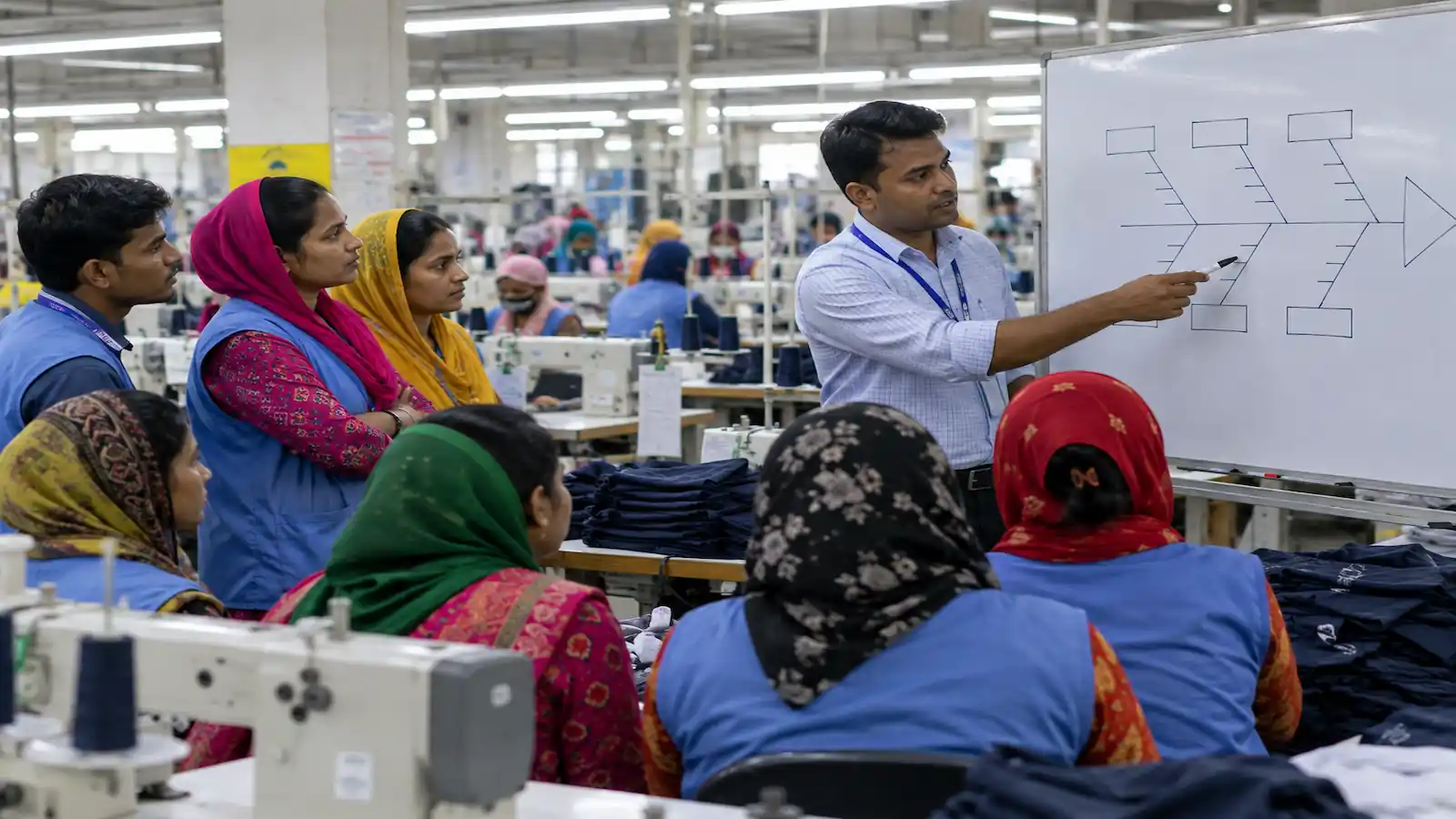
Knowing your DHU number, covered in Part 3, tells a factory where it stands today. It says nothing about how a factory with a DHU of 15 actually becomes a factory with a DHU of 5, and stays there. That journey is not a single fix. It is a handful of specific, unglamorous habits, repeated until they become culture rather than campaign.
Give the Line the Authority to Stop
In a factory still running on end-of-line inspection, an operator who spots a problem mid-seam usually keeps going, because stopping the line is not their decision to make. In a zero defect culture, that authority moves downward: the operator who sees a defect stops that single piece immediately, flags it, and gets it corrected before it moves one station further down the line. The defect still happened, but it never gets the chance to multiply across the next fifty pieces before anyone notices.
This only works if it is genuinely safe for an operator to raise their hand without being read as slowing down the line. That cultural permission is worth more than any poster about quality, and it is the single hardest habit on this list to actually install.
Lean QC: Removing Waste From the Inspection Process Itself
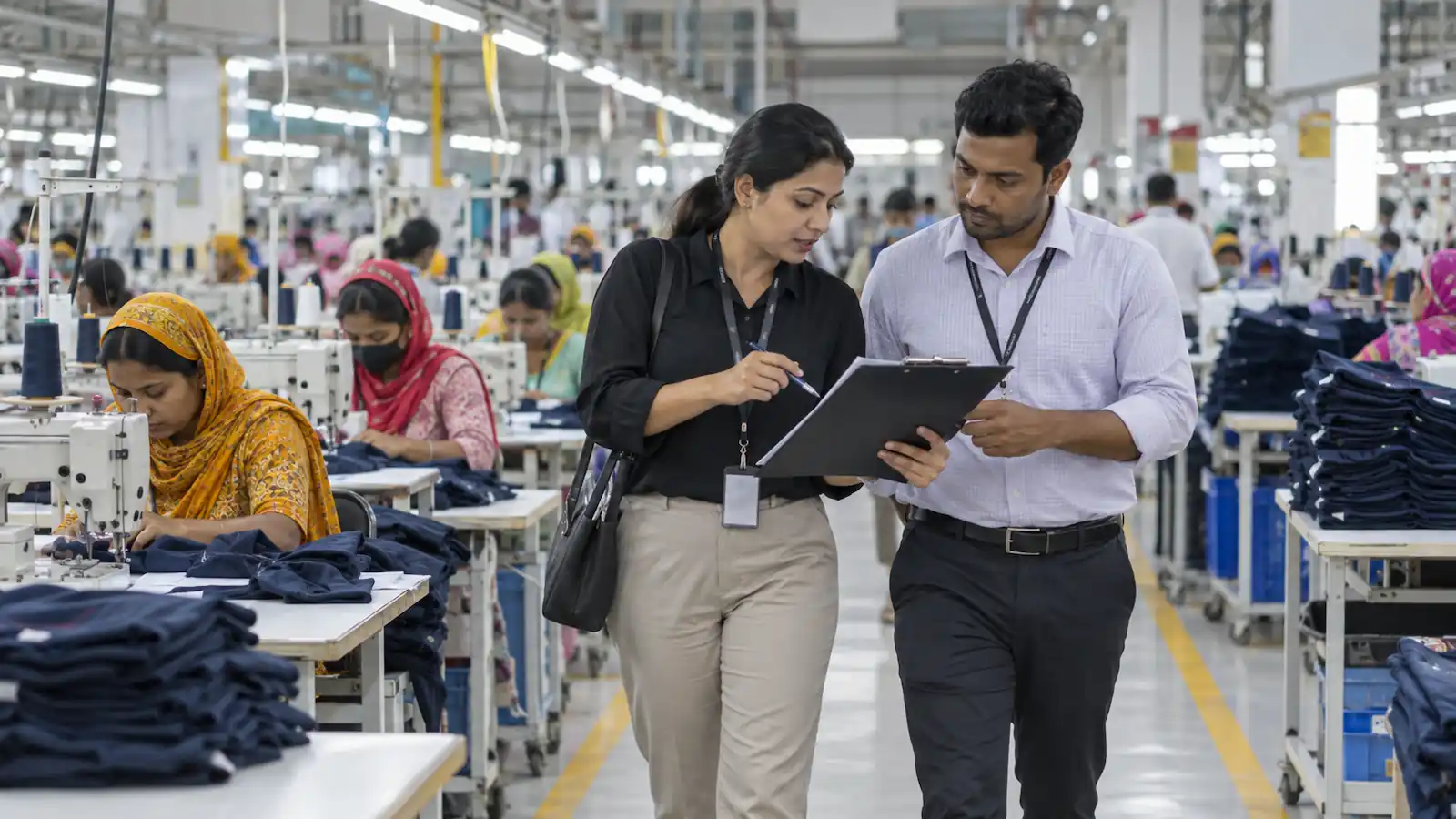
Inspection itself can be wasteful. A paper-heavy process where the same defect gets written down by hand three separate times, once on the floor, once in a register, once in a summary report for management, burns hours that add nothing to the garment. Lean QC applies the same waste-elimination thinking used in Kanban-style pull systems to the inspection process: digital tally entry instead of triple-written paper, inspection points placed exactly where a defect is most likely to be created rather than spread evenly and inefficiently across every station, and reporting that reaches a supervisor the same shift, not three days later when the cause has already been forgotten.
The same principle that keeps a sewing line balanced, covered in line balancing with linear programming, applies to a quality team's own workload: an inspection process with an unbalanced bottleneck slows the whole line down just as surely as an unbalanced sewing operation does.
Train the Operator, Not Just the Inspector
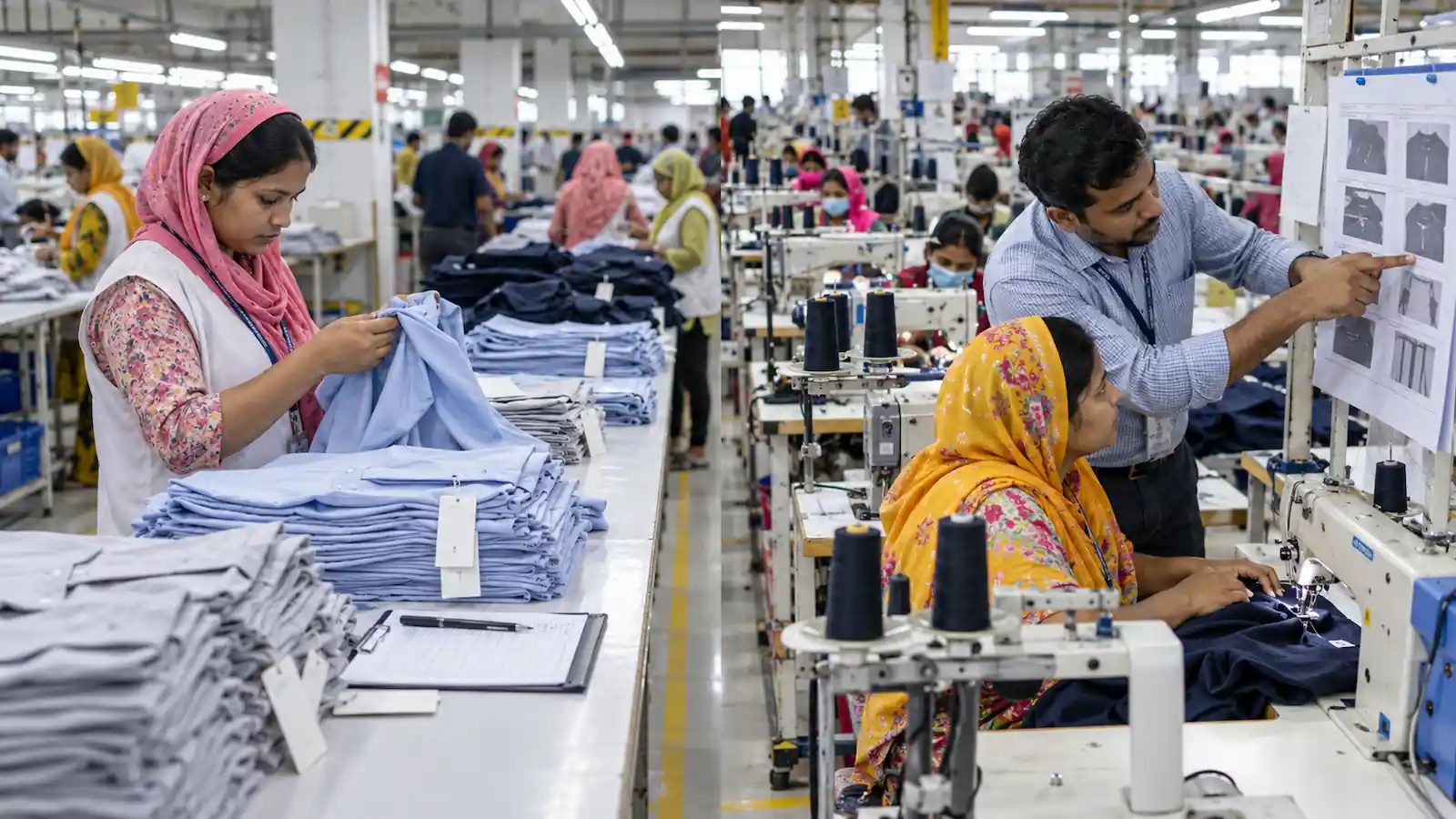
The strongest factories do not treat quality as one department's job. Every operator gets trained to recognize the specific defect risks of their own operation, not just a general awareness talk. A collar-attach operator learns to spot the two or three ways their specific seam typically goes wrong, because they are the person best positioned to catch it in the two seconds before it happens, long before it ever reaches a QC inspector three stations later.
Root Cause Analysis: Asking "Why" Until the Real Answer Shows Up
When a defect or a rejection happens, the least useful response is fixing the single piece and moving on. The useful response is root cause analysis (RCA): asking why the defect happened, and then asking why that cause happened, repeating until the answer stops being another symptom and becomes something a factory can actually act on. This is often run informally as the "5 Whys," or visually as a fishbone-style diagram grouping causes by category, people, machine, material, method, environment.
A real, recurring version of this on a factory floor looks like a simple tracked table, reviewed on a set schedule rather than only when something goes badly wrong:
Cause of rejection | Root cause | Corrective action | Responsible |
|---|---|---|---|
Label missing on a portion of finished pieces | Labels for one country market were mixed in storage with labels for another | Separate labels by market from receipt through packing, with a dedicated handler checking each carton | Finishing manager |
Trim delivery delay pushed a late accessory attach | Trim card approval routed through one person with no backup during leave | Add a second approver and a minimum three-week trim lead time before target output date | Merchandiser |
Notice what makes this work: the root cause is never "the operator made a mistake." It is a system condition, a storage habit, a single point of failure in an approval chain, that made the mistake likely to happen to whoever was standing at that station that day. Fix the system condition, and the same mistake stops finding new people to happen to.
Confirming an Improvement Actually Stuck
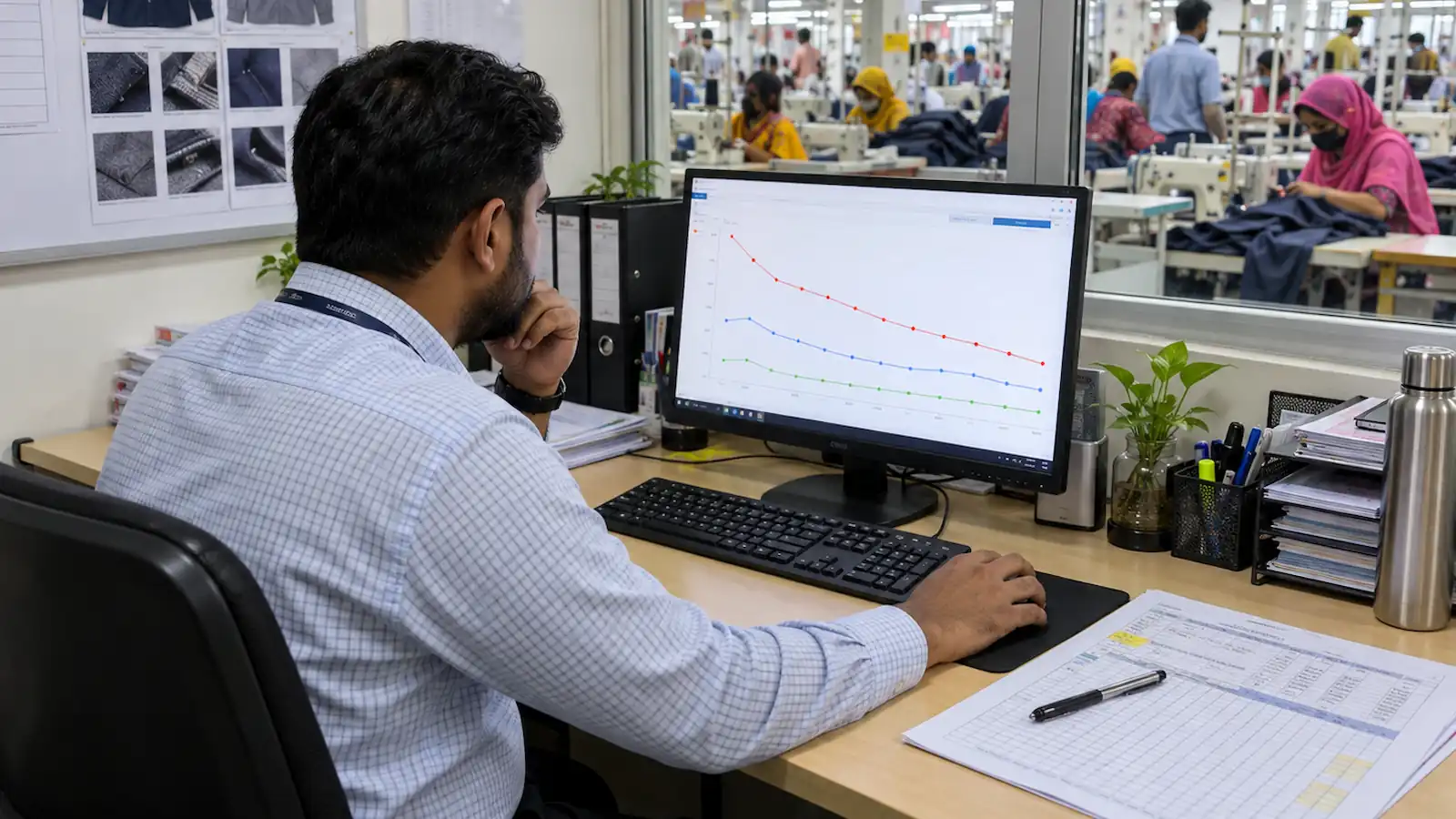
A corrective action is not finished the day it is written down. The only real proof is the next few lots sampled at the same AQL level, run back through the same AQL sampling process and the site's own AQL sampling plan calculator, showing the specific defect actually declining, not just being reported as "resolved." This is also where preventive and predictive maintenance thinking earns its place in a quality conversation: a machine drifting slowly out of calibration is a root cause hiding in plain sight, and catching that drift early is exactly the same discipline that keeps a defect from reappearing three months after everyone thought it was solved.
Continuous Improvement Checklist
Any operator can stop their own piece the moment they spot a defect, without being penalized for slowing the line
Inspection reporting reaches a supervisor the same shift, not days later
Every operator is trained on the specific defect risks of their own operation, not just a general quality briefing
Every recurring defect gets a documented root cause that names a system condition, not a person
A corrective action is only marked closed after the next sampled lots actually show the defect rate declining
Final Word
Bangladesh's RMG industry has spent decades being known as the world's factory floor. The quieter, more durable shift happening now is toward being known as a place that has genuinely industrialized the discipline of catching problems early, closing them for good, and proving it with a paper trail rather than a promise. Line-stop authority, leaner inspection, operators trained to be their own first checkpoint, and root cause analysis that names systems instead of people, together, these are what actually turn a good DHU number into a permanent one, and what quietly turns "Made in Bangladesh" into a standard buyers stop double-checking.
This closes the four-part series on quality culture in Bangladesh RMG. Part 1 covered the shift from inspection to prevention, Part 2 covered what a buyer's audit is really scoring, Part 3 covered the DHU metric itself, and this final part covered how factories actually move that number and keep it there.
Discussion0
Loading the discussion…