
Define the mottled effect before the process
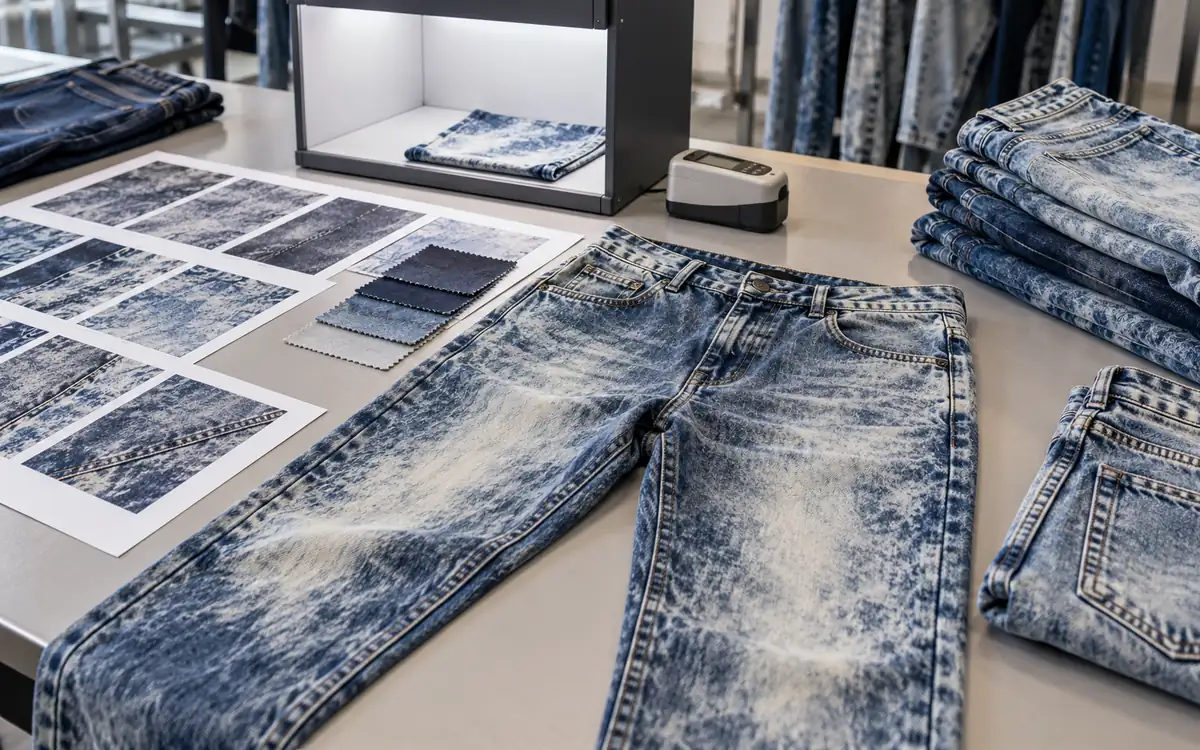
Acid wash denim usually has uneven light areas against a darker ground. The pattern may look cloudy, marbled or sharply contrasted. That appearance can be desirable. A random-looking pattern still needs quality control.
A useful specification sets the acceptable range of variation. It identifies what must remain sound. That includes fabric strength, seams, stretch recovery, pocketing and closures. It also covers the final garment's performance after care.
The process name alone does not provide those limits. It does not identify the chemicals or prove a particular pH. It cannot tell a laundry how much local damage is acceptable.
Begin with a clear effect brief. Develop the route with qualified suppliers and suitable equipment. Then check the finished garment against the brief. This article focuses on that approval work. It does not provide a universal chemical recipe.
Understand the name without treating it as a recipe
Historical acid-wash methods used local contact with bleaching chemistry. Some routes also used abrasive media. A 1994 patent on distressed denim describes such methods. It also discusses later yellowing.
That old document helps explain this type of process. It is not current operating guidance. It does not prove that its formulations suit a modern garment.
The word acid should lead to questions. Do not assume what it means. Ask for the exact process name and products. Check how they are applied. Adding acid may not create the desired effect. It does not prove that a bleaching treatment suits the garment.
A laundry may use a newer supplier system for a similar visual style. The appearance name can stay the same while the process changes.
Record both. The trade name helps design and merchandising teams discuss the effect. The technical route tells staff which process has been qualified.
Separate mottling from uniform bleaching and abrasion
Three garments can reach a similar average lightness yet look very different.
One may be evenly pale. Another may have light seams and a dark body. A third may have scattered light patches across the panels. Average colour alone does not describe the effect.
CottonWorks discusses several denim finishing routes. These include mechanical abrasion and chemical colour changes. Decide how the effect should look. Use that goal to choose a route for development.
For acid-wash approval, describe the dark ground and light regions. Explain how the marks should change between the two. State how large the marks should be and where they should occur.
Many small marks may make a garment look busy. A few large pale zones can create a very different design. People may call both of them heavily washed.
Do not force these appearances into one shade measurement. Use colour evidence. Pair it with a defined check of the whole garment.
Create an effect map that allows controlled variation
Divide the garment into regions that are easy to view. For jeans, these might include upper front, thigh, knee, lower leg, seat and waistband.
For each region, state whether mottling is required or allowed. Mark the regions that should remain fairly plain. Set placement limits around logos and hardware. Include any deliberate design features.
Use an approved centre sample and boundary samples. The centre sample shows the intended look. Boundary samples show the lightest and darkest acceptable versions. They also show the maximum contrast.
Do not choose boundary samples only after a bulk problem occurs. Agree these before production. This reduces disputes about which variations belong to the design.
Protect the boundary samples from fading and handling wear. Record when they were approved. Compare their condition with stored images and any retained reference. An approval sample may wear over time. Its changed appearance can shift the accepted range even when the process stays the same. Replace a damaged standard through the same approval route. Do not choose a convenient garment from current output.
An effect map can use phrases such as scattered medium patches. It might specify low contrast near the waistband. Support these words with physical samples. The words should point to something visible.
Where symmetry matters, define it. An irregular wash need not be perfectly mirrored. Yet one almost-white leg beside a dark leg may fall outside the brief.
Identify which variations are defects
Some variation is expected within a mottled finish. Other changes remain faults even if the overall look is in fashion.
Feature | Potentially intended variation | Example of a separate defect |
|---|---|---|
Light patch size. | Approved small and medium patches. | A large blank region outside the boundary sample. |
Contrast. | Approved light-to-dark difference. | Local fibre damage hidden in a pale patch. |
Seam emphasis. | Worn seam edge within the brief. | Broken structural stitching. |
Surface texture. | Controlled aged character. | Unplanned holes or exposed stretch filaments. |
Panel balance. | Limited asymmetry. | One panel from a visibly different starting lot. |
Trim appearance. | Approved aged finish. | Corrosion, loose plating or impaired function. |
Teach inspectors how to tell these cases apart. An inspector should know whether a hole is fashion or damage.
Mark intended distress separately on the product specification. Its placement and size need their own approval.
Also inspect hidden surfaces. A dramatic face effect does not justify stained pocket bags. Residue trapped inside the waistband is still a fault.
Control the starting denim
The starting fabric limits how much processing it can tolerate. Record its construction and fibre blend. Add the colour system and prior finishing.
Track garment and fabric lots. Starting shades may differ. Their finished effects can then differ. This can happen even if every piece follows the same route.
Inspect preparation before the effect stage. Uneven wetting, residual size or contamination can create local differences. At first glance, these may look like deliberate mottling.
Keep an untreated matched garment. Or keep enough material for a valid comparison. Without a control, the cause of a weakness may be unclear. It could predate the process or result from it.
For stretch denim, identify the stretch component. Include its required recovery in the review. The cotton surface may look sound. That does not prove that the whole blend is fit for use.
Check the complete garment construction too. Dense seams, folds and attached trims can create local contact patterns. A flat fabric swatch cannot reproduce all of them.
Define the process boundary with the supplier
The qualified route should identify equipment and approved products. State the material's starting condition. Define the application stage and completion checks.
Describe what happens before and after developing the effect. Preparation and extraction can affect the result. So can drying, rinsing and final finishing.
A time copied from another style is not a complete process instruction. Results may change with the starting material. The equipment can also change them.
Ask how the supplier defines completion. The answer should cover the chemistry and intended garment condition. Loss of a visible colour alone is not enough.
Record interruption rules. A delay after an active treatment may matter. This includes time spent waiting for its completion stage. Staff should know the approved response before a delay occurs.
For chemical trials, follow the established safety data sheet review process. Check product identity and handling controls. Use it to assess which materials can be used together.
Keep chemical identities exact
Small naming errors can create large process errors. Record the full product identity. Use its current technical and safety information.
For example, sodium metabisulfite has the formula Na₂S₂O₅. It is not sodium thiosulfate, Na₂S₂O₃. The ILO/WHO sodium metabisulfite card identifies it as a reducing agent. It describes incompatibilities with acids and oxidants.
The ILO/WHO potassium permanganate card identifies permanganate as a strong oxidant. It describes serious hazards from incompatible materials.
Use these facts to guide product choice and handling. They do not create a mixing instruction. Use a supplier-qualified process. Provide suitable engineering controls and trained staff.
Neutralizing or reducing products may have similar names. That is no reason to substitute one for another. Commercial products can differ in active content. Their application requirements may also differ.
Keep a separate list of approved chemicals. The design name cannot replace it. An acid wash order still needs an exact technical identity.
Distinguish pH from residual chemistry
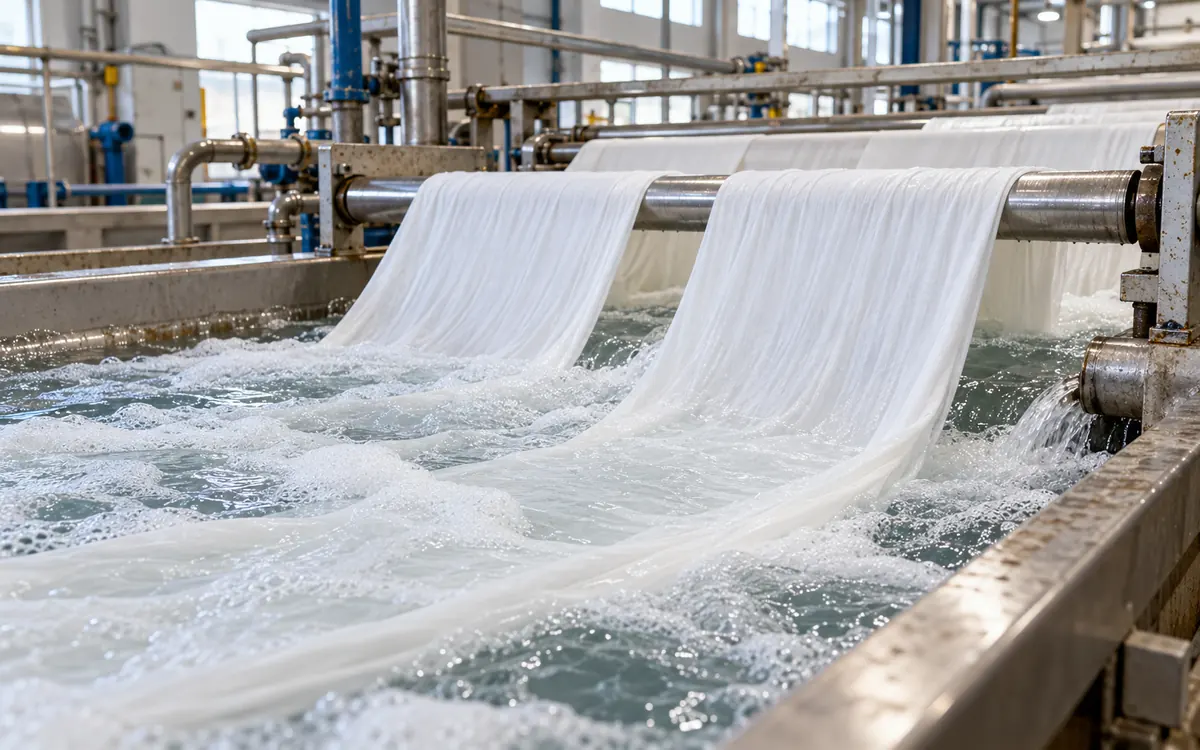
Garment wash teams often use the term neutralization loosely. It may mean a pH adjustment. It may also mean removal of an active oxidant or another completion step.
Those are different endpoints. A pH result does not prove that every reactive residue has been removed.
ISO 3071 provides a method for the pH of an aqueous textile extract. It does not identify every chemical in the extract. It cannot prove the absence of an oxidizing species.
Choose residue checks that suit the qualified route. Agree the test location and sampling stage with the supplier and laboratory. Define the method and pass limit too.
Inspect the garment just after wet processing. Inspect it again after drying. Some appearance changes become clearer later.
Keep the results together but separate. The extract pH may pass. A residue check for that route may remain unresolved. One passed result does not fully clear that garment.
Compare effects under a stable viewing setup
Use the agreed lighting and viewing distance. Lay or hang each garment in the same way. Otherwise, folds may create false patches.
Keep the garment dry. Use the defined assessment condition. Damp fabric often looks different from the same fabric after it has settled.
Use a consistent background. Compare front and back, then review the mapped regions at a closer distance.
Use a controlled setup for photographs. Include the sample identity. Avoid automatic image adjustments. These can change exposure or contrast between samples.
A photograph records the viewing conditions. It is not an absolute colour standard. If the decision is close, use the physical garment. Follow the agreed colour assessment method.
Several people may judge the effect. Check that they read the boundary samples in the same way. Resolve disagreements before bulk sorting. Otherwise, inspectors may grade pieces differently.
Use image measurements as supporting evidence
Carefully defined image analysis can help compare patch coverage. It should support visual approval rather than replace it.
Consider a hypothetical development exercise. Photograph a fixed region under controlled conditions. The chosen rule classes 28% of this area as light.
A second garment gives 31% under the same rule. That difference may be useful. It does not show whether patches are small, large, connected or well placed.
Changing the lighting can change the result. So can changing the threshold used to classify light areas. Keep those settings fixed. Retain the original images.
Do not call the percentage a standard acid-wash grade. It is an internal measure. State its method.
Use it to answer a focused question. It may show too much light area in the seat region. The whole-garment view can then show whether the shape of that area is acceptable.
Read contrast and coverage as separate features
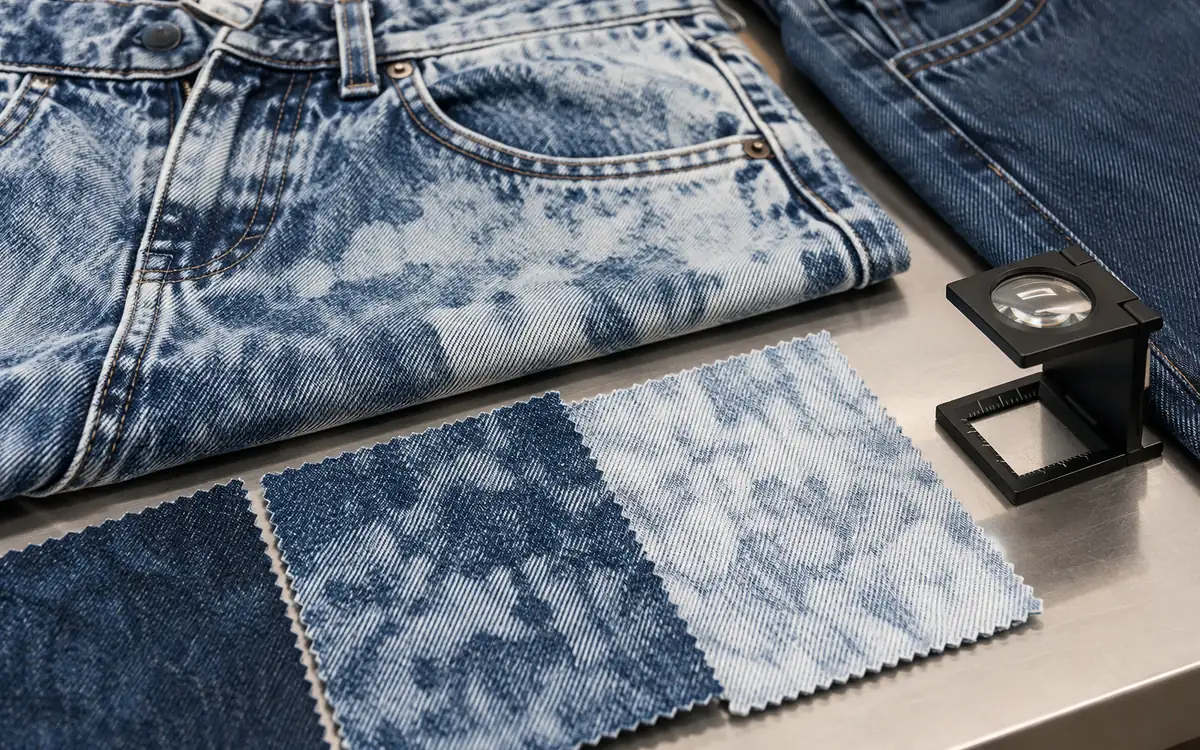
Consider two hypothetical garments with the same light-area coverage of 30%.
Garment A has a dark-region lightness value of 30 and a light-region value of 70. Its simple lightness difference is 40 units.
Garment B has a dark-region value of 40. Its light-region value is 65. Its difference is 25 units.
The equal coverage does not mean equal contrast. In a suitable controlled comparison, A will have a sharper divide.
These values illustrate the distinction. They do not prescribe a colour instrument setting or pass limit. Choose measurement geometry and sampling that suit the product. Account for texture too.
One pair of spot readings cannot describe the whole garment. A mottled surface may need several mapped readings and a visual review.
Use the numbers to explain an appearance decision, not to hide it. A buyer should still understand the allowed variation.
Check local integrity in the palest regions
Give the region with the strongest visual effect a close check. Compare it with less affected areas and the untreated control.
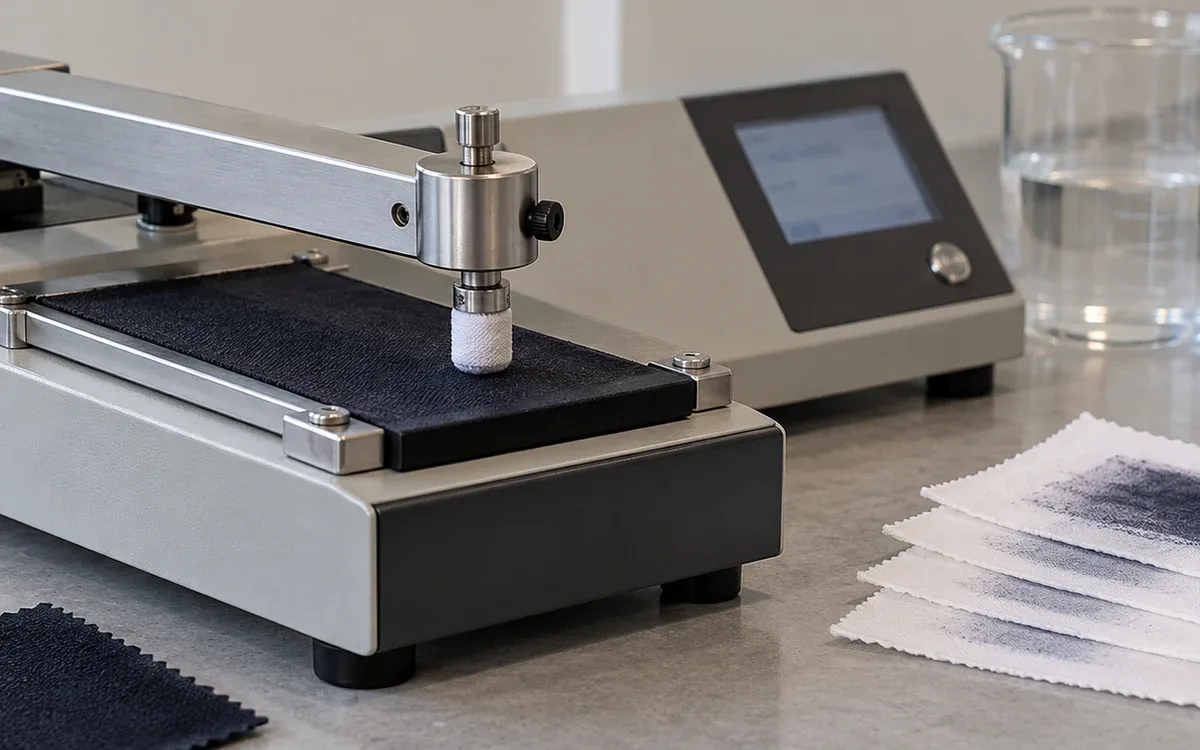
Use the strength methods required for the product. Have a competent laboratory perform them. ASTM D5034 covers grab and modified grab breaking-strength procedures for appropriate fabrics. Its scope cautions against use for high-stretch fabrics. Confirm that it suits the product before assigning it to stretch denim.
Results from different methods cannot be swapped directly. A grab result, strip result and tear result answer different questions.
Plan specimen locations before cutting. Photograph and label them. This connects the test report to the garment's appearance.
A whole-panel average can conceal a local weak zone. The design may permit irregular colour. It still needs a suitable strength limit.
Inspect seams, belt loops, pockets and closures separately. Their shape may hide the fault from a standard fabric test. That fault may still matter in use.
Work through a hypothetical strength decision
Consider an agreed test on a suitable rigid woven denim. Suppose the matched control has a mean of 900 N. Test two trial routes. The table shows their results in the specified light regions.
Route | Mean post-process result | Retention versus control | Visual decision |
|---|---|---|---|
A. | 765 N. | 85%. | Mottling within the brief. |
B. | 630 N. | 70%. | More pronounced effect. |
Retention for Route A is 765 ÷ 900 × 100 = 85%. For Route B it is 630 ÷ 900 × 100 = 70%.
The hypothetical project requires at least 700 N under that method. Route B therefore fails even if its appearance is attractive.
The 700 N limit belongs only to this example. It is not a universal denim requirement.
Route A also needs the remaining checks. Its mean result cannot approve every specimen. Nor can it approve every local region. Apply the agreed decision rule. Review the individual data.
This makes approval depend on both design and function. A stronger visual effect does not always mean a better process.
Validate trims and enclosed areas
The shell may be the most visible part of the wash. The garment's other components still have to work.
Inspect metal surfaces for changes. Check nearby fabric for staining. Operate zippers and snaps after the complete route.
Check whether labels and prints remain readable and attached. Look for colour transfer too. A label may survive the wet stage. It may still change during later drying or care.
Turn out pocket bags and inspect enclosed spaces. Look for trapped media, loose particles and residual marks.
For an elastic waistband, use the agreed force and recovery checks. Hand feel alone may miss a change in function.
A component may not tolerate the qualified route. Consider a different assembly sequence or another approved component. Do not assume an untested protective cover solves the issue. The cover itself can alter local contact and appearance.
Make final drying part of the approval
Drying conditions can affect the final appearance, shape and handle. Record the actual approved route. The heat source alone cannot predict the colour outcome.
It is too broad to assign one colour cast to all gas dryers. The same applies to all steam-heated dryers. Consider the garment, process residues and temperature history. Equipment operation also matters.
Use the same final condition for trial comparisons. Do not approve one sample while damp. Dry and finish both samples before comparing them.
Inspect the garment again after the defined settling period. Check dimensions and local surface appearance.
A shade or yellowing problem may develop later. Preserve samples from different stages to investigate it. This can reveal when the change appeared. Was it immediate, or did it arise during storage or finishing?
A retained approval sample should represent the final packed state. Link any required care evidence to it.
Investigate delayed yellowing without guessing
Yellow or brown areas can have more than one cause. A visible mark does not identify the chemical responsible.
Map the affected locations. Are they concentrated in folds, near trims, inside pockets or across the whole garment? Compare treated and untreated controls where available.
Review the completion evidence for that route. Check rinsing records and drying history. Keep samples for appropriate laboratory investigation.
Do not repeatedly apply a correction product until the colour disappears. That can add exposure and make the original cause harder to identify.
A correction may work on one test piece. Still check its strength and construction. Removing the mark proves only a visual change. The earlier or later treatment may still have changed the fabric.
If the cause is still unclear, hold the affected material. An approved route needs a stable result. A brief visual improvement is not enough.
Approve a range from representative samples
Choose trial samples that cover the known sources of variation. These may include material lots, garment sizes and different construction details.
Choose samples that answer the process question. One sample size may miss a problem. A larger garment may fold differently and receive a different effect.
Review several garments together. A group view can reveal differences that are hard to see in one piece.
Consider a hypothetical 24-garment pilot. Suppose 18 match the approved appearance range. Four are too light in one region. Two have damaged pocketing. Do not report only an average appearance score.
The first-pass acceptable share is 18 ÷ 24 × 100 = 75%. Keep separate cause records for the six failures. Their corrections may differ.
This small pilot describes the observed sample. It does not establish a precise long-term production defect rate.
Decide how to handle off-standard pieces
Before bulk sorting, define what may happen to each piece. A piece may be accepted or held for review. Other options are a qualified correction or rejection.
An appearance correction can create a new integrity risk. A garment near its strength limit may not tolerate further processing.
Adding colour may not restore an over-light piece to the approved effect. The surface pattern and local material loss may remain different.
Keep reprocessed pieces marked until the final checks are complete. Apply the same final product requirements to them. Do not use a weaker unofficial standard.
Several appearance grades may be sold. Each needs an approved specification. State where each grade may be sold. Production should not invent a lower grade to clear a difficult lot.
Record the decision and its reason. Use that information when choosing the next development route.
Evaluate newer systems without repeating broad claims
Supplier systems may offer different ways to produce colour removal or washed effects. Rudolf's garment finishing range offers some examples. It positions products as alternatives for certain bleaching or permanganate uses.
Use such information to start a technical discussion. It does not prove an exact visual match on the intended denim.
Compare the complete approved outcome. Include residues, garment strength, handling requirements and accepted yield.
To make an environmental claim, measure how resource use changes. Compare routes over the same process boundary. Include completion stages and repeat work. Do not compare only the effect-making step.
A new system may require a revised appearance brief or equipment route. State that change before adopting it.
Frequently asked questions
Is acid wash simply washing denim in acid?
No. The trade name covers a distinctive finish and historically related process routes. The actual chemistry must be identified from the qualified process.
Does an acceptable pH prove that the treatment is complete?
No. Extract pH and residual active chemistry are different checks. Use the methods relevant to the actual route.
Should every garment have the same pattern?
An irregular effect normally allows variation. Define its acceptable range. The word random does not justify uncontrolled defects.
Can average shade approve a mottled garment?
It is incomplete evidence. Coverage, contrast, patch scale, placement and local integrity also matter.
Can an off-standard garment always be rewashed?
No. Further exposure may alter strength, dimensions and trims. Use only a qualified correction within the garment's remaining performance limits.
Approve the effect and the garment together
A strong acid-wash specification shows and limits variation. It describes the mottled appearance and qualified route. It separates pH from other completion checks.
Check the lightest regions and hidden components. Validate final care performance. Then approve a range based on samples that represent the product. The finish can then be explained, inspected and repeated. Local damage stays distinct from the intended design.
References
US5322637A: Historical distressed-denim treatment and yellowing discussion.
ILO/WHO ICSC 0672: Potassium permanganate.
ILO/WHO ICSC 1461: Sodium metabisulfite.
ISO 3071: pH of aqueous textile extract.
ASTM D5034: Fabric breaking strength and elongation by grab procedures.

Discussion0
Loading the discussion…