
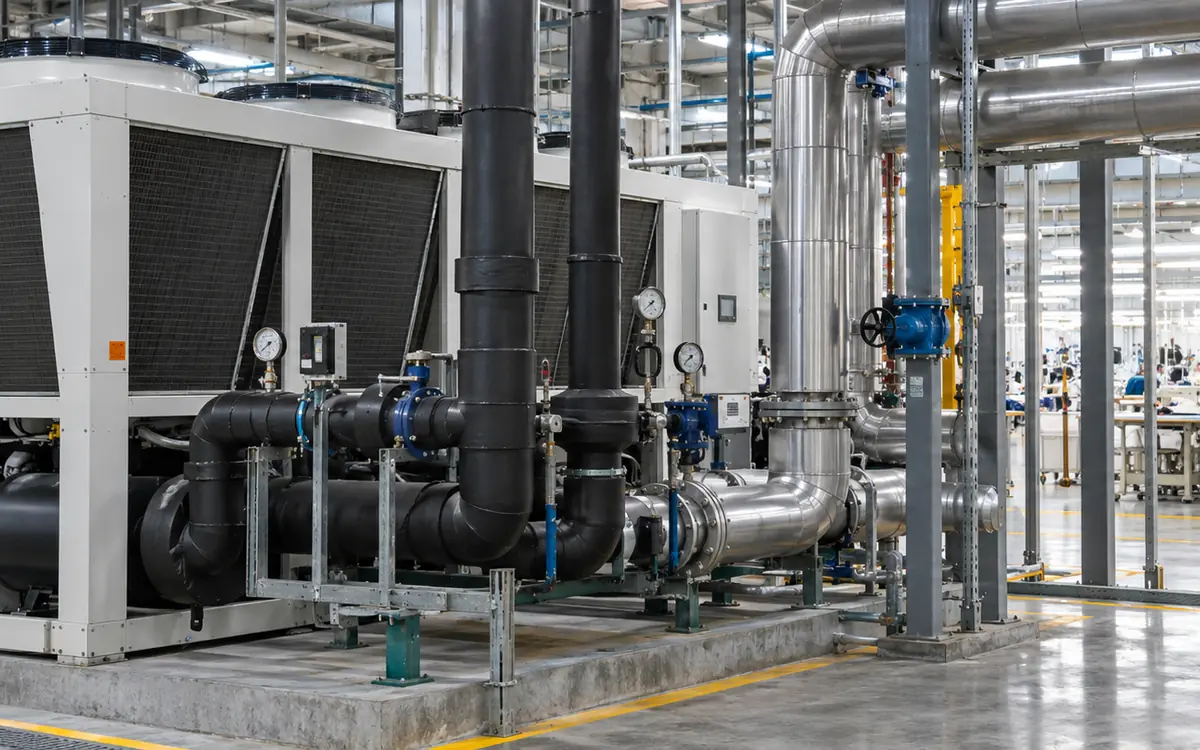
An energy performance contract links a supplier's work to a defined result. For a garment factory, that result might be less power for the same air flow, less fuel for the same steam service, or a lower cost for a set cooling duty. The difficult part is deciding how to prove the result and turn it into a payment.
A promise to save 20% does not answer those questions. Twenty per cent of which load, at which price, under which work pattern? Who pays if orders fall? Who repairs a failed part? What happens when the factory adds a new line?
This guide explains the terms that connect energy savings to cash. It uses original, hypothetical examples. The prices, shares and guarantees are teaching figures. They do not represent market quotes or terms suitable for every factory.
Start with the result and the service it must preserve
The US Department of Energy's overview describes a contract in which a contractor designs and installs energy measures and guarantees performance. Funding may come from the contractor, the owner or another party. The label alone does not reveal who supplies the cash.
Write the required service before the savings target. A cooling project must still meet the agreed room conditions. A steam project must supply the required duty. A lighting project must meet the approved light levels and other needs. Lower energy use caused by poor service is not a useful factory result.
Define the physical scope too. List the machines, pipes, meters and controls covered by the work. Mark the limits on a plant drawing. A vendor may improve one pump while an extra fan raises energy use elsewhere. The contract needs a rule for such effects.
Keep the promised result clear enough to test. “Improve efficiency” is an aim. “Meet this measured duty within this agreed energy limit” can support a test and a remedy.
Separate the price model from the source of funds
A factory can pay a fixed price for work and still obtain a performance guarantee. It can share savings while funding some of the equipment itself. It can also pay a service fee without receiving any guarantee of energy savings.
The IEA's explanation of ESCO contracts distinguishes guaranteed savings and shared savings models. In a common guaranteed savings model, the client funds the project and the energy service company, or ESCO, takes the stated technical risk. In a shared savings model, the ESCO may fund the work and receive a share of the savings. Actual terms still govern each deal.
Commercial form | Main payment basis | Question to resolve |
|---|---|---|
Fixed project price | Agreed work and acceptance | What result is warranted? |
Guaranteed savings | Fees plus a defined savings promise | How is a shortfall settled? |
Shared savings | A stated share of an agreed savings pool | What enters or leaves the pool? |
Service fee | Time, service or availability | Does the fee depend on savings? |
Hybrid | More than one basis | Are any costs charged twice? |
Do not treat “no upfront cost” as “no cost.” Ask for the full payment schedule, fees, ownership terms and exit price. A long payment term can shift cash timing while raising total cost.
Agree what the word savings means
Energy savings compare actual use with an estimate of what use would have been without the project. That estimate is the baseline, adjusted for the agreed conditions. A smaller bill alone does not prove savings caused by the project.
For payment, the contract must also convert energy into money. It may use a fixed reference price, actual tariffs or a defined price formula. Each choice allocates price risk in a different way.
The FEMP guide, version 5.0 provides methods for checking energy, water and related savings. It is written for US federal projects, but its technical planning methods are useful elsewhere. Its federal contract rules do not automatically apply to a private apparel factory.
Define whether the savings pool includes demand charges, water, chemicals, labour or repair costs. Each claimed benefit needs its own evidence. Avoid a broad “other savings” line that can grow after the contract is signed.
Use a worked payment schedule before signing
Consider a hypothetical cooling project. Its approved baseline, adjusted to the reporting year's conditions, is 1,000,000 kWh. Actual use within the agreed scope is 820,000 kWh. The accepted energy saving is therefore 180,000 kWh.
Assume the payment schedule uses USD 0.12 per kWh. It also accepts USD 1,800 of demand charge savings. Extra project costs of USD 2,400 for upkeep and USD 1,200 for checking savings are deducted before sharing.
Item | Calculation | Annual amount, USD |
|---|---|---|
Energy cost saving | 180,000 kWh × 0.12 | 21,600 |
Accepted demand saving | Separate tariff calculation | 1,800 |
Gross accepted benefit | 21,600 + 1,800 | 23,400 |
Added upkeep cost | Agreed deduction | −2,400 |
Savings checking cost | Agreed deduction | −1,200 |
Net savings pool | 23,400 − 3,600 | 19,800 |
If the ESCO receives 70% of this net pool, its payment is USD 13,860. The factory keeps USD 5,940 before any other obligations. State whether tax is included. State who pays each deducted cost and when.
Now test the same words against another reading. If the ESCO takes 70% of gross benefit, it receives USD 16,380. If the factory also pays all USD 3,600 of extra costs, it keeps only USD 3,420. The phrase “70% shared savings” can therefore hide a USD 2,520 difference in this example.
Check a guaranteed savings shortfall
Use a separate example for a guarantee. Suppose a project promises USD 30,000 of annual savings on a defined basis. The factory has USD 24,000 of annual finance payments and USD 3,000 of service fees. The planned retained cash is USD 3,000.
After the agreed review, accepted savings are only USD 26,000. If the contract requires the ESCO to pay the full guarantee shortfall, the amount is USD 4,000. The factory then has USD 26,000 plus USD 4,000, less USD 27,000 of payments, leaving USD 3,000.
That outcome depends on the actual remedy. The contract may instead allow repair, a payment credit, a later cure period or another rule. Check payment timing, limits, exclusions and evidence. A future credit does not provide the same cash timing as money paid now.
Also check the upside. If savings reach USD 36,000, who keeps the extra USD 6,000? A guarantee and an incentive can exist together, but both need a clear formula. Avoid assuming that all gains above the guarantee belong to one party.
Allocate energy price risk explicitly
A project can meet its energy target while its cash benefit falls. In the first example, the 180,000 kWh saving is worth USD 21,600 at USD 0.12. It is worth USD 16,200 at USD 0.09. The physical saving is unchanged; its value has fallen by USD 5,400.
A fixed reference price can keep the ESCO's test focused on energy performance. It can also leave the factory exposed to a gap between contract value and bill value. Using actual prices shifts more of that risk into the payment calculation. Neither approach should be hidden in a spreadsheet.
Demand charges need a separate check. Saving energy does not always reduce the billed peak. A minimum charge, demand ratchet or another tariff rule may limit the cash benefit. Test the proposed method against the site's actual tariff structure.
If the agreement includes price escalation, identify the index, starting date, frequency and any cap. A fixed annual percentage is an assumption, not proof of future tariffs. Keep reference-price savings and actual bill effects visible in management reports.
Put each major risk beside an owner
The FEMP risk and responsibility guide shows how to record risk allocation across financial, operating and equipment issues. It also makes clear that a summary matrix needs supporting terms in the contract. A tick beside “shared” is not enough.
For a factory tender, use a project-specific matrix like this one:
Event | Decision needed | Evidence to retain |
|---|---|---|
Equipment fails | Repair duty, response time and savings treatment | Fault log and service report |
Factory cuts operating hours | Baseline change and any minimum payment | Approved shift records |
Product mix changes | Relevant load adjustment | Production and process data |
Tariff changes | Reference or actual price treatment | Tariff notices and bills |
Meter fails | Temporary estimate and repair duty | Meter test and missing-data log |
Factory adds equipment | Scope change and review route | Design and commissioning records |
For each row, name the person who must report the event. Set a notice period and a decision route. Identify what happens while the parties disagree. This turns a risk discussion into a usable operating process.
Treat production changes fairly
Apparel orders can move between styles, lines and shifts. A lower production year may reduce total energy use without any technical improvement. A higher production year may raise bills even when the project works well.
Agree the variables used to adjust the baseline before the work starts. They may include operating hours, output, weather or a measured process duty. The method should match the physical cause of energy use. Counting finished pieces may be a poor choice when styles have very different process needs.
Test a shutdown scenario during the tender. Ask each bidder to show the payment if the factory closes for two months. Ask the same for an extra shift and a new production hall. These are useful stress tests, not predictions.
Do not let either party change the baseline alone after seeing the result. Keep a change log with the cause, evidence, method, approval and effective date. A fair change protects the original bargain without turning every poor result into an excuse.
Make the savings plan part of the contract
Measurement and verification, or M&V, means checking and quantifying savings. Its plan should state the boundary, baseline, meters, variables, calculations and reporting schedule. It should identify which values are measured and which are fixed by agreement.
FEMP's description of the project stages explains why baseline records must be captured before the old system changes. Once equipment is removed, some evidence cannot be recreated.
Ask the bidder to deliver a sample annual report using the proposed method. It should trace a raw reading through the calculation to the invoice. Give the same sample data to the factory reviewer. If the reviewer cannot reproduce the payment, the method is not yet ready for use.
Agree how missing data, meter drift and model limits will be handled. Do not use a general claim of “IPMVP compliant” as a substitute for the actual plan. The site still needs a defined method, data and review process.
Tie acceptance to a working system
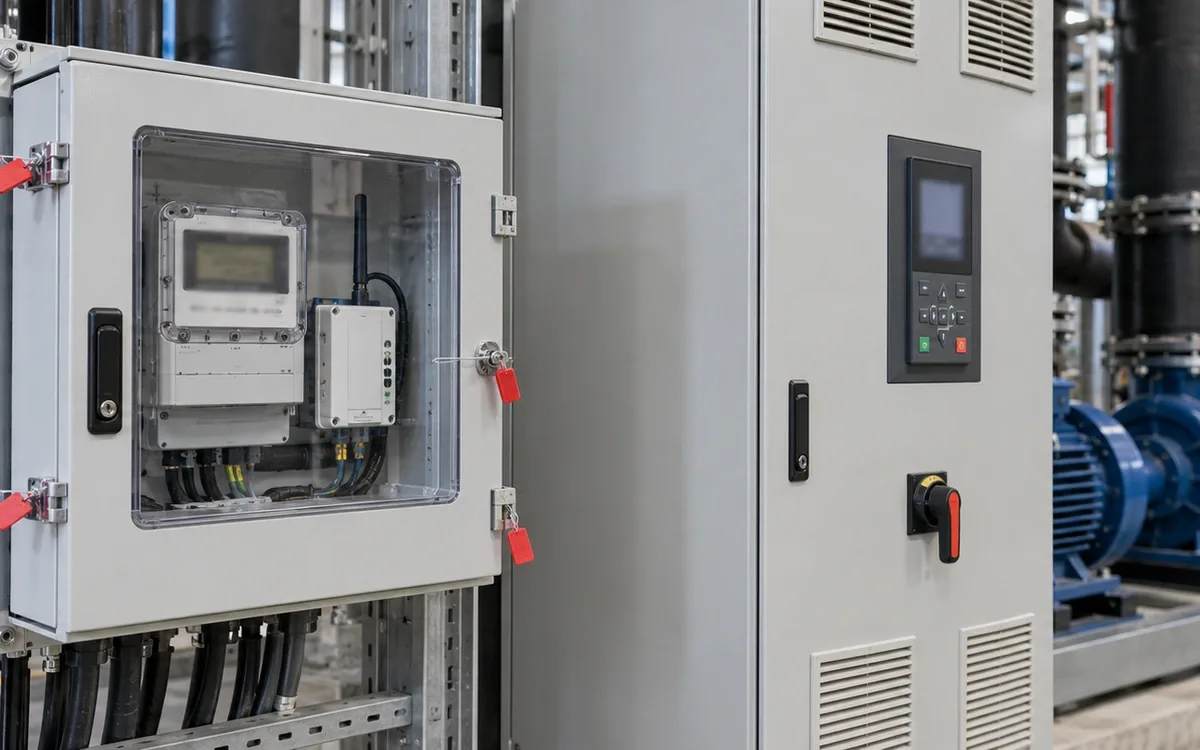
Separate delivery, installation, commissioning and acceptance. A machine on site is not the same as a system that meets the agreed duty. Define the tests and records needed at each stage.
Include the service conditions in the acceptance test. A fan's lower kW is not enough if required air flow is lost. A new heat recovery system must be checked for its effects on the original process. Use staff who understand the production limits to witness the relevant tests.
The DOE quality assurance guidance connects delivery of the required equipment and service with ongoing proof of savings. That principle helps prevent a contract from ending its technical review when the equipment is switched on.
Keep unresolved items in a dated list. State which items block acceptance, which can close later and how any retained payment is released. The final record should include settings, drawings, manuals, training and meter details.
Define upkeep duties in enough detail to use
“Factory to maintain equipment” is too broad when savings depend on upkeep. List the tasks, intervals, parts, skills and records required. Define who can change control settings and who must approve a change.
If the factory must clean a heat exchanger, the ESCO should provide a clear method and trigger. If the ESCO must replace sensors, the service term should state response time and access needs. Both parties need a route for urgent faults.
Avoid blanket loss of the guarantee for any missed task. The agreement should explain how a failure affects performance and how the effect is assessed. A small record gap and a disabled control system are different events.
Plan staff handover. A contract may outlast several plant engineers. Keep the task list, passwords under approved access controls, settings and contact details in a managed site record. A departing employee's memory is not a reliable part of the guarantee.
Protect access to data and the right to review
The factory needs usable access to the data behind its payments. Define the raw data format, export frequency, retention period and ownership. Include meter settings, time stamps and changes to calculation versions.
A dashboard picture is not enough to reproduce a bill. Ask for readable files with units, channel names and quality flags. If software is involved, define what happens when the subscription or vendor service ends.
Set the review timetable. The ESCO submits a report; the factory checks it; both resolve questions; an authorized person approves payment. Keep the technical review separate from the release of money. ApparelDiary's factory payment controls guide explains how to divide those duties.
The agreement should allow a suitably skilled independent reviewer to inspect the relevant evidence. Define who pays for that review and how disputed findings are handled. Review rights have little value if the underlying records cannot be obtained.
Compare bids on the same basis
Give all bidders the same boundary, service needs, baseline data and scenarios. Ask each to state exclusions in the same schedule. Compare the full term, not just the first year's fee.
Show the factory's cash flow under expected, low-use and poor-performance cases. Include upfront costs, service fees, M&V costs, repair duties, tax assumptions and end-of-term costs. Show the remedy as a separate cash flow rather than treating it as certain cash on the original due date.
If the deal includes borrowing, assess the finance terms separately. ApparelDiary's guide to comparing factory loan costs covers fees and timing beyond the headline rate. A strong energy guarantee does not make expensive finance cheap.
Check whether one project can claim the same benefit as another. A controls upgrade and a motor replacement may interact. Their separate savings claims cannot always be added. Require a combined calculation for shared loads.
Check minimum fees and the time when cash moves
A low-use year can expose terms that seem minor in the sales offer. Ask whether the payment has a floor. Does the factory owe a fixed service fee even when the savings pool is small? Does the share apply before or after that fee? Can unused savings from one year offset a shortfall in another?
Consider a further hypothetical case. The annual net pool falls to USD 8,000. A 70% share would be USD 5,600. If the contract instead sets a minimum annual payment of USD 9,000, the factory pays USD 1,000 more than that year's net pool. This may be an agreed financing term, but it is not the same as paying only from savings.
Timing matters too. Monthly fees may fall due long before an annual shortfall is settled. The factory needs cash to cover that gap. Ask for a calendar showing when meters close, reports arrive, invoices fall due and credits are paid. Test a delayed report as well as a poor result.
Review the strength of the party making the promise. A large guarantee from a firm unable to meet it may provide little practical protection. Ask how a claim would be funded and what agreed security supports it. Have the relevant finance and legal staff assess the evidence. Do not treat the guarantee's face value as cash already held by the factory.
These checks help separate technical confidence from credit and timing risk. A good engineering result, a sound payment formula and a collectible remedy each solve a different part of the deal.
Test the exit and handover terms early
Factory plans change. A site may move, close, be sold or replace a process before the contract ends. Ask for the exit calculation while the deal is still being compared.
Identify the owner of each asset during the term and at its end. State who removes equipment, who repairs damage and who keeps the data. Define whether software licenses and control access transfer with the hardware.
An early exit schedule may include unpaid capital or other agreed costs. Check the calculation with finance and legal staff who know the site and its law. The commercial examples here do not replace review of an actual contract.
At normal expiry, arrange a condition check and handover test. Obtain current drawings, maintenance history, settings, spares and training. A project should leave the factory able to operate the system after the service team has gone.
Run a trial settlement before the first invoice
Use one agreed reporting period to run the full payment process. Treat it as a rehearsal with real data. Confirm that the meter records arrive, the calculation runs and both sides reach the same answer.
Start with the energy quantity. Check the baseline adjustment and actual use. Then check the price conversion, other benefits, allowed costs and sharing rule. Record each stage in a separate line so a disputed item can be isolated.
Suppose the draft invoice includes a demand saving that the current bill does not support. Remove that claim pending evidence, without losing sight of valid energy savings. The review should resolve a specific number, not force an all-or-nothing argument about the whole project.
Keep an approved settlement example with the contract. Future staff can use it to understand the intended calculation. If terms change later, create a new worked example and retain the old one with its dates.
Frequently asked questions
Does a shared savings deal always include a guarantee?
No. A share defines how an accepted benefit is divided. A guarantee defines a minimum result and a remedy. Read both terms. A deal can include either or both.
Can lower utility bills be used directly for payment?
Only if the agreed method fairly accounts for the relevant changes. Bills can change with tariffs, production, weather and unrelated equipment. The payment method must separate those effects to the extent the contract requires.
Who should verify the ESCO's report?
The factory should assign a person with the skills and authority to review it. An independent specialist may be useful for a complex project or dispute. The review route and access to records should be set before work begins.
Is the lowest savings share the best offer?
Not by itself. Compare the savings pool, fees, service duties, guarantee, term and exit cost. A small share of an inflated pool may cost more than a larger share of a sound one.
Make the payment rule as clear as the engineering
A sound factory energy performance contract joins three things: a required service, a credible savings test and a clear cash settlement. Work through normal and difficult cases before signing. Define who owns each risk and record the evidence needed for each payment. The result is a deal that plant, finance and service teams can use throughout its life.
References
US Department of Energy: Energy Savings Performance Contracts.
FEMP: M&V Guidelines, version 5.0.
FEMP: Risk, Responsibility and Performance Matrix guidance.
FEMP: M&V activities through the contract process.
DOE: Quality Assurance in Energy Savings Performance Contracts.


Discussion0
Loading the discussion…