
Part 1 ended with four questions. Real ones, the kind that stay with you. Let's answer them one by one, in plain words, like a friend explaining it over tea, not like a report.
Question One: Who's Really Winning These Orders?
Here's the simple truth. It's rarely the factory that offers the lowest CPM (cost per minute) this season. It's the factory that was even allowed to quote a price in the first place.
More and more, buying houses and brands make a shortlist before price is even discussed. A factory has to pass a safety and compliance check first. Only after that does anyone open the costing sheet. Get on that shortlist, and price still matters. But getting on the list is where the real fight happens now, and two cents won't get you there.
The numbers back this up. By mid-2026, Bangladesh had around 290 LEED-certified garment factories, more than any other country, and 53 of the world's top 100 highest-scoring LEED factories are here. That's not a side project for a press photo. It's a ticket into the room. It works the same way a proper hazard and risk assessment works on a factory floor. It doesn't win you the order by itself. It just makes sure you're still in the game.
Question Two: Why Doesn't Winning an Order Keep the Buyer?
This answer stings a little, because it's simple. If you win only because you were cheapest this month, the buyer has no reason to stay next month either. Cheapest is not loyalty. It's a moving target, and someone else will always chase it lower.
Buying houses often do this on purpose. Most keep three or four approved factories for the same style, not one. That way, no single factory feels safe enough to stop competing. It isn't personal. It's just how they protect their own negotiating position.
Loyalty only sticks when leaving actually costs the buyer something. A factory with a clear, visible track record, the kind a real factory dashboard gives you, is harder to walk away from than one that just happened to be cheap this week. Switching to an unproven factory is a risk for the buying house too. A known factory with a clean record removes that risk. That is worth more than a fraction of a cent, even when it doesn't look that way on the surface.
Question Three: What Do the Survivors Actually Do Differently?
This is the part worth slowing down for, because the answer isn't secret. It's just not exciting to say out loud.
First, many of the strongest factories make more of their own raw material instead of buying everything from outside every single time, something the industry calls backward linkage. If you spin your own yarn or make your own fabric, you're not stuck waiting on someone else's price to change before you even start your own quote.
Second, they treated safety as something you build into the walls, not paperwork you fill out once a year. This has real history behind it. In 2013, the Rana Plaza building collapse took the lives of over a thousand garment workers. It remains one of the worst industrial tragedies this sector has seen. What came after was real change: the Accord and Alliance safety programs, later combined into the RMG Sustainability Council, made building and fire safety a basic requirement for working with major global brands, not an extra. Factories that took this seriously early, building on things like fire safety and building compartmentation planning, weren't just avoiding risk. They were earning a seat at the table before price ever came up.
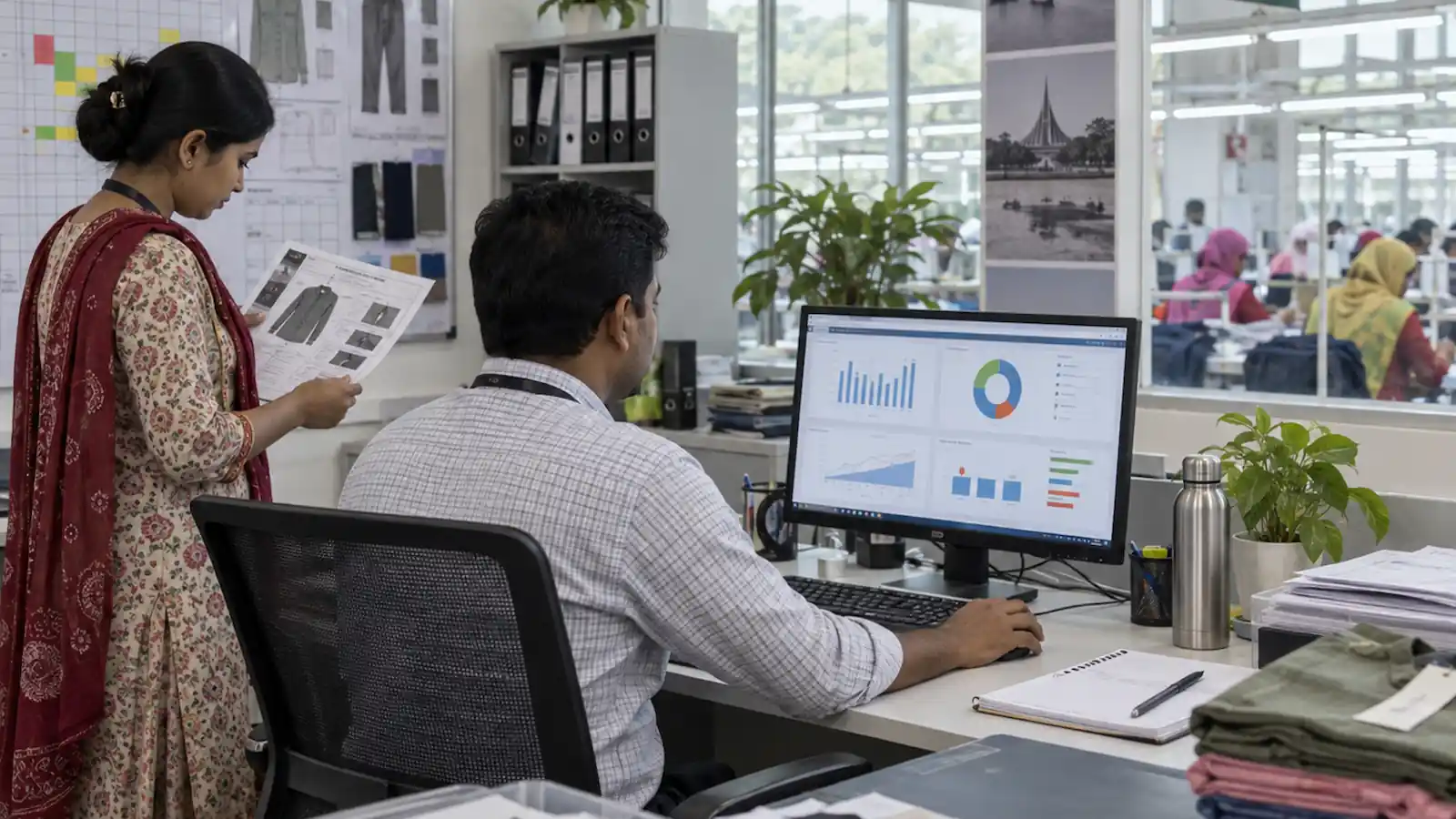
Third, and this is the part more people are starting to talk about now: the survivors run on systems, not memory. A good ERP (Enterprise Resource Planning, basically one shared system that connects every department) lets a factory see a problem the same day it happens, not three weeks later when the shipment is already late. That speed matters more than people think. A former BGMEA president publicly warned in 2026 that Bangladesh risks losing ground to Vietnam if factories don't move faster on automation and digital tools, and one industry report found that less than 15% of RMG operations in Bangladesh are currently automated in any real way. That's not a small gap. It's a wide open door for the factories willing to walk through it.
This is really about two things working together. One is proper SOPs (Standard Operating Procedures), clear, written steps for how a task gets done the same way every time, no matter who's doing it that day. The other is digital transformation, meaning the SOP actually lives inside a connected system instead of a binder on a shelf, so everyone from the cutting floor to the shipping desk is working off the same live information. A good example of this already exists on this site: a proper kanban pull system between cutting and sewing is really just an SOP that removes guesswork from a handoff.
And underneath all of it is one simple idea worth naming clearly: operations management and supply chain management are not two separate jobs, they're two ends of the same rope. Operations management is about running the factory floor well. Supply chain management is about making sure the right material shows up at the right time and the right product goes out the door on time, something covered well in how a factory chooses between an EOQ or periodic review inventory policy. When these two are connected through one system instead of two separate departments guessing at each other, decisions that used to take a week can happen in an afternoon. That speed, more than any single price cut, is what keeps a factory in the room season after season.
Question Four: Where's the Government in All This?
Nobody answers this one simply, and honestly, it shouldn't be simple. Here's the hard part: CPM isn't standardized in Bangladesh, but it isn't standardized in Vietnam, Cambodia, or India either. Global buyers shop around on purpose. No government anywhere has managed to fix a labor-minute price across an entire export industry without buyers simply working around it.
So if fixing the price directly was never realistic, what actually helps? Probably the less exciting but more honest answer: making it easier for more factories, not just the biggest ones, to reach real capability. Bangladesh's own LEED numbers and the safety reforms after Rana Plaza already prove that the floor can be raised when there's enough will behind it. The next useful step likely isn't price control at all. It's support for smaller factories to reach compliance and digital readiness faster: financing help, stable utility and energy policy, and export logistics that don't quietly eat into the margin a factory just fought to protect.
That's a less dramatic answer than "fix the price war." But it matches how this industry has actually changed before, not through a fixed number, but by raising what it takes to even be considered.
Four questions, and not one clean, one-line answer, because the industry itself doesn't work that way. But if there's one thread running through all four, it's this: the factories winning long-term stopped trying to win the price argument, and built systems that made the price argument beside the point.

Discussion0
Loading the discussion…