
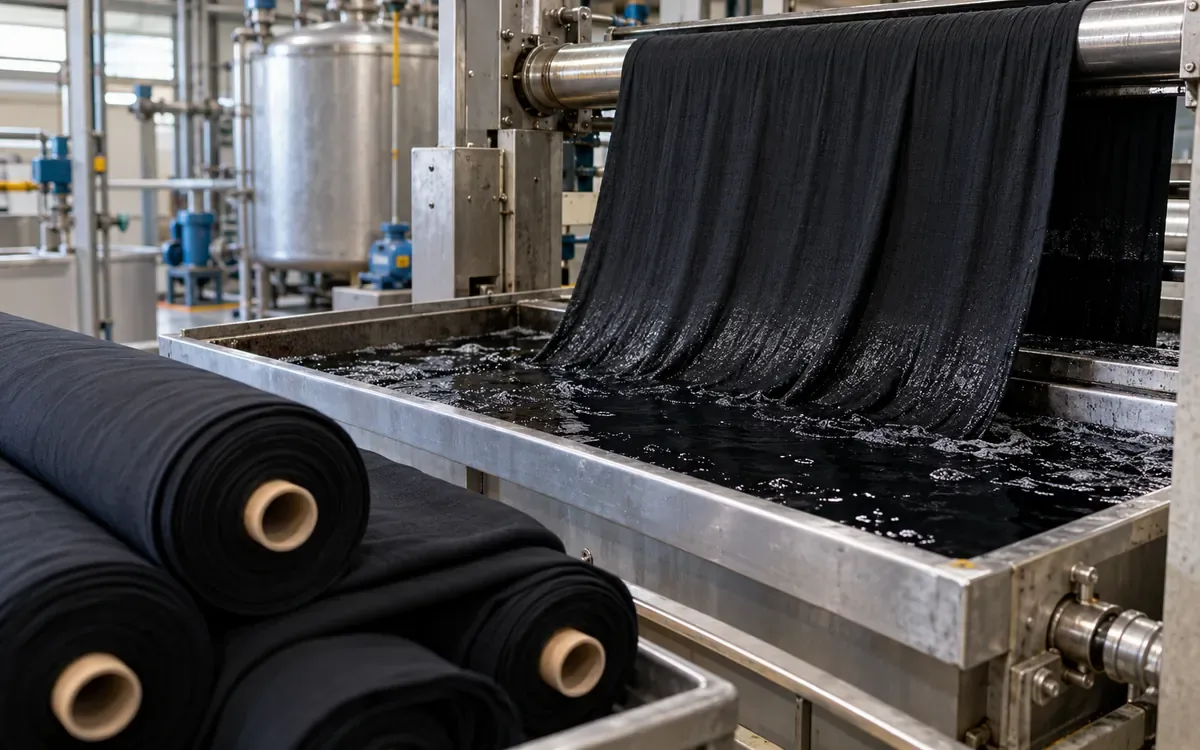
A deep black shade is only the first quality check
Sulfur dyeing gives cotton useful dark shades. Its dye cost can be competitive. The mill must also control rubbing, washing, and oxidation. Check fabric strength after storage too. A roll may look acceptable at the dye range. It can still fail a later test.
A major storage concern is tendering. This means a loss of useful fabric strength. Check both the dyeing route and the aged fabric. Keep colour and strength results separate. One does not reliably predict the other.
This guide covers cotton fabric dyeing and strength checks after storage. The worked cases are teaching examples. They explain decisions and calculations. They are not recipes or limits for every product.
Identify the sulfur dye system before choosing the process
Sulfur dyes are commonly used for black, navy, and muted shades on cotton. Cotton Incorporated notes their value for deep colours. It also describes rubbing and chlorine sensitivity as issues. See its dyeing basics guidance.
The dye class name alone cannot define a bath. Products differ in chemical form and supplied strength. Check their reduction state and intended use too.
A conventional product may require reduction before application. A pre-reduced liquid product has already undergone part of that work. Archroma offers its DIRESUL RDT range as liquid sulfur dyes. They are pre-reduced and have low sulfide content. This describes the named range. It does not describe every sulfur dye sold as a liquid.
Ask for the current technical data and safety information for each selected product. Confirm which reducer and oxidation system suit the dye. Check auxiliaries and the machine route. Run a controlled comparison when the supplier changes. The same colour index name does not remove that need.
Keep three meanings of “strength” apart
Dye strength describes the colouring power of the supplied product. Reducing strength concerns the chemical system. Can it maintain the required reduction conditions? Fabric strength concerns the textile. It describes its resistance in a physical test.
They need different measurements. A darker lab dip does not prove control of the reducing bath. A bath reading may be satisfactory. That still does not prove enough cotton strength will remain after ageing.
Write the complete term on trial sheets. A note saying “strength low” can send the team in the wrong direction.
Follow the dye through its change of form
The conventional route starts with reduction. This makes a dye form that can enter cotton. Oxidation then returns it to a less soluble form. Washing removes material that should not remain on the textile.
Cotton Incorporated's Textile Dyeing booklet describes this sequence. It explains why washing and storage behaviour matter for sulfur-dyed cotton.
Think of the route as a series of handovers:
Stage | Main control question |
|---|---|
Prepared cotton | Can the treatment reach the fabric evenly? |
Reduction and application | Is the selected dye in the required application state? |
Transition to oxidation | Is the fabric following the approved timing and wash sequence? |
Oxidation | Has the dye developed the intended stable colour state? |
Washing and finishing | Are residues and surface colour controlled? |
Ageing assessment | Does the fabric retain the strength required for use? |
Each handover needs its own evidence. Do not release the whole route based on one freshly dried swatch. Its shade gives only part of the evidence.
Establish the fabric's starting condition
Use material from a known lot and record its preparation history. Check whether the input wets evenly. Test any prior chemicals left on it. They must stay within the chosen sulfur system's approved limits.
Retain undyed material from the same lot. It gives the strength investigation a useful reference. The input may already be weak. Without a retained sample, the team may wrongly blame the dyeing route.
Keep width and length positions identifiable. A poor result at one edge may reflect local contact or input variation. A result across the full width suggests a different investigation.
For fabric and liquor dose conversions, see ApparelDiary's liquor ratio and dosing checks. Start the sulfur trial with a correct dose basis. Then focus on reduction, oxidation, and aged performance.
Control reduction as a measured process
The reducer quantity belongs to the validated dye system. Do not assume that one kilogram of reducer is suitable for every kilogram of sulfur dye.
The control needs can change with dye strength and formulation. Oxygen exposure, bath conditions, and other inputs also matter. More reducer does not reliably fix every weak or uneven shade.
Blackburn and Harvey ran an experimental study of reducing sugars in sulfur dyeing. They examined how reduction conditions affected dye performance. The strongest reducing power did not always give the best result. Test a suitable operating range for the selected system. The study does not set one redox target for all mills.
Record the actual pH, temperature, and reduction readings at the required stages. Compare them with the approved limits. Keep interruptions and additions visible. The process may have left its range earlier. A final reading cannot describe that period.
Make redox readings comparable
An oxidation-reduction potential reading is a voltage. An electrode system measures it. The reference electrode and measurement temperature matter.
Hanna Instruments explains these points in its pH and ORP instrument manual. Record the instrument and reference system beside the millivolt result. State the sample temperature and reporting basis too.
A value copied from a paper may use a different reference basis from the plant meter. Check that difference before setting a controller limit. Validate the process with the chosen measurement basis.
Follow the sensor supplier's verification and maintenance procedure. A coated or slow electrode can appear stable. Yet it may give poor evidence about the bath. Investigate unusual response time as well as unusual values.
Connect air exposure to process events
Some routes must keep the dye reduced. Unplanned air contact can then change what reaches the cotton. Record any breaks in circulation or unusual foaming. Note open transfers and delays before the next stage.
Use these observations to design a controlled comparison. They do not prove the cause of a defect on their own.
Do not alter machine covers or gas systems to chase a shade result. Keep ventilation and protective interlocks in place. Follow the approved procedure for equipment and chemical controls.
Treat oxidation as its own controlled stage
Oxidation develops the applied sulfur dye. Choose an oxidant, conditions, and endpoint that suit the product. An old list of oxidizing agents does not recommend a process.
Ask the dye supplier how the intended oxidation route affects shade and fastness. Confirm compatibility with the fabric and the site's chemical requirements.
Preserve the timing of the transition from application to washing and oxidation. One trial may wait much longer than another. If so, the oxidant is not the only difference that could explain the result.
Take samples at defined stages. A sample taken before oxidation can help explain a fault. It has not reached the finished state. Keep that distinction clear when comparing it with a finished reference.
Do not infer completion from colour alone
A colour change may show process progress. It does not measure every residue or reaction. Use the endpoint checks established during validation.
For a fault check, take matched samples. Compare the full route with a controlled lab oxidation. If the results differ, review process conditions. Then decide which correction the evidence supports.
Keep any correction trial separate from the release decision. A successful small sample does not prove that the whole lot received the same treatment.
Understand sulfur-black tendering
Tendering means loss of the cotton's physical strength. Acid can form during storage of sulfur-dyed cotton. This is a known concern. Cotton Incorporated's dyeing booklet describes the risk during hot, humid storage. Sulfur-dyed goods can form acids that attack cellulose.
This is a chemical durability issue. Investigate it separately from mould and abrasion damage. Check whether the fabric was weak before treatment too. More than one problem can occur in the same lot.
A fresh extract-pH result may help describe the current sample. It cannot rule out later acid formation or strength loss on its own.
Do not assume that a mild acid treatment neutralizes acidity in cotton. Choose an anti-tendering treatment for the specific dye system. Verify it with the relevant fabric tests.
Distinguish prevention from attempted repair
Prevention starts with dye selection. Control the dyeing and washing route. Choose a suitable finish and verify the result with ageing tests.
Cellulose may lose strength through damage. Changing its pH does not rebuild it. A lot may fail a strength test. Decide what happens to it based on its actual condition.
Re-treatment may improve the shade or residue result. The fabric may still be too weak for use. Repeat the relevant physical checks after any approved recovery trial.
Use an ageing method that answers the storage question
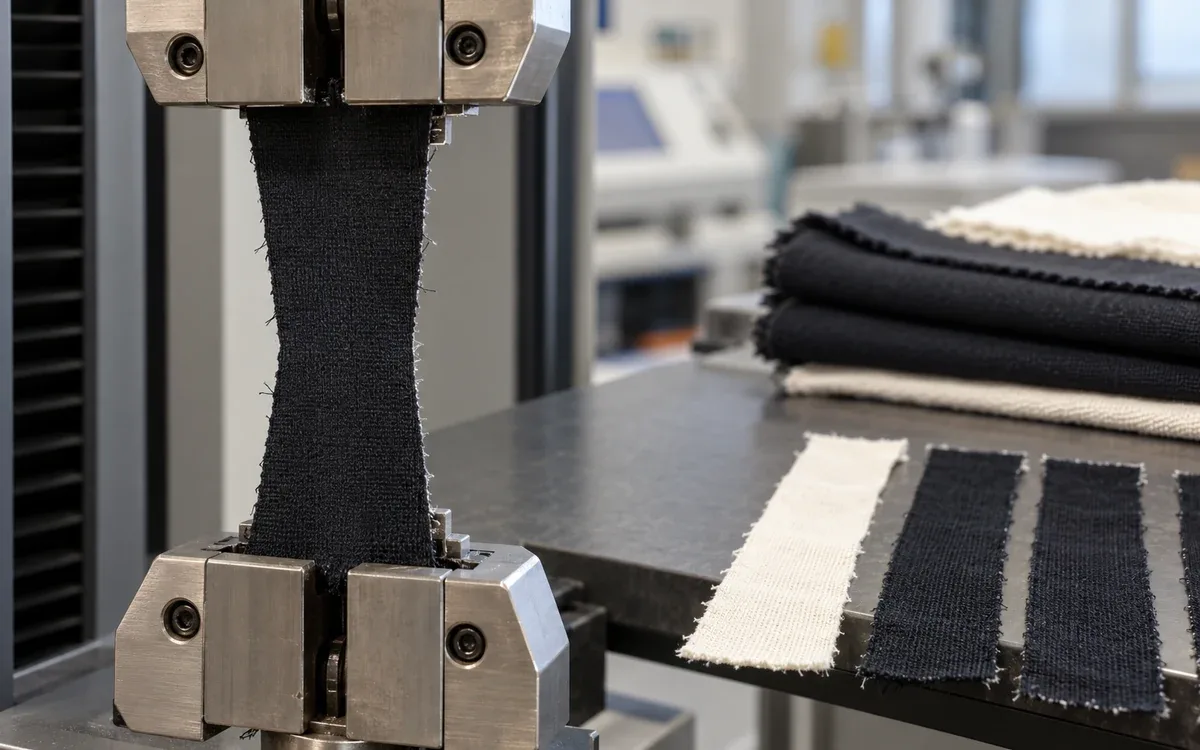
AATCC TM26-2020 covers accelerated ageing of sulfur-dyed textiles. Its public scope describes controlled ageing in moist steam. The test then assesses strength loss.
The complete method defines the test. Use a qualified lab with the required equipment. It needs a controlled copy of the agreed method edition. Do not report an improvised oven exposure as TM26.
The result helps assess the risk of damage under the test conditions. It does not give a fixed link to real storage time. One test hour cannot be assumed to equal one month in a warehouse.
Agree the acceptance rule before testing. The buyer or technical authority should approve it. State the allowed loss of strength. Add any required absolute strength after ageing.
Build the sample set around the actual comparison
In development, save samples at three useful points. First, keep prepared undyed cotton. Next, keep finished dyed cotton before ageing. Finally, keep matched finished dyed cotton after the defined ageing test.
The first comparison asks what happened during processing. The second asks what happened during ageing. Keeping them separate prevents two losses from being hidden in one percentage.
Where relevant, retain a known acceptable sulfur-dyed reference. Use it to investigate an unusual result. Did the test run change, or did the new route cause the difference?
The method defines specimen details and how many tests to run. Follow those rules. Add fabric positions and lot identity in the trial plan to keep samples traceable.
Worked example: separate process loss from ageing loss
Take three teaching trials on a woven cotton lot. All use the same required strength method and direction. They share the same conditioning and specimen preparation. The matched prepared fabric has a mean breaking force of 620 N.
Trial | Force after dyeing | Force after ageing | Ageing retention | Overall retention from prepared fabric |
|---|---|---|---|---|
A | 600 N | 570 N | 95.0% | 91.9% |
B | 580 N | 435 N | 75.0% | 70.2% |
C | 500 N | 485 N | 97.0% | 78.2% |
Calculate ageing retention against the dyed, unaged result:
Ageing retention (%) = aged force ÷ dyed unaged force × 100
For Trial B, 435 ÷ 580 × 100 = 75.0%.
Calculate overall retention against the prepared input:
Overall retention (%) = aged force ÷ prepared input force × 100
For Trial B, 435 ÷ 620 × 100 = 70.2%.
Trial C has the best ageing-retention percentage. Its final force is only 485 N. Much of its loss occurred before ageing.
Suppose the project sets two limits. It requires at least 90% ageing retention. It also requires at least 540 N after ageing. Trial A meets both illustrative limits. Trial B fails both. Trial C passes the retention rule and fails the absolute-force rule.
These means do not give a full statistical assessment. Review each result and check whether results repeat. Follow the method's reporting rules. One high retention percentage should not settle the product decision.
Keep colour and force results separate
Add the specified shade and fastness results to the same record. Keep them distinct. Do not merge them into an unexplained quality score.
A route may retain colour and lose strength. Another may retain strength and change shade beyond the required limit. Each failure has a different practical consequence.
A published study on improving sulfur-dye resistance to oxidation tested an experimental after-treatment. It assessed both colour behaviour and aged strength. These outcomes need separate measurements. Treat the study as research evidence. Its treatment still needs review before factory use.
Check rubbing and laundering for the intended product
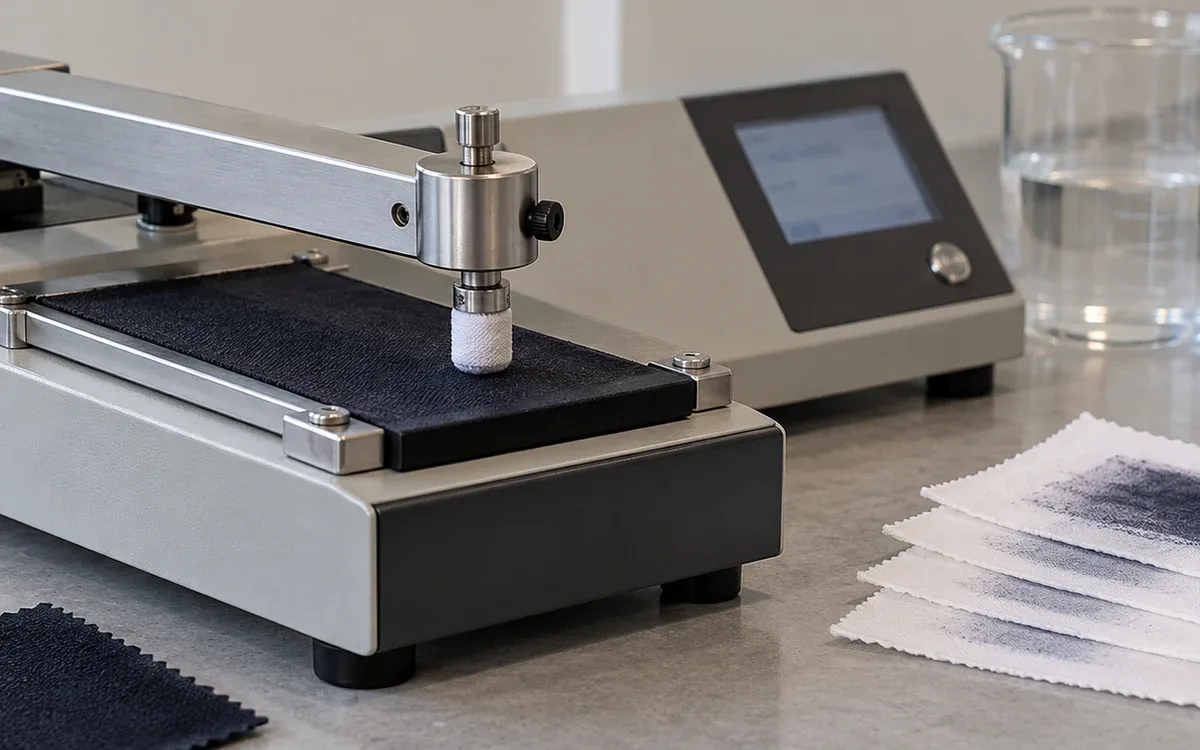
Rubbing fastness is especially relevant for deep shades that contact pale surfaces. Test the required dry and wet conditions with the specified method. A visual shade match is not evidence of acceptable transfer.
Laundering conditions also matter. Detergent chemistry, oxidants, mechanical action, and the chosen test can change the result.
Soliman and colleagues examined these factors in research on C.I. Sulphur Black 1 dyed cotton. Their study used defined wash procedures. It changed oxidant and abrasive-ball conditions. This supports naming the actual wash test. A request for “good wash fastness” alone is too vague.
Select the care and performance requirements before approving the dye system. The intended care may include bleach that the colour cannot tolerate. Resolve that mismatch during development.
Qualify after-treatments as part of the whole route
A fixing agent or softener can change several properties. So can an anti-tendering treatment. Check the intended benefit. Also test shade, handle, absorbency, and required fastness.
Keep the applied product and lot identity in the recipe record. A supplier's broad claim cannot replace the result for the actual fabric.
Test ageing in the final relevant treated state. An unfinished lab swatch has not had all later treatments. Its test may miss an interaction from those stages.
Investigate bronzing and surface colour systematically
Sulfur dyeing can produce an unwanted surface look called bronzing. Start by recording what you see. Take photographs and keep a physical sample.
Record where it appears and at which process stage it becomes visible. Compare the affected section with an acceptable section from the same lot.
Check reduction control and dye application. Review transition delays, washing, and later finishing too. Do not assume that all shiny or dull patches share the same cause.
An extra lab wash may change the appearance. This helps narrow the cause. It does not automatically approve extra production washing. More washing can change shade and fabric performance.
Observation | Evidence to compare | Next decision |
|---|---|---|
Shade changes through oxidation | Compare matched samples labelled by stage. Review process records. | Decide whether oxidation needs a controlled trial. |
Surface colour transfers badly | Compare rubbing results before and after the defined wash. | Review washing or surface deposits. |
Fabric is weak before ageing | Compare prepared input and dyed unaged strength. | Did the loss start with the input or the process? |
Strength falls mainly during ageing | Compare matched unaged and aged results. | Does the dye and finish route control storage damage? |
Only one zone deteriorates | Map positions. Review preparation and treatment records. | Does local contact or contamination explain the pattern? |
A new after-treatment shifts shade | Compare matched finished and unfinished trials. | Does the product package still suit the fabric? |
Keep sulfide handling within a designed system
Some sulfur dye routes use products that contain sulfides. These need specific handling controls. Their wastewater needs suitable controls too.
NOAA's inorganic sulfide guidance describes the acid-contact risk. Soluble sulfides can release hydrogen sulfide when they contact acids. An improvised acid addition to such a stream is a serious process error.
The NIOSH hydrogen sulfide guide warns against relying on smell. It cannot reliably detect continuing exposure. Use the site's engineered controls and monitoring. Follow its training and emergency procedures.
A recipe or shade correction must not bypass those arrangements. A change may affect the dye system, reducer, or oxidation stage. Waste routing may change too. Involve the responsible chemical and wastewater specialists in these reviews.
Compare lower-sulfide routes on measured results
Pre-reduced products and other reducers can change process demands. Test their value for the intended shade and fabric.
See the European Union's 2022 textile BAT conclusions, BAT 41. They address reducing the use of sulfur-based reducing agents for cellulosic dyeing. This source has a stated EU technical and regulatory context. It is not a recipe for every mill.
In a mill trial, start both routes with the same prepared input. Follow them through to accepted output. Count reducer use, washing, oxidation, water, and energy. Include effluent results and any repeated treatment.
Do not call a route “sulfur-free” merely because the reducer is sulfur-free. The dye itself may still be a sulfur dye. State product composition and reducing-agent chemistry separately. Report wastewater findings as a separate result too.
Use a clear denominator for resource claims
Take two example routes, each starting with 1,000 kg of fabric. Route A uses 18,000 litres of process water. It releases 980 kg of accepted fabric. Route B uses 15,000 litres. It releases 900 kg.
Their accepted-output water intensities are:
Route A: 18,000 ÷ 980 = 18.37 L/kg
Route B: 15,000 ÷ 900 = 16.67 L/kg
Route B still uses less water per accepted kilogram in this example. It also leaves more fabric unaccepted at that point. Explain that quality result. Decide what happens to the unaccepted fabric.
Recovery may later use another 3,000 litres. Include that water in the final comparison. Keep the original input mass in the record. Do not count reworked fabric as new production a second time.
Connect storage evidence to the dyed lot
Storage conditions still matter. A dry warehouse does not replace an ageing test. A test pass does not excuse wet packing or poorly controlled stock.
Link the dyed lot to its finishing route and ageing result. Add the packing date and shipment identity. Retain a sample in the condition required by the quality plan.
Building and stock moisture need a separate plan. See ApparelDiary's garment storage and moisture-control guide. The sulfur-dye record has a different focus. Track chemical durability and fabric performance back to the lot.
If a complaint appears after storage, compare retained material with the returned goods. Review differences in their exposure and finishing history before assigning a cause.
Release the route with a defined evidence set
State the fabric family, dye products, and machine route in the approval. Add the controlled reduction and oxidation conditions. Define washing and the final finish.
Keep actual shade and required fastness values. Record strength before and after ageing. Record the methods and editions. A single “passed” box gives the next investigation little useful detail.
State which changes require renewed qualification. A new supplier or after-treatment may fall outside the proven scope. So may a different fibre blend or wash route.
If a result fails, control the affected fabric. State what evidence a proposed recovery needs. A recipe adjustment made for the next lot does not release the current one.
Frequently asked questions
Is sulfur dyeing the same as using sodium sulfide?
No. Sulfur describes the dye class. Sodium sulfide is one reducing agent used in some routes. Commercial pre-reduced products and alternative reducing systems need their own instructions.
Can good wash fastness prove that tendering is controlled?
No. Wash colourfastness and aged fabric strength answer different questions. Use the appropriate tests for both requirements.
Does neutral fabric pH guarantee safe storage?
A current pH result cannot prove all future chemical behaviour. Check the finished sulfur-dyed fabric with the agreed ageing and performance plan.
Can a high retention percentage hide weak fabric?
Yes. The fabric may be weak before ageing. It can then keep a high share of a low starting force. Check absolute aged strength as well as the percentage.
Should every sulfur black use the same after-treatment?
No. Review the dye formulation and process together. Include fabric, finish, and end use. Work with the supplier and use relevant tests to qualify the package.
Judge sulfur dyeing through the fabric's useful life
A sound sulfur route delivers the intended colour. It preserves enough cotton strength for use and storage. Reduction, oxidation, washing, and finishing each contribute to that result.
The strongest evidence joins process records with matched unaged and aged tests. This helps the mill look beyond an attractive fresh shade. The fabric must also be ready for manufacture, storage, shipping, and use.
References
Cotton Incorporated: Dyeing basics.
Archroma: DIRESUL RDT pre-reduced sulfur dye range.
Cotton Incorporated: Textile Dyeing booklet.
Blackburn and Harvey: Reducing sugars and redox potential in sulfur dyeing.
Hanna Instruments: pH and ORP instrument manual.
AATCC: TM26-2020, Ageing of Sulfur-Dyed Textiles: Accelerated.
Improving the Resistance of Sulfur Dyes to Oxidation.
Soliman and colleagues: Extended laundering of C.I. Sulphur Black 1 dyed cotton.
NOAA CAMEO Chemicals: Inorganic sulfides.
European Commission: Textile BAT conclusions, Decision 2022/2508.

Discussion0
Loading the discussion…