
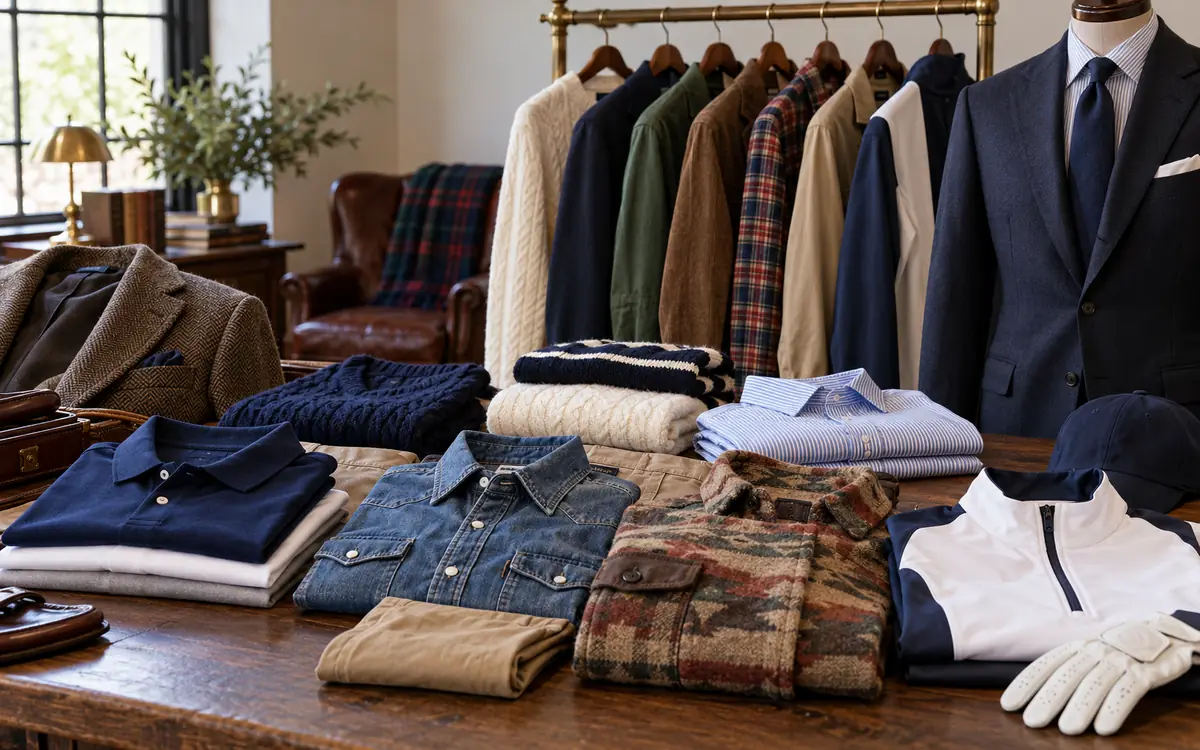
A Ralph Lauren label gives useful clues about a garment. It may point toward tailoring, American sportswear, Western workwear or golf. Yet a name at the neck cannot tell the whole story. The product line, fit, fabric, age and condition all matter.
This guide explains the main Ralph Lauren labels through the company's own descriptions. It covers Polo, Purple Label, Collection, Double RL, Lauren, RLX and Chaps. It also explains why older names and coloured tags can cause confusion.
The aim is to help you choose and describe clothes with more care. A shopper can use the guide to narrow a search. A student can use it to understand brand structure. A secondhand seller can use it to make a more precise listing. None of those tasks requires a fixed ranking that treats every garment from one line as better than every garment from another.
Start with the full name, then identify the product
“Ralph Lauren” can refer to the designer, the wider company or a name used on a product. “Polo” may refer to a brand name or to a type of collared shirt. Read the full wording before deciding which meaning applies.
The company describes Purple Label and Collection within its luxury offer. It also presents Double RL in that group. Its separate pages explain Polo, Lauren and Chaps. These are useful starting points for a map of the clothes. Sources: Ralph Lauren Luxury, Polo, Lauren and Chaps.
Label | Main question it helps answer | What still needs checking |
Polo Ralph Lauren | Is this part of the broad American sportswear and tailoring offer? | Category, fabric, cut and size |
Ralph Lauren Purple Label | Is this the men's luxury tailoring and sportswear line? | The actual model and its construction |
Ralph Lauren Collection | Is this the women's luxury Collection offer? | Season, design details and care |
Double RL or RRL | Does it belong to the heritage and workwear-inspired line? | Specific cloth, finish and fit |
Lauren Ralph Lauren | Is it part of the Lauren lifestyle or tailored-clothing offer? | Women's or men's range and sales market |
RLX | Is the focus performance clothing, especially golf? | The exact performance features |
Chaps | Is this the Chaps brand within the stated licensed offer? | Product, date and retailer |
Use this table to choose the next question. It cannot authenticate a garment, estimate resale demand or replace a fitting.
For example, a broad comparison between a Purple Label jacket and an RLX top leaves out the purpose of each. One may be considered for a formal meal. The other may be considered for a round of golf. The useful comparison starts with the job you need the garment to do.
Polo Ralph Lauren: a broad wardrobe, with several kinds of fit
The company's Polo description combines collegiate and English tailoring influences with American sporting and city style. It covers both men's and women's clothes. The Polo page also includes children's clothing, with familiar pieces such as polo shirts and cable-knit sweaters. Source: Polo Ralph Lauren.
Polo is therefore a useful place to start when looking for a varied everyday wardrobe. But “Polo” is not a fibre content, a fit block or a construction method.
A cotton shirt and a wool jacket can share the line name while asking different questions of the wearer. The shirt may need room to lift the arms or sit at a desk. The jacket may need the right shoulder position and enough room over a layer. A shared logo does not settle either question.
Fit names are separate from the label
Ralph Lauren's men's polo-shirt fit guide distinguishes Classic, Custom Slim and Slim. It describes Classic as the roomiest option, Custom Slim as an intermediate shape and Slim as closer through the chest and waist. Those descriptions belong to that guide; they should not be extended to every category. Source: Ralph Lauren polo-shirt fit guide.
Keep three fields separate in your notes:
Brand or line: for example, Polo Ralph Lauren.
Named fit: for example, Classic Fit.
Tagged size: for example, medium.
A seller who records only “Ralph Lauren medium” has left out useful information. A buyer who already owns one medium should still compare the fit name and measurements.
Children's clothing needs its own size chart and proportions. The fact that it shares a visual theme with adult clothing does not make an adult and a child size interchangeable. Compare the garment you will wear, including length, shoulder width and sleeve position.
Purple Label: understand the tailoring claim at product level
Ralph Lauren places Purple Label in its men's luxury offer. The corporate description includes hand-tailored suiting, made-to-measure suits and sophisticated sportswear. The line therefore extends beyond formal suits. Source: Ralph Lauren Luxury.
That positioning helps explain the intended experience. It does not mean every piece has the same fabric, the same number of hand operations or the same fit.
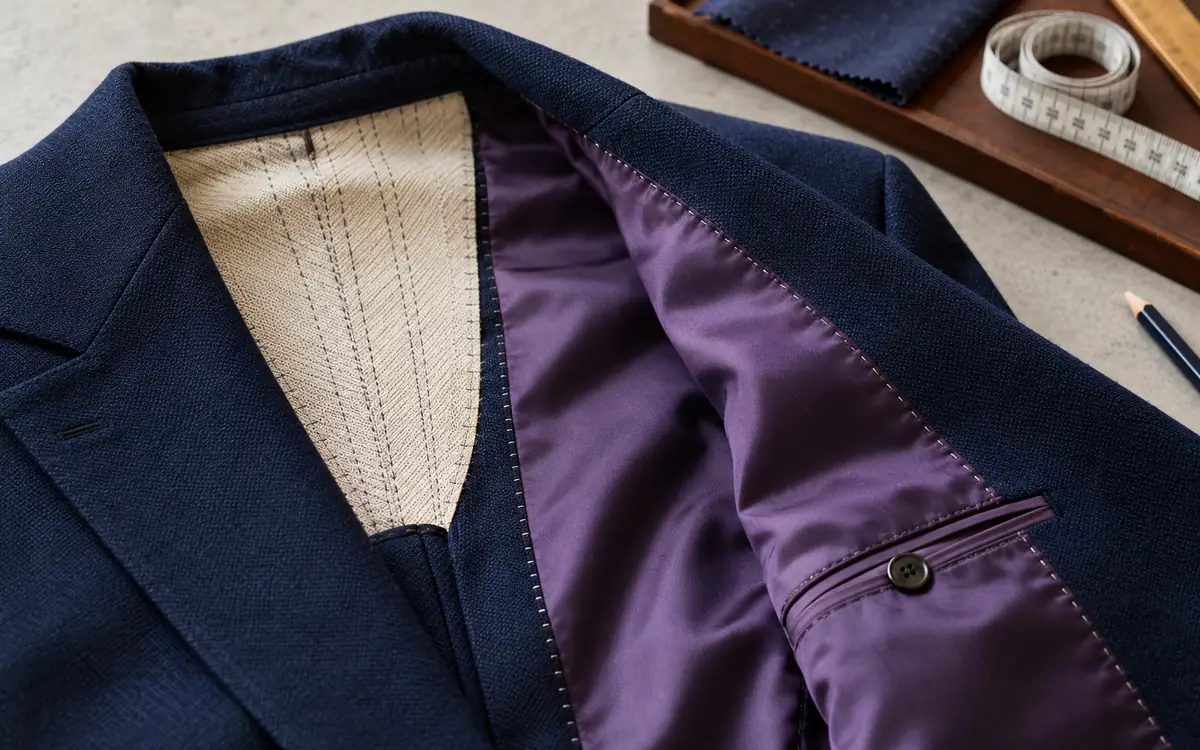
When considering a jacket, start with the model. Ask how the shoulder sits, how the lapel rolls and whether the body hangs as intended. Then check the stated fabric and lining. If a product description names a particular construction, assess that claim for that product.
A ready-made jacket and a made-to-measure service also involve different decisions. The former begins with an existing garment. The latter involves an order and a fitting process. Confirm the service, options, delivery terms and alteration arrangements with the provider before treating the two as equivalent.
For secondhand clothes, condition can outweigh the appeal of the line name. A beautiful jacket may have a shortened sleeve with little cloth left to release. The trousers may have been taken in. A damaged lining or stained cuff may change both the work required and the value to you.
Purple Label can narrow the search toward a certain kind of luxury menswear. The final decision remains about a particular garment on a particular person.
A practical tailoring enquiry
Instead of asking only, “Is this Purple Label?”, ask:
What is the complete model or style reference?
Which measurements describe this actual garment?
Has it been altered?
What does the product information say about cloth and construction?
What adjustment, if any, would make it work for the wearer?
The first question identifies the item. The next four establish whether it is useful.
Ralph Lauren Collection: read the season as well as the name
Collection is the women's luxury offer in the company's brand description. It is distinct from Lauren Ralph Lauren and from women's Polo. Source: Ralph Lauren Luxury.
A seasonal example makes that distinction clearer. In its February 2026 account of the Fall 2026 Collection, Ralph Lauren describes an archival landscape scarf used for silk twill pieces. It also discusses tapestry-inspired fabrics and worked surfaces. The account concerns that Collection and those designs. Source: RL Mag, Brave New Realm.
The useful lesson is to look for the design story in the item itself. A skirt may depend on the way a print falls across a wrap. A jacket may depend on the balance between a shaped waist and a full trouser. A photograph of the complete look can explain a proportion that seems unusual on a hanger.
This is also why a line name alone is a poor care guide. A simple-looking top can contain delicate surface work. An elaborate-looking garment can have quite different care needs. Read the fibre and care information for the actual piece.
For a student, compare one named season with another using a small set of features. Record silhouette, surface, colour and styling. This creates a more useful study than describing every Collection item as “formal” or “dressy.”
For a buyer, ask whether the item works in the intended setting without the full runway styling. Can the jacket close over the planned layer? Does the skirt length work with the shoes? Those questions connect the design to daily use.
Double RL: heritage clothing with its own point of view
Double RL is also written as RRL. Ralph Lauren's own magazine dates its launch to 1993 and connects it with the family's Colorado ranch. The account describes workwear-inspired denim, flannels, workshirts and khakis. Source: RL Mag, Family Style.
The corporate page includes both men's and women's apparel and accessories. That matters because Double RL is sometimes discussed only as a men's denim label. Source: Ralph Lauren Luxury.
The clearest way to assess RRL is through its approach to heritage clothing. Look at the shape, pocket layout, cloth and finish. Then ask which features appeal to you. A strong preference for a certain denim shape is more useful than a vague wish to buy a “higher” label.
Do not treat a worn appearance as a diagnosis of damage. First determine whether the finish was intended. Then inspect actual wear at stress points. A deliberate faded surface and a split seam are different observations.
Equally, the line name alone does not establish where a piece was made. Read the specific origin label or product record. A collection can include different kinds of garments, materials and production arrangements.
Compare denim by the garment you will wear
For jeans, record the tagged size, laid-flat waist, front rise, thigh width and inseam. Use the same measurement method when comparing two pairs. Also note whether the seller measured before or after washing.
For a jacket, consider the layers that must fit underneath. A close jacket that looks good over a T-shirt may feel quite different over a thick knit.
These checks help explain why two buyers may value the same RRL piece differently. One may want a certain historic shape. Another may want a daily layer with room to move. Both are making a useful choice when their reasons are clear.
Lauren Ralph Lauren: separate women's lifestyle clothing from men's tailoring
The company describes Lauren for women as sportswear, denim, dresses, accessories and footwear at a more accessible price point. It also documents Lauren for men, including suits, sport coats, shirts, trousers, tuxedos, coats and ties. The listed markets and channels differ between the two. Source: Lauren Ralph Lauren.
This corrects a common shortcut: Lauren is not a name that can always be interpreted as women's clothing.
It also helps with online searches. A search for “Lauren jacket” is broad. Adding the wearer, category, full label wording and model creates a more useful result. If shopping secondhand, include the actual measurements in your comparison.
The phrase “more accessible” describes the company's positioning. It does not provide a fixed discount against Polo or a guarantee about any current selling price. Retail prices vary by item, market and date. A marked-down price adds another variable.
Consider a hypothetical shopper choosing a dress for regular office use. The questions might include sleeve comfort, ease while sitting, opacity and a care routine the shopper can manage. A garment that meets those needs may provide more value to that person than a more costly design suited to a different occasion.
The same care applies to men's tailoring. Ask whether the jacket and trousers are sold together or separately. Check the measurements of both. A line name cannot show whether an altered trouser will suit the next wearer.
For sellers, preserve the wording that is actually present. Do not turn “Lauren Ralph Lauren” into “Ralph Lauren Collection” because the garment has a dark neck label or an elegant shape.
RLX: examine the feature, then the activity
RLX has a clear performance focus. The company's Polo page discusses it in relation to golf. Its 2023 Ryder Cup announcement provides a dated example: the team clothing included fabrics described as offering moisture movement, stretch and airflow. Sources: Polo Ralph Lauren and Ralph Lauren's 2023 Ryder Cup announcement.
Those statements describe the brand's offer and a named collection. They do not establish that every RLX item has every listed property.
For a current product, turn a broad word such as “performance” into specific questions. Does the description explain stretch? Does it name a weather-protection feature? Is there a test result or a stated limitation? What does the care label require?
Next connect the feature to use. A light layer for mild conditions serves a different need from clothing for prolonged rain. A garment that moves well during a swing may still be too warm for a particular climate.
Avoid ranking RLX beneath or above a tailoring label on a single scale. Its purpose changes the criteria. Movement, layer bulk and the intended conditions may matter more than a formal jacket's shape.
A useful fitting includes the relevant motion. Reach, bend and turn while wearing the layers you plan to use. Check whether the hem, collar or sleeve becomes distracting. This is a personal fit check, not proof of a laboratory performance claim.
Chaps: licensing is part of the explanation
Ralph Lauren's corporate site lists Chaps and describes clothing for men, women and children, alongside home products. It also states that a multi-year licensing partnership with OVED Group took effect in Fall 2021 for Chaps menswear and womenswear. Source: Chaps corporate profile.
A licence gives a named partner rights under agreed terms. In this case, the company's stated arrangement covers manufacture, marketing and distribution. Read the scope and date rather than treating “licensed” as a quality score.
For a buyer, the item still needs the usual checks: fit, composition, construction, condition and price. For a researcher, the arrangement explains why the operating structure can differ from a directly run range.
It is therefore too broad to say that a licensed brand has no connection with its owner. It is also too broad to assume that licensing tells you exactly how every garment was made. The contract structure and the product specification answer different questions.
Historical labels need dated evidence
Older garments may carry names that do not appear in the same way in today's shopping menus. A historical source helps place those names without turning
memory into a rule.
Ralph Lauren's fiscal 2012 annual report describes men's and women's Black Label. It also describes a women's Blue Label offer. This is evidence of how the company presented those names at that time. It is not a current catalogue. Source: Ralph Lauren fiscal 2012 Form 10-K, brand descriptions.
Two practical lessons follow.
First, a black piece of label cloth is not enough to establish the historical Black Label line. Read the wording and look for supporting records.
Second, “blue label” can be used loosely by sellers to describe colour. That usage should not be confused with the named historical range. Ask what the seller means and what evidence supports the description.
When recording an older item, separate the garment's visible facts from an estimated date. A useful listing might state the full label text, care-label details and measurements. It can then explain why a date range is suggested. If the date is unknown, leave it unknown.
Do not assign a precise year from one logo shape without reliable evidence. Tags, product categories and market practices can vary. A strong dated reference is more useful than a confident guess.
Logos and campaigns are another layer
A garment can carry a familiar image while belonging to a broader product line. The image and the line should be recorded separately.
Pink Pony is a useful example. Ralph Lauren describes it as a cancer-related campaign established in 2000. The company also explains that support arrangements involve the US foundation and local organisations in other markets. Source: Polo Ralph Lauren, Pink Pony section.
If a purchase is motivated by that support, read the current terms for the exact product and market. A percentage mentioned for one item or year should not be applied to every product carrying the symbol.
For a seller's catalogue, create separate fields for line, motif or campaign, category and date evidence. This makes searches more precise. It also avoids creating an invented sub-brand every time a logo appears in a different colour.
Build a useful comparison in five steps
1. Define the purpose
Write one sentence about intended use. “A jacket for two formal events each month” is more useful than “the best Ralph Lauren jacket.”
Include climate, layers and care needs when they affect the choice.
2. Identify the exact item
Record the full line name, category, model or style reference and fit. For secondhand clothing, save clear photographs of all relevant labels.
If the seller's title conflicts with the label, resolve that conflict before comparing prices.
3. Compare measurements consistently
A laid-flat width and a full circumference are different values. State the method, fastening position and whether the cloth was stretched.
For an illustrative example, Shirt A measures 54 cm across the chest when laid flat. Shirt B measures 57 cm using the same method.
Approximate chest circumference = 2 × laid-flat chest width
Shirt A = 2 × 54 cm = 108 cm; Shirt B = 2 × 57 cm = 114 cm
The approximate difference is 6 cm around the chest. This helps explain why two garments tagged medium may feel different. It does not predict the whole fit. Shoulder, armhole, sleeve and fabric behaviour still matter.
For a fuller measurement method, see ApparelDiary's garment specification sheet guide.
4. Read material and care information together
Do not infer the fabric from the brand name. Record the stated composition and inspect the garment. Then check whether its care needs suit the intended routine.
A purchase that needs a care process you will avoid may sit unworn. ApparelDiary's care-label validation guide explains why accurate care instructions matter.
5. Compare the full cost and condition
Include known alteration and cleaning costs. Keep estimates separate from confirmed charges.
Suppose two secondhand jackets are offered at hypothetical prices. Jacket A costs 120 currency units and needs 35 units of alterations. Jacket B costs 145 units and needs none.
Initial usable cost = purchase price + necessary alteration cost
Jacket A = 120 + 35 = 155 units; Jacket B = 145 + 0 = 145 units
The lower ticket price does not produce the lower initial usable cost. This example does not assign those prices or alteration needs to any Ralph Lauren line. It shows why the complete purchase matters more than a label ranking.
A worked choice: three jackets, one wardrobe
Consider a hypothetical buyer named Sam. Sam needs a jacket for client meetings and train travel. The search produces a Polo jacket, a Lauren jacket and a secondhand Purple Label jacket.
Sam wears the same Oxford shirt to every fitting. This keeps one part of the comparison steady. The jacket must close over that shirt, allow comfortable sitting and fit beneath a travel coat. Sam does not need matching trousers.
The listings leave different gaps. The Polo jacket has useful measurements but no lining detail. The Lauren jacket is available to try on. The Purple Label seller provides good photographs but does not know whether the sleeves were shortened.
Sam asks the Polo seller for a photograph of the inside. The lining is then clear, but the sleeve measurement is shorter than Sam needs. That closes one question without making a claim about Polo jackets in general.
At the Lauren fitting, Sam checks the jacket both open and fastened. It sits well at the shoulder and does not pull while seated. There is room for the work shirt. The care instructions also suit Sam's routine.
The Purple Label seller supplies a sleeve measurement. It is short too. A photograph shows the cuff, but it does not establish how much cloth remains inside. Sam would need an alteration assessment before treating the jacket as usable.
The decision is now about known fit and unresolved work. Sam chooses the Lauren jacket. Its name did not win the comparison; the fitting and product information did.
A different buyer could reasonably choose otherwise. Someone who wants the Purple Label jacket's particular cloth might accept the work of investigating the sleeve. Someone with shorter arms might find that it already fits.
The exercise shows why a useful label guide leaves room for the wearer. It directs the search, then lets actual measurements and priorities determine the choice. It also shows when to stop: once the necessary facts establish a suitable garment, there is no need to invent a prestige score to justify it.
What a label guide cannot authenticate
Ralph Lauren advises buyers seeking new authentic products to use its own stores, website and authorised retailers. It also states that it does not authenticate products obtained from third parties. Source: Protecting Our Brands.
Treat a neck label, logo, QR code or registration number as one piece of information. This guide does not provide a method for declaring an item genuine from a photograph.
When evidence is weak, avoid a firm authenticity claim. A seller's confident wording is not a substitute for provenance. If the uncertainty affects the purchase, choose a source whose authenticity and return arrangements you can establish.
Frequently asked questions
Is Polo Ralph Lauren the same as Ralph Lauren?
Polo is one named part of the wider Ralph Lauren offer. The full name helps distinguish it from Purple Label, Collection, Lauren and the other lines described above.
Is Lauren Ralph Lauren only for women?
No. The company's Lauren profile also describes men's tailored clothing. Check the product category and market as well as the name.
Is RRL the same as Double RL?
Yes. The company uses Double RL and RRL for the heritage-inspired line discussed here.
Does a purple or black tag prove quality?
Colour alone does not establish a product's identity, authenticity or condition. Read the full text, find the product evidence and inspect the actual garment.
Which Ralph Lauren label is best?
The answer depends on the task. Start with the line's purpose, then compare the item against your needs. A fitting, clear product information and honest condition report make that answer more useful.
Conclusion
Ralph Lauren labels become easier to understand when each name has a clear role. The brand structure guides the search. The garment's own details complete the decision.
Read the full wording, distinguish line from fit and motif, and use dated evidence for older names. Then compare the exact cloth, measurements, condition and care needs. This approach gives shoppers and apparel professionals a sound basis for choosing, studying and describing the clothes.
Other brand models give useful contrast, so see the Zara business model and UNIQLO LifeWear.


Discussion0
Loading the discussion…