

GS1 SSCC Allocation and Label Controls for Apparel
Control GS1 SSCC allocation for apparel cartons and pallets. Verify check digits, prevent duplicate IDs, manage reprints, and validate labels before dispatch.
Garment Factory Calculators and Guides
Industrial Engineer & Business Process Optimization Executive
Salauddin Ahamed Sagar is an industrial and production engineer in Dhaka, Bangladesh, specializing in ready-made garment manufacturing, ERP systems, and industrial engineering. He leads ERP and process optimization projects at Apex Holdings Ltd. and previously worked in line balancing and industrial engineering at Epyllion Group and Young Group. He holds a BSc in Industrial and Production Engineering from NITER (University of Dhaka) and founded Apparel Diary to share practical engineering methods, calculators, and factory operations guides.
Control GS1 SSCC allocation for apparel cartons and pallets. Verify check digits, prevent duplicate IDs, manage reprints, and validate labels before dispatch.

Specify tensile strength, strap-slip resistance, wash cycling, and nickel-free finish tests for bra rings, sliders, and hook-and-eye closures before bulk approval.

Evaluate industrial textile filter media across airflow resistance, fan power penalty, particle capture, bypass leakage, and field-trial durability.
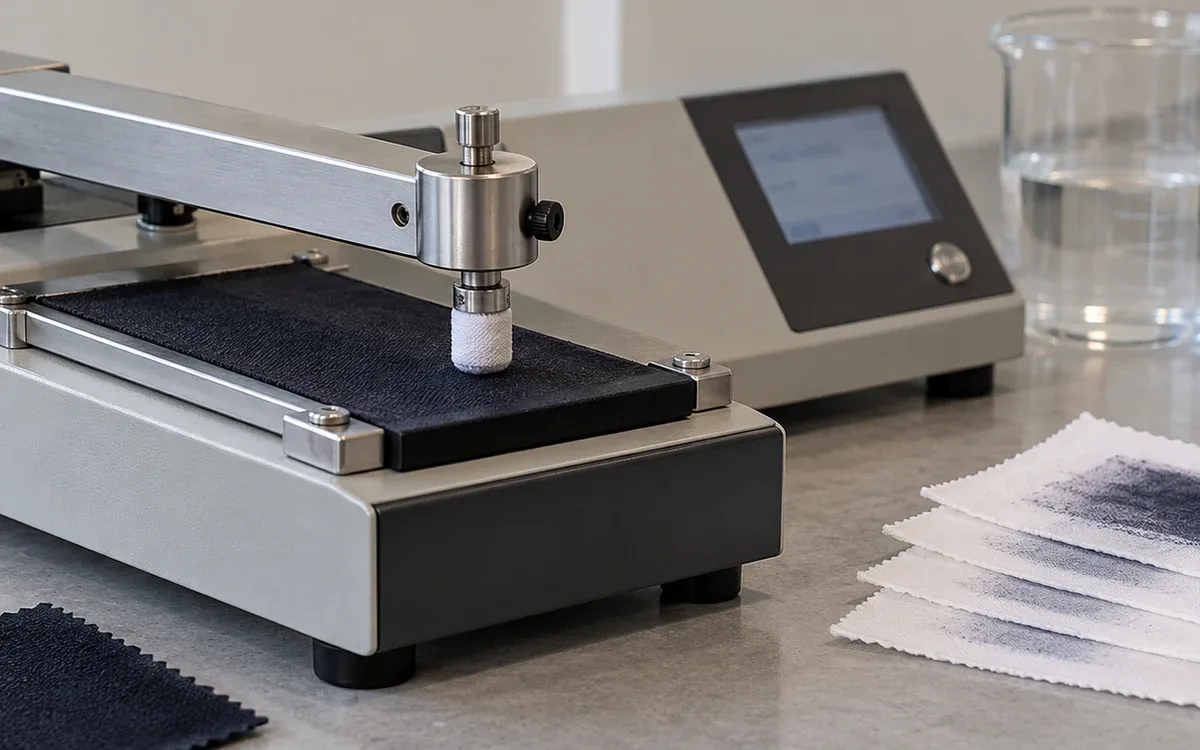
Run a reliable rubbing fastness test with dry and wet controls, pickup calculations, surface sampling, sound grading, and practical failure diagnosis.

Turn apparel ERP requirements into observable order, material and stock-control outcomes. A time-phased fabric reconciliation exposes held stock and late supply before a pilot expands.

Connect fashion development gates, BOM revisions and production release in one controlled PLM workflow. A material-change example shows why approvals and ERP handoffs must carry the same revision.

Measure supplier lead time through quality release, handle partial receipts, and calculate variation from consistent events before changing inventory buffers.

Select a review policy before calculating a buffer or EOQ. Checked examples distinguish a fixed-lead-time reorder point from a periodic order-up-to target and explain inventory-position controls.

Turn shade approval into controlled roll, lay, bundle and recut allocation. A grouped-length example shows why pooled fabric totals can overstate feasible cutting capacity.