
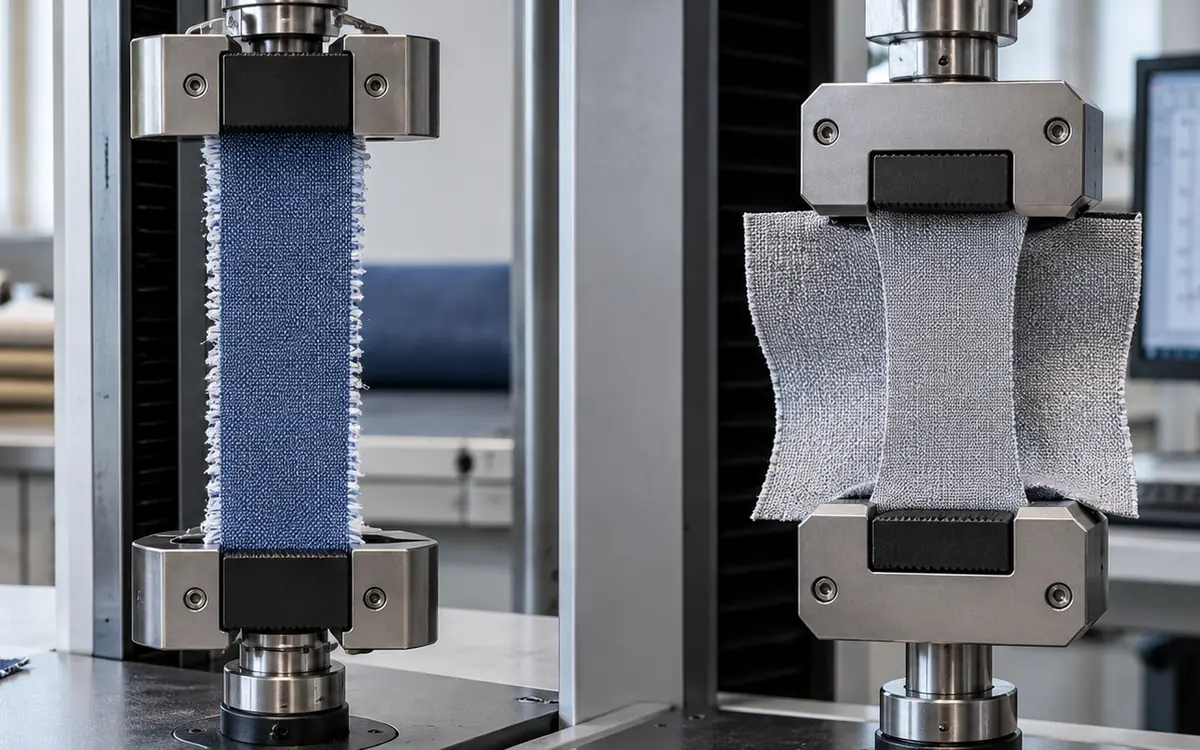
Fabric Tensile Strength Testing with Strip and Grab Methods
Compare fabric tensile strength tests using strip and grab methods. Learn scope, specimen preparation, directional results, grip checks and clear calculations.
Garment Factory Calculators and Guides
Industrial Engineer & Business Process Optimization Executive
Salauddin Ahamed Sagar is an industrial and production engineer in Dhaka, Bangladesh, specializing in ready-made garment manufacturing, ERP systems, and industrial engineering. He leads ERP and process optimization projects at Apex Holdings Ltd. and previously worked in line balancing and industrial engineering at Epyllion Group and Young Group. He holds a BSc in Industrial and Production Engineering from NITER (University of Dhaka) and founded Apparel Diary to share practical engineering methods, calculators, and factory operations guides.
Compare fabric tensile strength tests using strip and grab methods. Learn scope, specimen preparation, directional results, grip checks and clear calculations.

Pumice stone is a working abrasive whose size, condition and history change during denim washing. Treating every bag or recovered stone load as identical makes the finished effect hard to repeat.
Reconcile garment WIP across cutting, sewing, washing and finishing. Use worked balances, rework controls and ageing reports to find missing or stalled work.

Build a 5S audit for garment factories. Use clear scores, trace missing tools, resolve repeat findings and measure changes without hiding serious risks.

Use thermal imaging in factory energy audits with checks for emissivity, reflections, target size, load, and uncertainty before making repair or savings claims.

Measure true textile chiller plant performance using system-boundary COP, chilled-water flow, condenser-pump power, and low-delta-T diagnostics.

Calculate rotor spinning output from twist, delivery and yarn count. Compare accepted kilograms, piecing losses, package stock and yarn quality in a fair trial.

Chlorinated-water colour testing needs a defined exposure and a measured solution, as well as a clear acceptance rule. This guide compares ISO and AATCC scopes and explains free and total chlorine, stock dilution, assay range, textile loading, and control fabrics.

Build needle and sharp-tool controls for apparel factories, with incident holds, stock checks, detector limits and evidence for safe product release.