
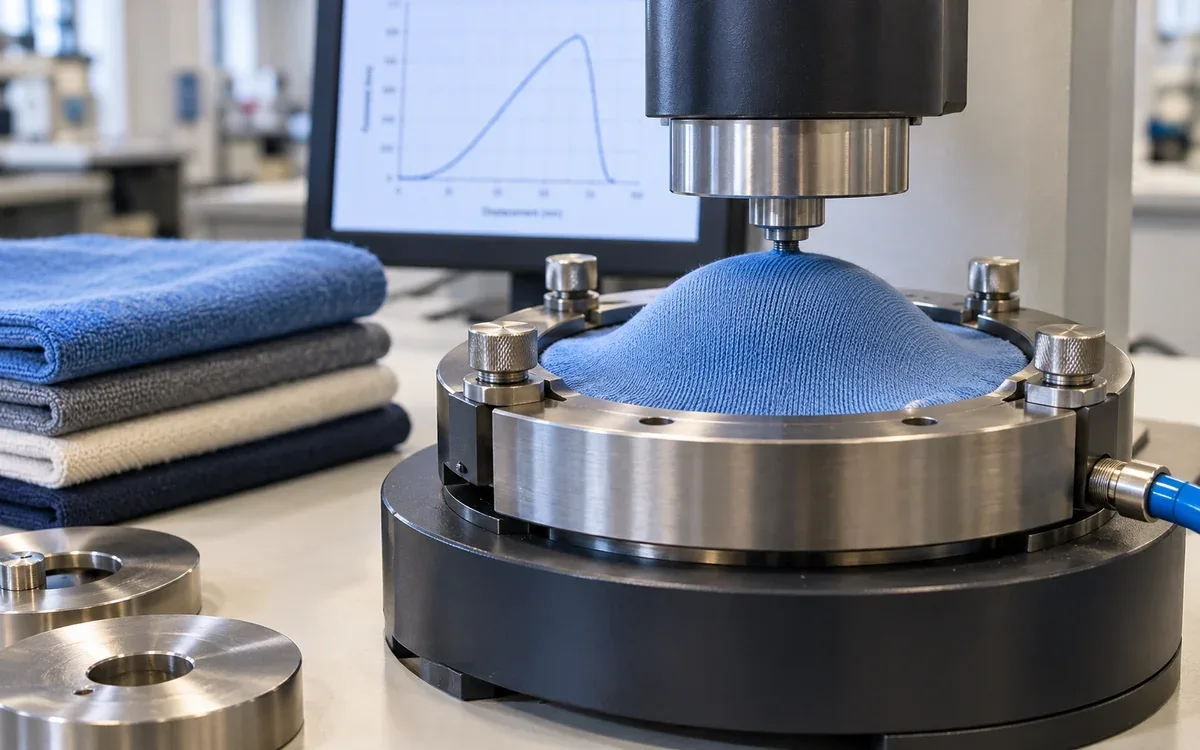
Fabric Bursting Strength and Hydraulic Versus Pneumatic Tests
Bursting results depend on how the fabric is loaded and which quantity the instrument measures. This guide separates hydraulic and pneumatic diaphragm tests from mechanical ball tests.
Smarter Operations for Apparel
Tag
20 articles tagged with this topic.
Bursting results depend on how the fabric is loaded and which quantity the instrument measures. This guide separates hydraulic and pneumatic diaphragm tests from mechanical ball tests.
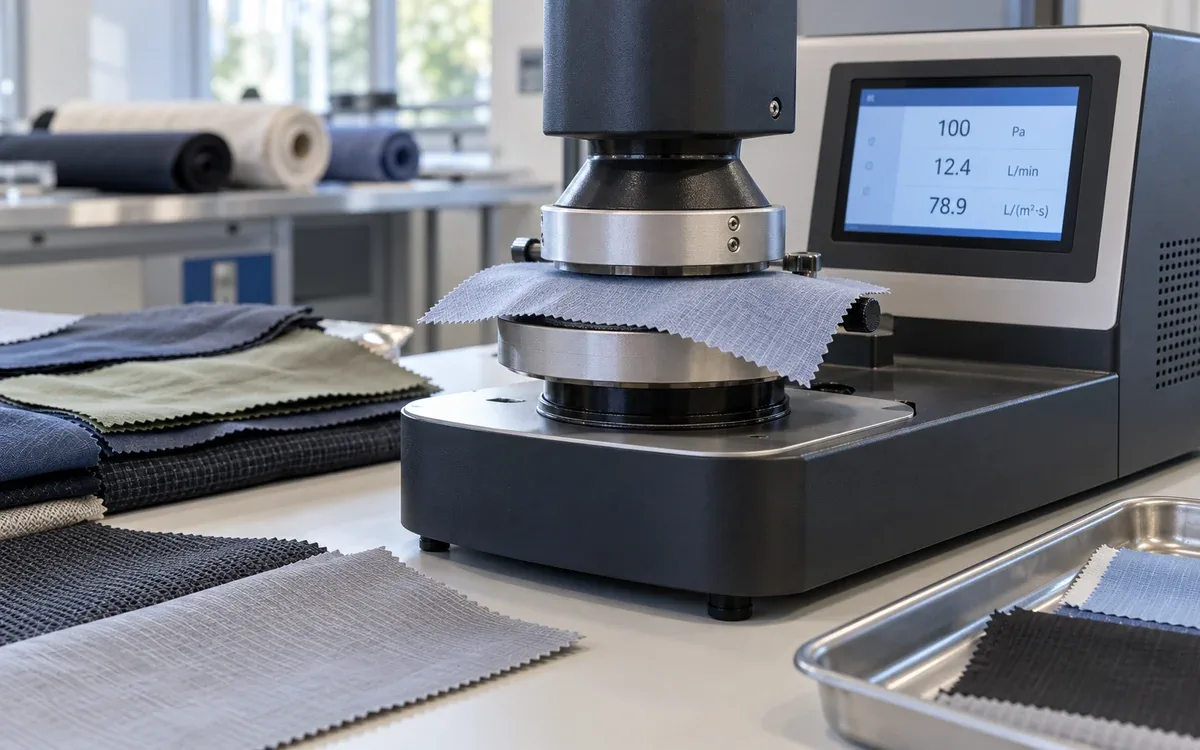
Air permeability results only support a fabric decision when the pressure, test area, units and specimen state are clear. This guide explains ISO 9237 and ASTM D737, with worked unit conversions, leakage checks and examples of care and layer effects.
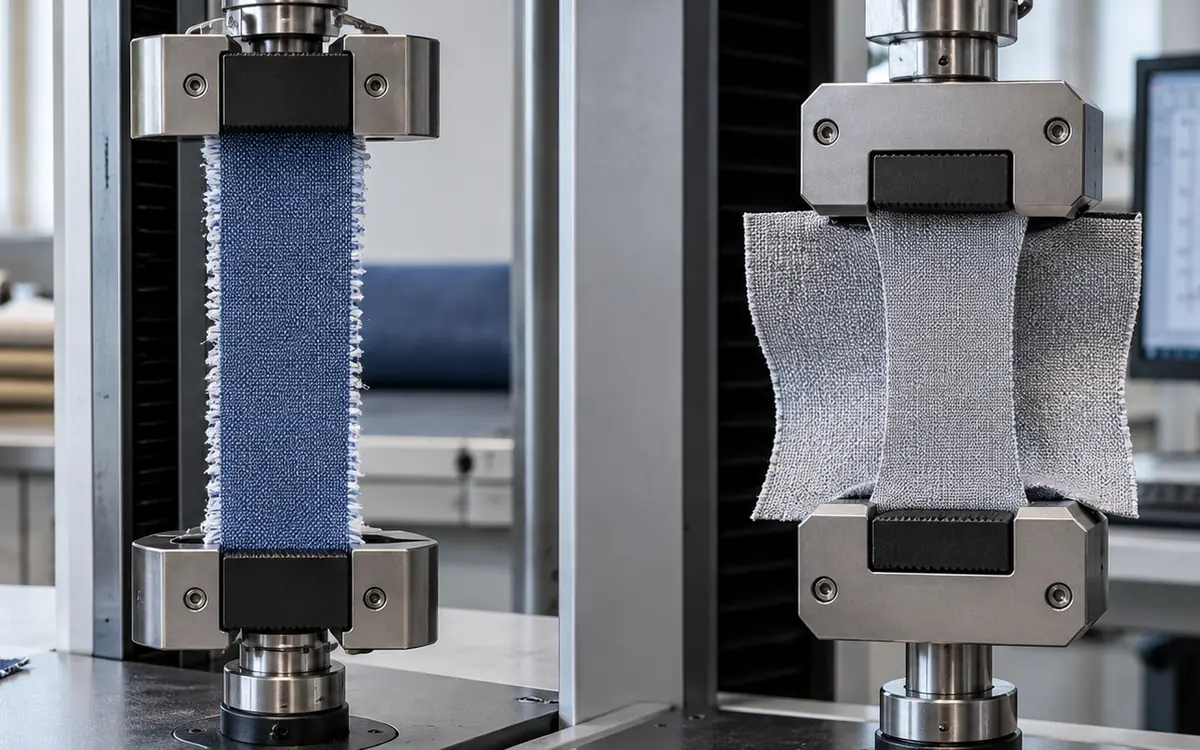
Fabric strip and grab tests load cloth in different ways, so their force results need distinct interpretation. This guide explains the current ISO and ASTM methods, specimen preparation, gripping controls and directional reporting.
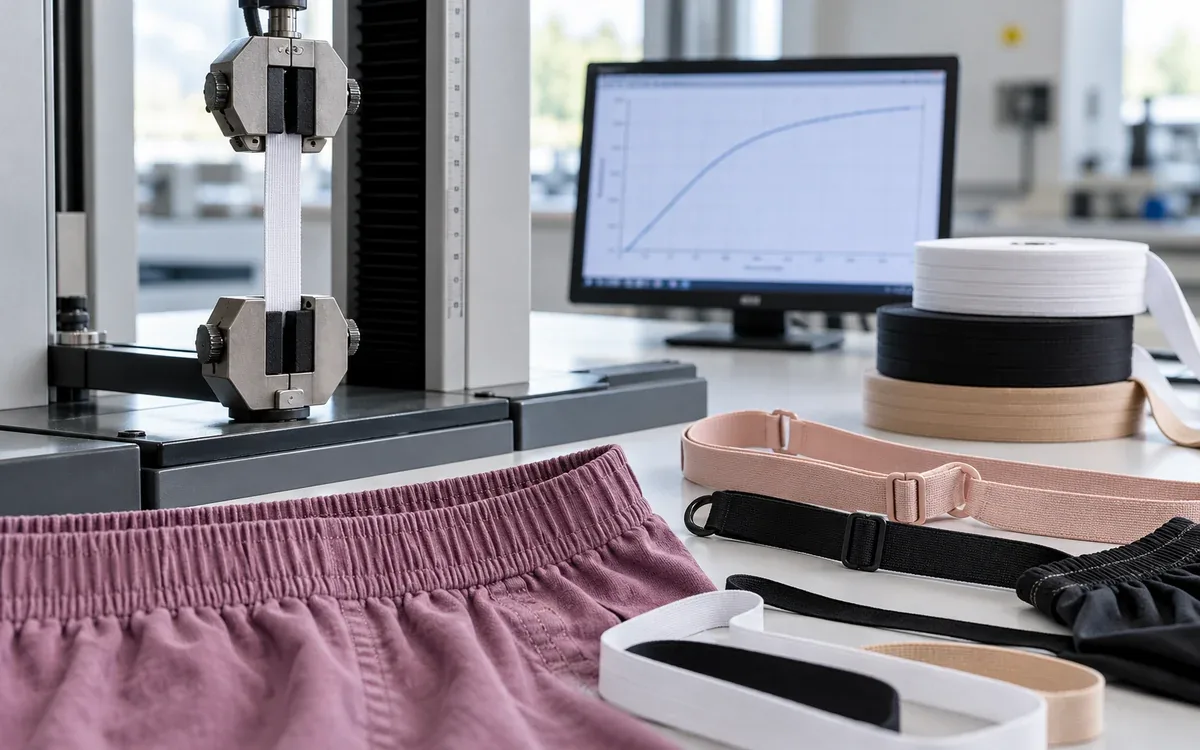
Narrow elastic must work as a waistband, strap, or finished edge, not just pass a loose-strip test. This guide connects suitable elastic test methods with garment opening, cut length, joining, casing, and hardware checks.
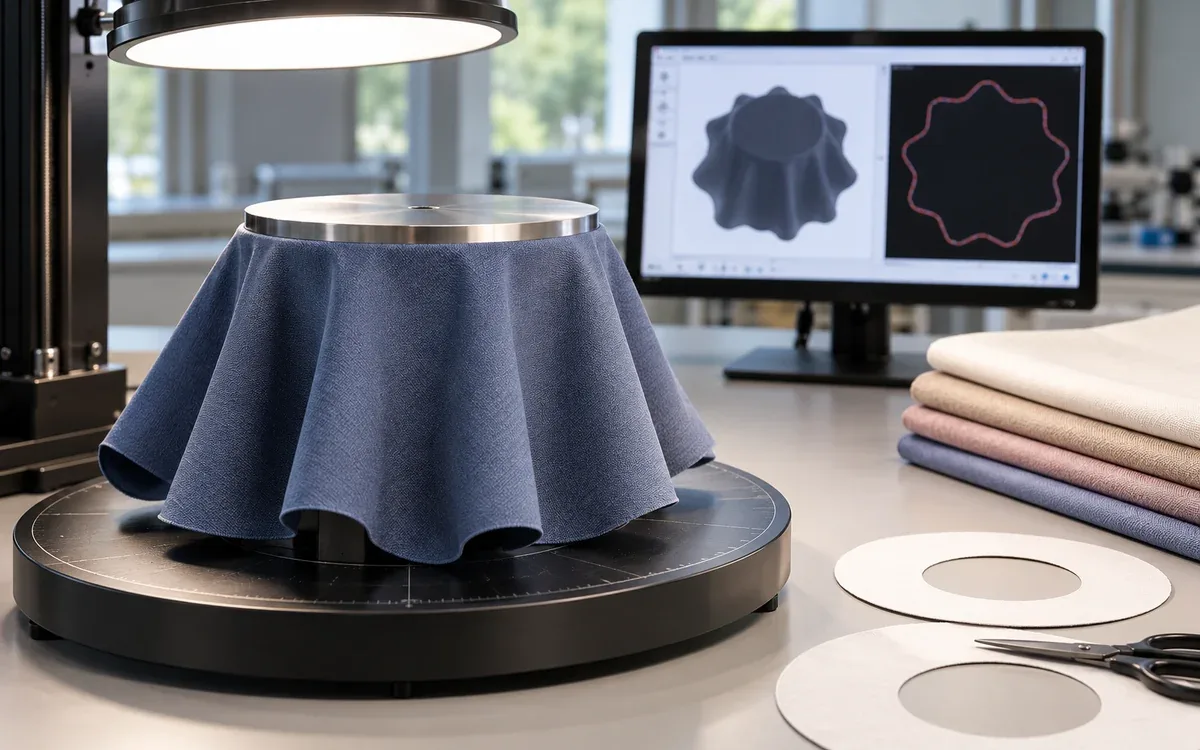
The Cusick drape coefficient describes a fabric's projected shape under a defined support geometry. This guide explains the correct area and paper mass ratios, with worked examples that expose common denominator and unit errors.
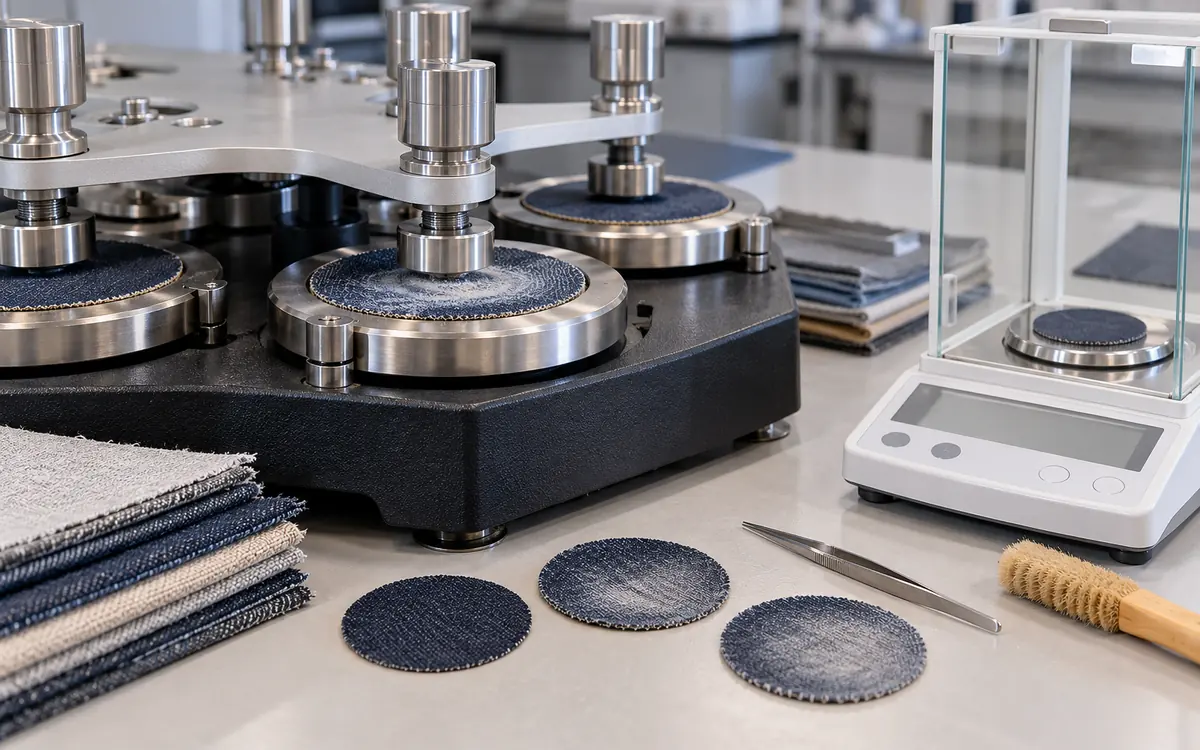
Mass loss and appearance describe different forms of fabric abrasion damage. This guide explains their method boundaries and shows how to calculate loss in milligrams and as a percentage.
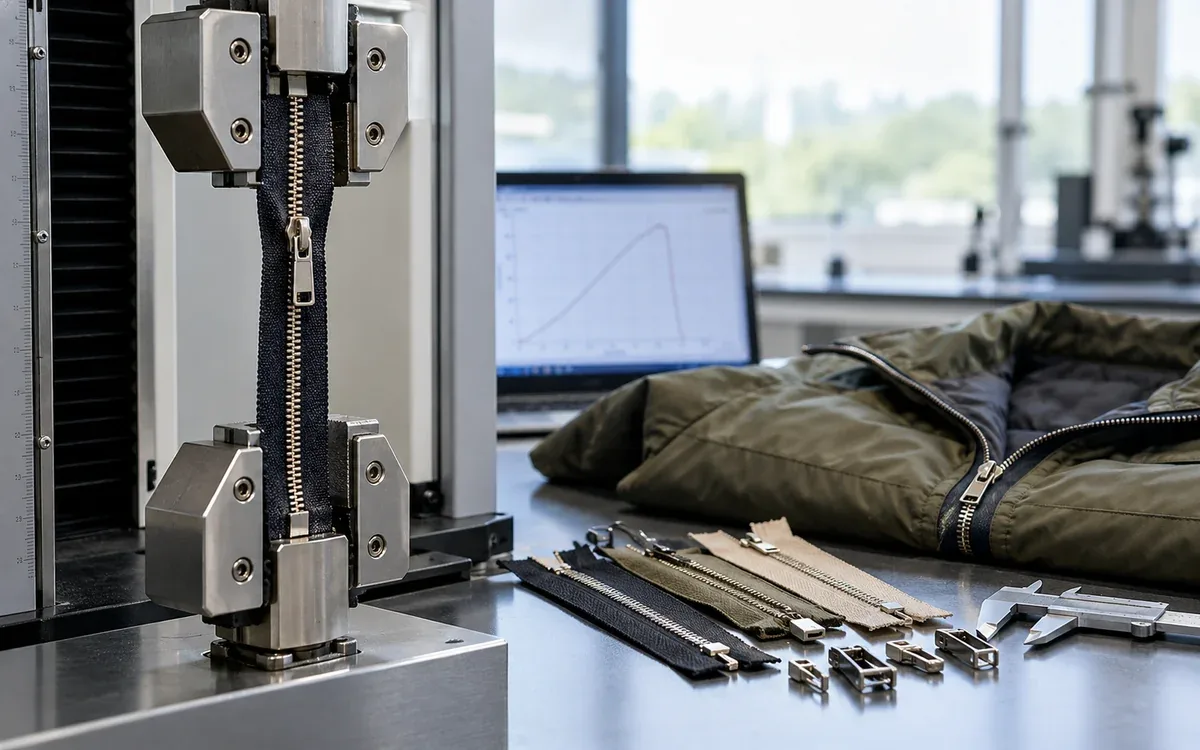
A zipper needs more than strong teeth. Its slider, stops, separating unit, dimensions and garment installation all affect performance. This guide maps common failures to useful tests, explains how to read results and develops a staged trial from loose zipper to finished garment.
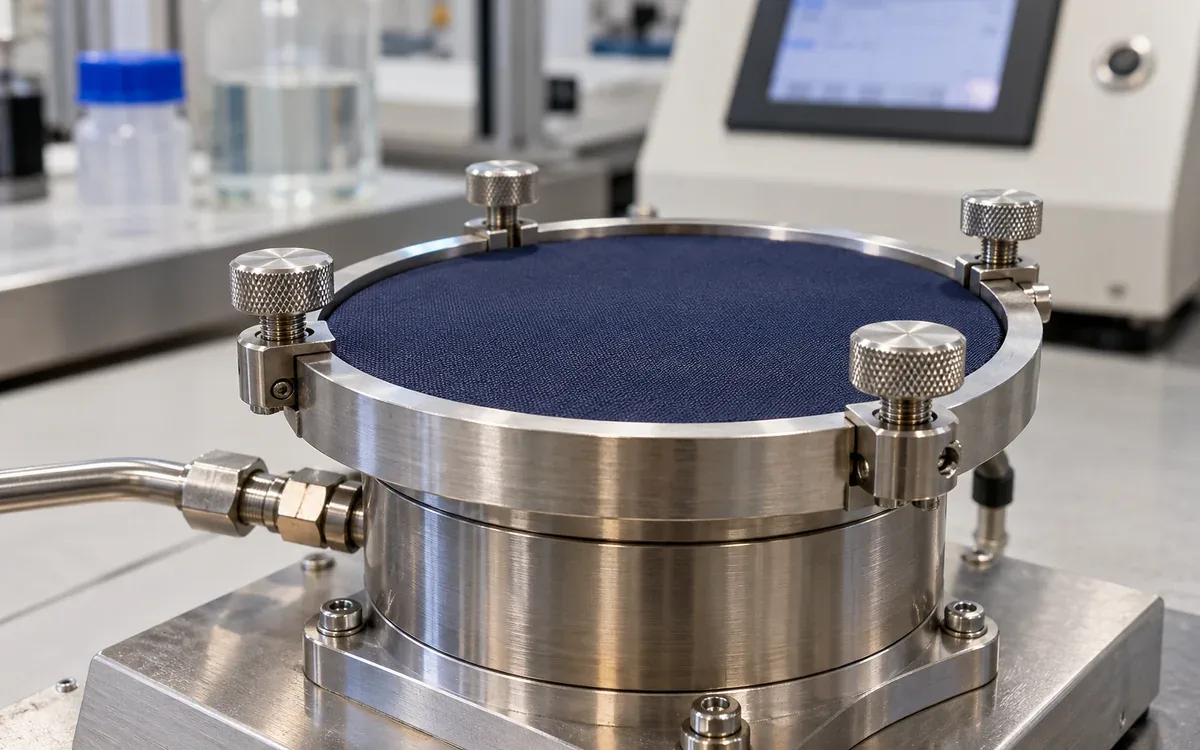
A water column rating becomes useful when the method and test conditions are clear. This guide explains hydrostatic pressure tests for apparel fabrics, including restrained and unrestrained methods, pressure ramps, leakage endpoints, and instrument limits.
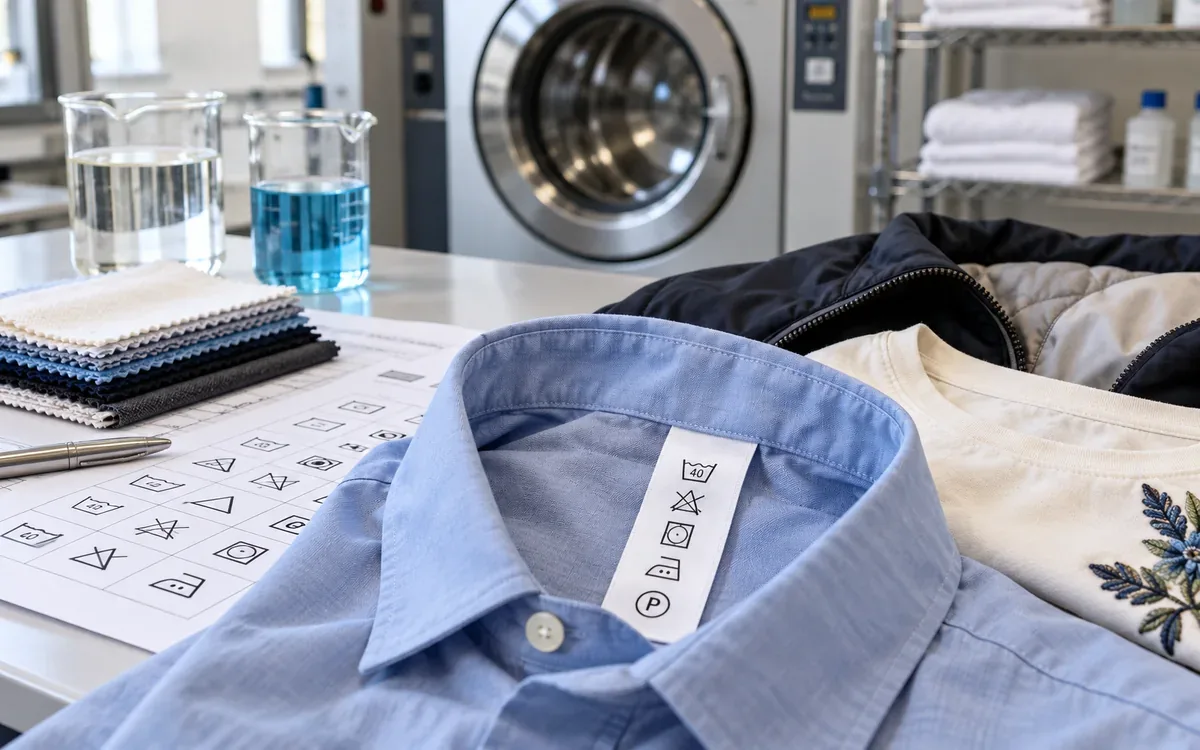
Care instructions must work for the garment as sold, including its lining, trims and decoration. This guide connects care-route decisions with product evidence, laboratory requests, destination rules and the final printed label.